Here are the cheapest and most expensive places to live in Europe. Poland shines

Romania (5.5 percent), Hungary (4.8 percent), Belgium (4.4-4.8 percent), Croatia (4.5 percent) and Estonia (4.1 percent) were leaders in 2024. In these countries, inflationary pressure remained the strongest in the EU. At the same time, the lowest indicators were recorded in Ireland (1 percent), Italy (1.4 percent), Luxembourg, Finland and Sweden (1.6 percent each).
Despite the relatively small differences in inflation data, the difference between food prices, drinks, tobacco and alcohol between European Union countries and the closest neighbors remains significant. For facilitating, Eurostat uses relative values according to which Average for the EU It is used as a reference point. If the indicator for a given country is higher, it means that the goods in this country are more expensive than the EU average for the EU, and if lower – cheaper.
The sample also included neighboring countries and countries belonging to the free trade zone with the European Union. The full list can be found on the charts.
The most expensive food products in Europe are in Luxembourg. According to Eurostat data, they are Fr. 25.7 percent more expensive than the European average. In second place there is dishes (+19.3 percent), and the three are closed by Ireland, where food prices are 11.9 percent. higher than the EU average. In the top five countries with the most expensive food were also France, and Malta and Austria are fifth.
Price discrepancies
The cheapest food can be found in Eastern European countries, but the lowest prices are in Romania – grocery purchases are 25.4 percent here. cheaper than average in the EU. Slovakia (17.1 percent) is in second place in terms of availability Polandwhere food products are 14.4 percent cheaper. Bulgaria and the Czech Republic also included in the top five.
The most expensive meat in the EU can be found in Luxembourg (37 % more expensive than the European average). France is second, where it is 31.7 percent more expensive, and the three are closed by Belgium (20.2 percent). The opposite situation occurs in Slovakia, where the meat is 29.8 percent. cheaper than the EU average.
The most expensive eggs and dairy products can be found in Cyprus, where they are about 30.8 percent. more expensive than the European average. Greece (30.5 percent) is second in terms of prices, and the third – Bulgaria (25.7 percent). However, the cheapest eggs and dairy products can be found in Slovakia, where they are about 13.7 percent. Cheaper than the average in Europe, as well as in Poland (10.2 percent) and the Czech Republic (8 percent).
According to Eurostat data, the most expensive bread in Europe is in Denmark. Bread is there by 36.2 percent more expensive than the average in Europe. Luxembourg (29.1 percent) is in second place, and Austria (20 %) on the third. The cheapest bread can be found in Romania – by as much as 44 percent Cheaper than the EU average. Bulgaria (26.9 percent) is in second place, and the third – Slovakia, where bread is 17.1 percent. cheaper.
Cigarettes and alcohol
The most expensive alcohol in Europe is sold in Finland – by 110.4 percent. more expensive than the EU average. Ireland came second, where alcohol is more expensive by 97.6 percent, and the third Greece, where alcohol products are more expensive by approx. 54 percent. than in the rest of Europe. The cheapest alcohol can be found in Italy – here it costs about 16.1 percent. Less than the European average, it is slightly more expensive in Germany: 13.3 percent. more expensive than the average in the European Union. Three countries with the highest availability of alcohol are closed by the Czech Republic with a result of 9.6 percent.
Non -alcoholic drinks are the most expensive in Ireland – by 40.4 percent more expensive than the EU average. Slightly cheaper juices and lemonade can be bought in Croatia, where they are more expensive by approx. 31.1 percent, and a bit cheaper – in Denmark (30.5 percent). The cheapest drinks are again in Italy – they are at 18.2 percent. cheaper than the EU average.
The greatest price discrepancies are observed in the category of tobacco products. Ireland definitely leads in the ranking of the most expensive tobacco products in Europe – the average price here is 158.6 percent. higher than the EU average, i.e. over two and a half times. High prices of tobacco products are also in France (94.8 percent), the Netherlands (60.7 percent), Finland (57.5 percent) and Belgium (36.2 percent).
The cheapest cigarettes can be bought in Bulgaria, where prices are half as much as average in the EU – by 50.9 percent. Poland (33.5 percent), Croatia (33.1 percent), Greece (30.7 percent) and Cyprus (28.1 percent) are behind it.
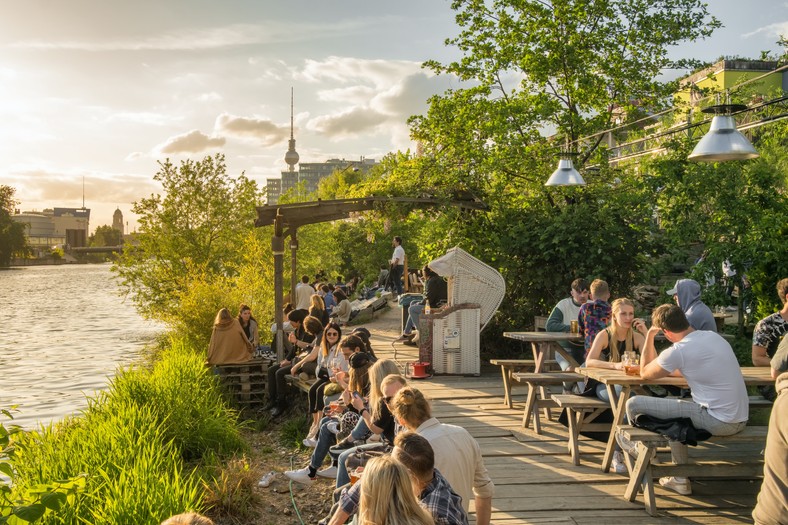
Place in Berlin (illustrative photo)
The most expensive life in Europe
According to Eurostat data on selected categories of products (food, non -alcoholic beverages, tobacco and alcohol) is allocated no more than 22 percent all expenses of European householdstherefore, to effectively assess the availability of life in every country, Eurostat takes into account the indicator of total household expenses.
This indicator includes not only food, drinks and tobacco, but also services and other expenses. In this way, it is a more comprehensive indicator of the availability of life and is more reliable. Based on the data on household expenses, the most expensive life in Europe is in Denmark – by 43.1 percent more expensive than the EU average.
Ireland is in second place: life here is on average by 38.1 percent. more expensive, and the three closes Luxembourg, where life is on average by 32.8 percent. more expensive than the average in the European Union. Finland, Belgium, the Netherlands, Sweden, Austria, France and Germany were also in the top ten of the most expensive countries.
According to Eurostat data, the cheapest country of the European Union turned out to be Bulgaria. Considering all goods and services, life here is on average by 40.3 percent. cheaper than in the rest of Europe. Life in Romania is slightly more expensive – by 36.3 percent. more expensive than the EU average. Three closes one of the fastest growing EU economies – Poland: Life here is 27.8 percent. cheaper than the EU average.
It is worth noting that the cheapest countries are those that still retained their national currencies: Bulgarian Lew, Romanian funnel and Polish gold. In the top ten countries in terms of availability of life were also Hungary, Croatia, Lithuania, Latvia, Slovakia, Greece and Portugal.