Great capitulation of the Republican Party. This is how the congressmen buckled under the pressure of Donald Trump. “They needed to remind you who was the playmaker here”
On Wednesday at 18:50 Conservative Republican Congressman Keith Self from Texas wrote on Twitter that the Senate version of the Republican “megaust” is “moral and financial bankrupt”. Despite this, on Thursday at 3:20 in the morning he voted for adopting the same act.
Congresmen Chip Roy, a Republican from Texas, also criticized the amendments of the Senate as a “parody”, which undermines “good elements” of the bill in the version presented by the House of Representatives. He also joined Keith Self and He finally supported the act on Thursday morning.
However, they both persevered longer than their more moderate colleague, Congressman David Valadao from California, who wrote on X last week that no changes in the Senate regarding the provisions on Medicaid.
Such changes in the position may be surprising, but they are not unusual. Over the past six months, conservatives have often expressed concerns about two different budget resolutions and the original version of the “megaust”, which left the Chamber of Representatives, and then succumbed to Trump's pressure.
In May, conservatives initially threatened that they would not support the “great, beautiful law” because it provided for tax relief for the inhabitants of the states supporting the Democratic Party. Republican Andy Harris from Maryland, chairman of House Freedom Caucus, groups of the most conservative members of the American Congress, 2May 1 even claimed that Calming the concerns of the extreme right may take weeks. The act was adopted early in the morning the next day.
It was no different this week, when they expressed the terror and consternation of the “great, beautiful act” adopted by the Senate. The outrage broke out that it increases the budget deficit. There have been many complaints that it does not contain enough solutions to undo activities to promote pure energy.
Continued article under video material
Conservatives demanded changes in the act that would take into account these fears. The problem was that this would require sending the law to the Senate-either as part of the legislative “ping-pong”, or through a traditional extraordinary means, which is the conference committee.
However, this would be time consuming and would prevent the Republicans from adopting the act before Trump set by the deadline on July 4. Republicans had until the end of the year to implement the most urgent part of the Act, i.e. the extension of tax reductions from 2017. However, it was decided to treat the deadline set by Trump as final.
On Wednesday morning, the Republican Congressman Tim Burchett from Tennessee, who strongly protested against imposing “arbitrary terms”, told Politico that such activities lead to “panic” and would not bring the expected results. Needless to say Burchett also finally voted for adopting the law.
The truth is that there was no other option than sticking to an arbitrary date, because that's what Trump wanted. Steve Scalise, the second person in the Hierarchy of Republicans in the House of Representatives, explained without a garden that the extension of the deadline for the introduction of changes at the last moment would not be possible, because “Trump does not want it”. “It was clear from the meeting with the president in the White House and subsequent conversations that there would be no amendments to the law anymore,” he said.
The Republican Congressman Troy Nehls from Texas compared this situation to the restless football team, which from time to time forgets who gives orders and needs a reminder. – You can be a good winger, you can be a great runner, but the playmaker is still Donald J. Trump.
“Reflecting the Act to the Senate does not make sense”
When it was all over, the opponents of the Act justified their concessions in a predictable way, claiming that they had won valuable concessions, Even if none of them is implemented.
Burchett, one of the opponents, who finally capitulated, said that he had a “very good conversation with President Trump and vice president Vance.” This conversation gave him confidence that the administration would “deal with fraud and get rid of many nonsense in our energy policy.”
Harris, another opponent, told journalists: – During the night we reached a significant agreement with the administration on executive actions that will make America great again.
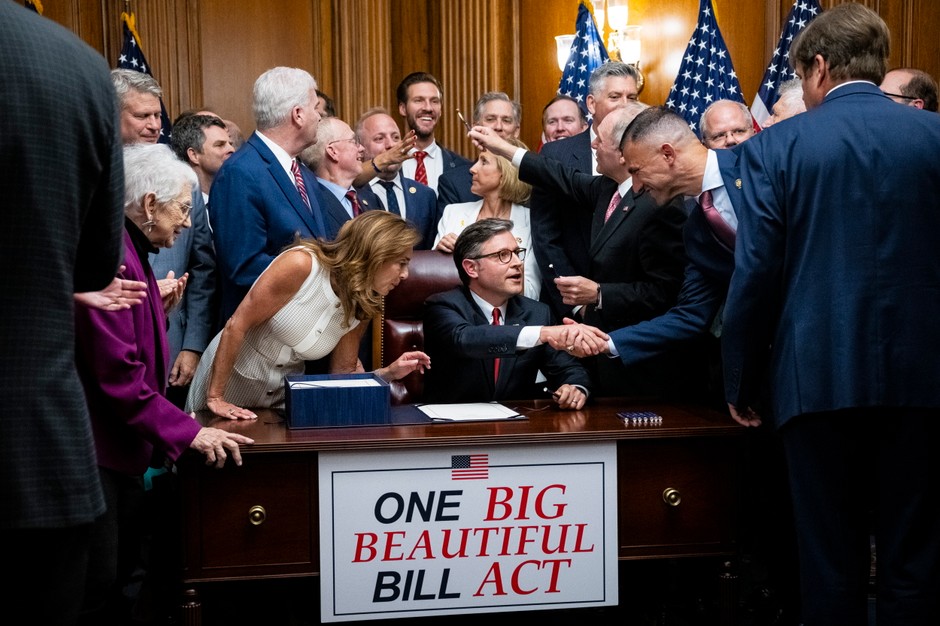
Chairman of the Chamber of Representatives Mike Johnson after the receipt of the Republican Budget Act in Kapitol in Washington, USA, July 3, 2025.PAP/EPA/GRAME SLOAN/PAP
Congresmen Lloyd Smucker, a Republican from Pennsylvania, who has long expressed concerns about the influence of the act on the deficit – according to the respect of the budget office of the Congress over the next decade, it will increase public debt by at least $ 3.3 trillion. (11 trillion PLN 916 billion) – assessed that the debate accompanying the act was a combination of political negotiations and expressing dissatisfaction. “It was in a sense to hear people's opinions,” said a die -hard supporter of a restrictive fiscal policy.
But there were also political issues, because “everyone came to the conclusion that referring the law to the Senate simply doesn't make sense“.
A more pessimistic and skeptical position was taken by the Republican Congressman William Timmons from South Carolina, who described the storm around the law as a desire to unload emotions by people who always “raise the alarm”. – There are several people who really want to talk a lot about matters important to them and use these pressure points as an opportunity to force others to hear them – he said.
In the last hours before the House of Representatives adopted a broadly large law, despite the entire apocalyptic rhetoric regarding its defects, everything was forgotten and forgiven.
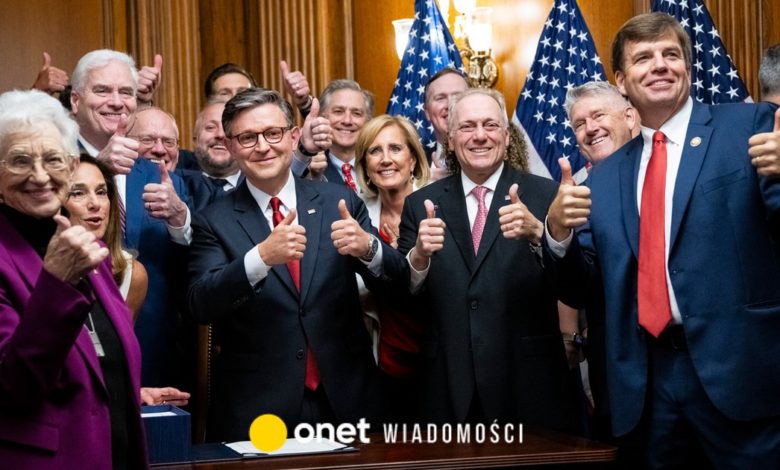
Around 3:15 in the morning a group of conservative opponents of the Act, including Self and Roy, gathered in the middle nave of the House of Representatives. This dozen supporters of the hard line, which he did not want to support the Senate law in its current wording, gathered to take a group photo, smiling broadly at it. It happened just before casting the votes that helped make this text by law.
The photographer was the chairman of the Chamber of Representatives Mike Johnson, who used the camera in a cell phone. “He just pulled out the camera and we took a picture,” said Bob Onder, a Republican from Missouri, one of the critics of the act. “It was amazing,” he added.
Thus, Republican opponents of the Act ended their fight, gathering together to pose for a photo. It wasn't difficult. Finally they posed all week.
I’m Ashley Davis as an editor, I’m committed to upholding the highest standards of integrity and accuracy in every piece we publish. My work is driven by curiosity, a passion for truth, and a belief that journalism plays a crucial role in shaping public discourse. I strive to tell stories that not only inform but also inspire action and conversation.