Economist, about the austerity measures of the Bolojan Government: “I am disappointed, all those who have paid so far”

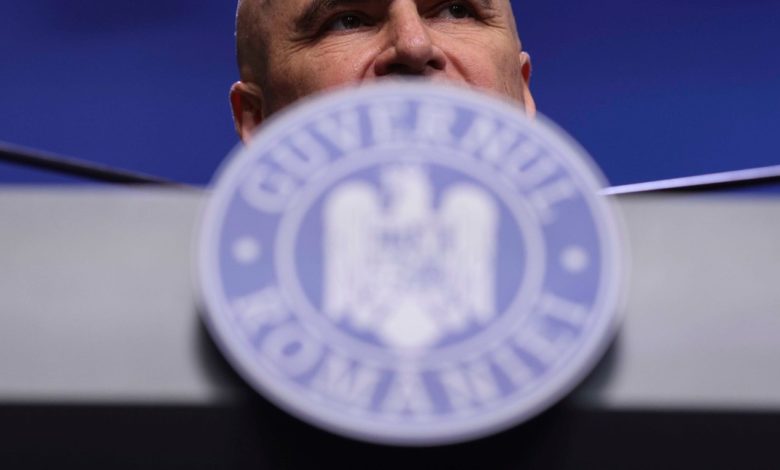
Economist Radu Nechita, professor at Babeș-Bolyai University, argues that if politicians had understood the message of the electorate otherwise they would have shown the austerity package. Instead, it went on the system: “Come to the cashier and pay you, all those who have paid so far.”
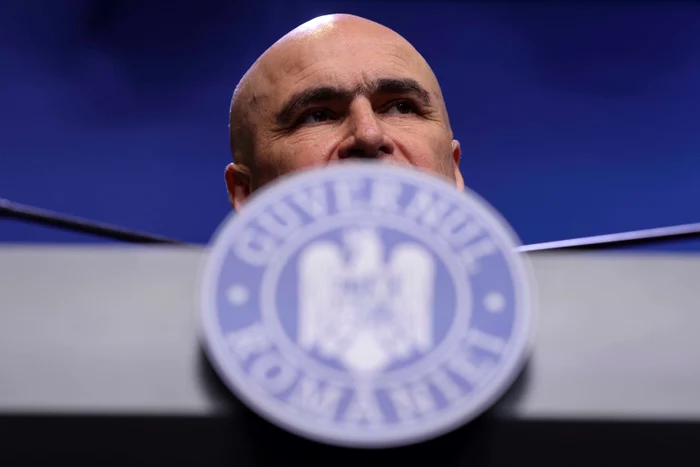
The prime minister claimed that consistent public spending cuts follow. Photo: Inquam Photos
Prime Minister Ilie Bolojan announced on Wednesday the main austerity measures that will be applied from August 1, specifying that a common effort is needed so that Romania does not enter into payment.
“We propose a fiscal package, which will allow us to reduce the expenses. We have tax revenues, income among the lowest of the European countries, because in almost all taxes we are in the lower half of the standings and we also have a fraud of public funds. The VAT tax rate is the lowest standard in Europe.”, Explained the prime minister.
He announced that this summer will come up with three packages in such a way as to respond emergencies to play the investors confidence in Romania.
The first package will come into effect from August 1 and provide for emergency measures:
– VAT will be reset to two odds. Today we have 3 odds: 5%, 9%and 19%. VAT is reached at 11% and 21%. At the low quota there are medicines, food, water and sewerage, books, water for irrigation, firewood and thermal energy. And the Horeca industry remains at this level. If the receipts will not grow, then this industry certainly has high chances of entering the high share at the end of the year.
– The excise duties increase by 10%, for alcoholic beverages, fuels and tobacco.
– In health, the number of taxpayers increases from 6 million to 8 million. CASS is inserted at large pensions of over 3,000 lei. Exceptions are eliminated. For a pension of 4,000 lei, 10% will be paid on the difference between 4,000 lei and 3,000 lei, ie 10% of 1,000 lei, ie 100 lei. These measures come into force from August 1, 2025.
– additional taxation of capital: on January 1, 2026 the tax on dividends is increased from 10% to 16%.
– The additional profits will be taxed, have some of the best yields of capital
– all the gambling earnings will be gained so that we collect 30% more
– pensions and wages remain capped
– In education, it increases the didactic norm by 2 hours in pre -university and university education. and the scholarships are reformed. The merit scholarships remain, in a limited number. Social scholarships will be allocated on criteria for supporting children from disadvantaged families.
Only in the second package, which will be adopted for autumn, measures to reduce/eliminate special pensions will be implemented; reform of self -financed institutions by reducing expenses and reorganizations; Reduction of subsidies and transparency and performance, reform of expenses in local public administration, reform of cascade applied increases; updating royalties and better use state assets.
The prime minister said that money from the parties will be cut.
“My feeling is one of disappointment”
“Adevărul” analyzed the measures taken by the Boloja government with the economist Radu Nechita, professor at Babeș-Bolyai University.
Truth: How do you think the decisions taken by the Government to cover the budget deficit?
My feeling is one of disappointment. The problem of the political class now is one of credibility and indirect is the main problem of Romania. It is a matter of credibility because a lot of the situation I have reached today is the consequence of some decisions – I can say irresponsible, demagogic – taken by parties that wanted to rotate in power by buying people's votes, so using the state budget, including the budget of the pension system, as an election campaign budget. In short, that was it. That made the famous stability coalition.
When it is said that it is not the time to look with your finger, I think it is always the time to show the irresponsible behaviors. So this is one of my disappointments. At the end of a government and at the beginning of a new one, the first step is a serious audit, a serious x -ray. Don't start to move on without knowing what the starting line is. So I think it would have been a good time for that.
In the political structure of the Parliament decided by the Romanian electorate remained in charge of the parties that were part of the respective errors. In one of them the management has changed, and in the other management it has not changed much. On the other hand, the opposition is not from the camp of those who come to say that several public spending cuts must be made. On the contrary, about any cuts spoke in public space, the opposition was very vocal in saying that it should not be cut from there. The only area from which the opposition wants to cut is national defense, which is strange enough for so-called patriots who claim to know history.
So we are in a situation where the government plays somewhat with electorate books, and these books are not good.
“They did not understand the message of the people”
Could it be done more politically?
I do not know if from a political point of view it could be more, but from an economic point of view, with some politicians who would have understood the message of the electorate, namely that people were tired of their ships, theft and the fact that they close their eyes to the corruption they coordinate and exercise their sovereignty only on the Romanian entrepreneur. The abuse, the challenge, the privileges that they distribute in a lack of common sense, from justice to the force institutions, went through the politicians who legally cover, legally, all these extractive rent organizations in the Romanian society. Did not understand people's message. They did not understand and continue in the same way.
With a probably unrealistic political class, to understand the message of the electorate, the measures would have been structured. According to the estimates made by the Government, this year and next year, the ratio between the tax increases and the discounts for the deficit is about 1 to 1. This is not done. It's not okay. In order to regain credibility, to show that they understood the message, they, the politicians, if they were responsible and patriotic, would have cut several public expenses and the report would have been somewhere at 2, 3, 4 – public expenses at 1 – tax increases.
Was the idea “to pay all”?
No, it went on another idea. It went on the idea that there is an asymmetry in the functioning of the policy. There is an asymmetry between the costs of policies that are scattered throughout the population, so the cost per capita is low, takes a little from many and is given to few. What does that mean? It means the benefits are concentrated. We will not revolt that bread becomes a more expensive lion. In contrast, for those who see their salary reduced from 20-30 thousand lei to half, the cost is very, very high. And they are on the buttons. And each has the opportunity to block through various blackmail, by organizing within the party making decisions. Do not think that the position of the prime minister is very solid in the party. Pups are almost certainly prepared.
“The possible cuts would disturb many people in the party, from the force institutions”
Do you think he gave up at various pressures?
I do not know, I can only speculate. I try to judge on the public information that exists. It is known that the possible cuts would disturb many people in the party, from the institutions said by force, from the armed arm of the state, from the state's spending arm. So there are very, many concentrated interests that want this situation to continue. Not necessarily in general, but for them. For each one. If they were to say, “dom'le, public expenses must be reduced to so much”, they would war between them. It did not come on the idea, “dom'ne, public spending must be reduced by 10% or 5%”, but it went on the idea that “yes, taxes will increase”. They, when you accept this idea that we also increase taxes, the war is no longer between these interest groups, but they coalize, to put the others to pay.
So it is a coalition of beneficiaries of very high concentrated rent. The greater the privilege, the greater their struggle.
“Domne, come to the cashier and pay you, all those who have paid so far”
How do you think the problem had to be addressed?
I said that, first of all, the expenses should be reduced without telling tax increases. If the problem was raised like this, “Dom'le, let's see, we cut … and after that we see if you need taxes”, these groups, these rival factions from the great extractive hunt that seek and obtain rent from the ordinary people, would have been fighting between them.
The first error was the idea that, “Sir, we have no place, we must increase the taxes.” I said it had to be a report of 3 to 1 to be socially acceptable. That if, they said, “I diminished by 3 billion the public expenses for the deputies, for the parties, for the agents, for various and unforeseen, all kinds of scandalous privileges”, probably accepting some tax increases would have been a little higher. Or, please, the opposition would not have been so strong.
People would have been pushed, it would have been normal not to suit you, but people would have understood that the burden is more fairly divided. That is, those who benefited from the privileges that brought us here, in the hall where we are now, at the mercy of international creditors, to bear some consequences. If unsustainable increases had been canceled, people could have understood this easier than “Domne, come to the cashier, pay you all, all those who have paid so far”.