
Who after Macron? Among the candidates, the most disliked politician in France

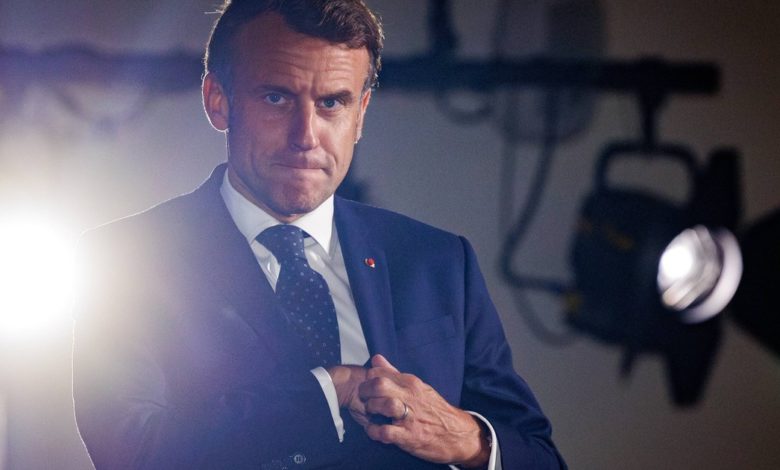
There are several reasons for this: widespread dissatisfaction with politics, the collapse of the old division into the left and the right, the weakness of the incumbent president, who cannot run again or easily influence the choice of his successor, as well as global economic and political uncertainty caused by the policy of US president's administration Donald Trump.
In addition, the choice of candidates is particularly uncertain this time, because the center of President Emmanuel Macron is very fragmented.
Until last month, the competition for succession after Macron was limited to its two former premieres: the leader of the center -right Horizons party (horizons) Edouard Philippe 1st Renaissance party leader (revival) Gabriela Attala. Currently, however, they both have conflicted with the president and are trying to attract his socially progressive, pro -European and probe facilities, while distancing themselves from an unpopular president of ambiguous achievements.
Pollippe indicate that Philippe is a definite leader in the fight for the center, with support from 21 to 24 percent. In the first round of elections, while Attal has about 14-15 percent. support. At the same time, the candidacy of the hard -headed interior minister Bruno Retailleau threatens the transformation of “Civil War in the Center” into a tripartite fight.
As a boss of the significantly weakened center -right Republican party, Retailleau seems to be a certain candidate of his party, which means that three of the four leaders of the ruling party become rivals in the fight for succession after Macron – this is an explosive situation.
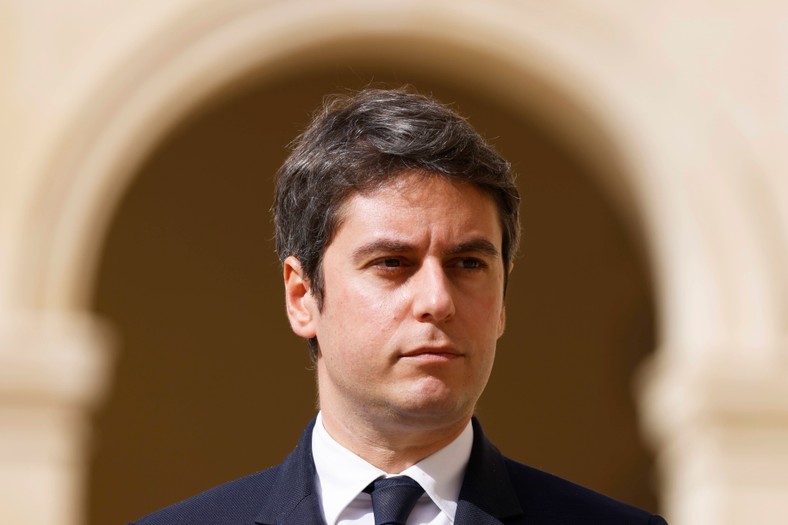
Former French Prime Minister Gabriel Attal during state ceremonies in honor of the deceased French politician and Admiral Philippe de Gaulle, son of Charles de Gaulle, at the Hotel Inwalidów in Paris, France, March 20, 2024.
Weak macron
The President of France has lost almost all his position in the country since the unsuccessful early elections last year and has little influence on this key fight as part of a greater fight [wyborów prezydenckich]. What's more, both Philippe and Retailleau are unlikely to conduct campaigns to “save Macronism”, but rather to bury it and restore something closer to a socially conservative, economically liberal and less enthusiastically pro -European center -right center of former presidents of Jacques Chirac or Nicolas Sarkozy.
On the left, the stage is even more crowded. Long -time candidate of the extreme left Jean-Luc Melenchondespite the fact that he is the most disliked man in French politics, with over 70 percent. He gets 13-15 percent in the first surveys before the first round of elections. support. As always, his unofficial but likely presence in the election will make the selection of a wide left candidate.
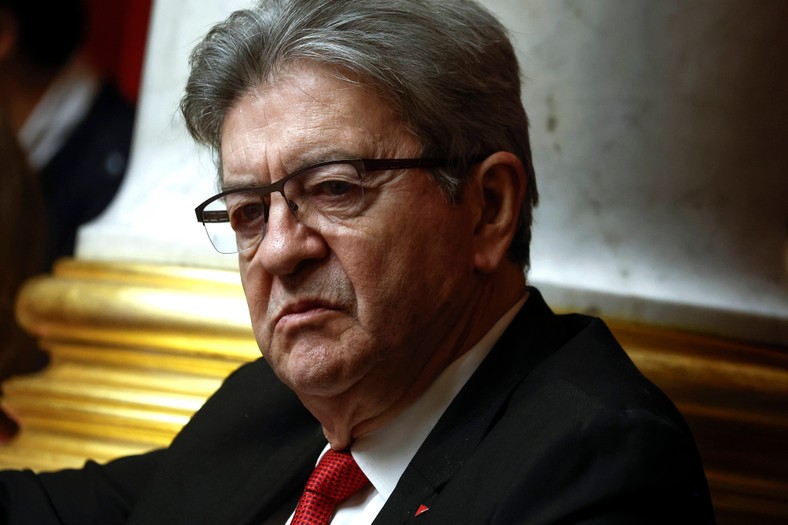
Jean-Luc Melenchon in the National Assembly, Paris, France, December 4, 2024.
However, the strongest candidate of the moderate, pro -European left is Raphael Glucksmann – MP to the European Parliament, which was surprisingly well in the European elections in 2024 and is currently enjoying support at 10-11 percent. Both Glucksmann and Melenchon excluded participation in any primaries of the entire left.
Meanwhile, once a powerful centro -levic socialist party remains divided between radical and reformation, pro -European wings. Left -wing first party secretary Olivier Faurewhich for the fourth time with a slight advantage maintained the mandate, hopes to become her presidential candidate in 2027. However, at least two rising characters from the moderate wing of the party – Carole Delgathe president of the Oxytania region in the southwest of the country, and Karim BumraneMer Saint-ouen in the suburbs of Paris-they plan to oppose him.
In general, it seems that by the end of next year there will probably be even eight left candidates in the presidential race.
Short -wing
For the extreme right, in turn, the leader's position does not necessarily mean victory.
The results of the survey remain good for the Rassemblement National Party (National Union), despite the March court judgment prohibiting the opposition leader Marine Le Pen [prezydenta] for five years. All recent studies show that Le Pen and her deputy, Jordan Bardellaenjoy over 30 % support in the first round. If this result is confirmed in April 2027, one of them will have the best chance of winning in the second round of elections in the next month – but this is still not guaranteed.
Both Le Pen and Bardella have very high indicators of negative assessment – in the range from 47 to 49 percent. – Which will significantly make it difficult for them to get 50 percent. votes needed for victory.
Since the court's decision, relations between them have deteriorated. Le Pen, who still considers himself a candidate of the National Assembly until the appearance of the appeal next year, is angry with suggestions – both from the Bardelli camp and the media – that he is currently the real favorite in the presidential election, reminding him many times his youth and lack of experience. So far, however, these tensions have not affected their common popularity in polls.
Of course, so far before the election in 2027, polls on the second round are rare, but the last few IFOP and Odox studies suggest that Philippe would beat both Le Pen and Bardella while they could defeat Retailleau or Attal. The result will therefore depend on who will take second place in the first round – which can be decided by only a few thousand votes if the candidates to the headquarters and leftist remain at the forefront to the very end.
Simply put, Macron has a problem with succession – and there is not much time to solve it.


