Where is Vlad Țepeș buried? Italian researchers claim to have found the tomb of the voivode in Naples

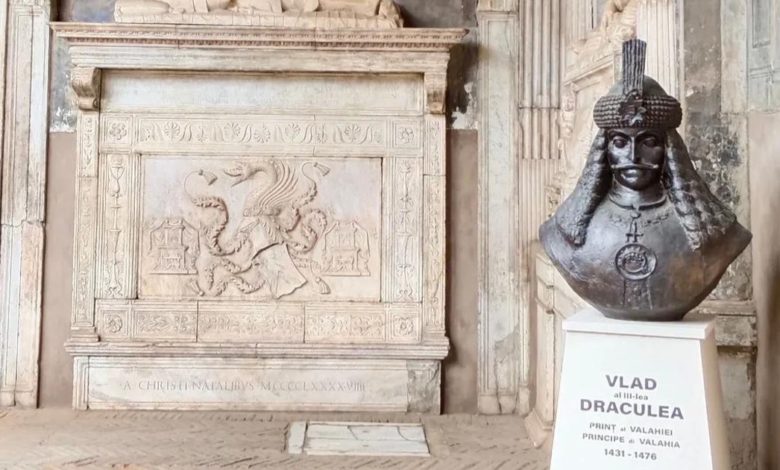
The hypothesis that Vlad Țepeș would have been buried at the Snagov Monastery is questioned by a team of Italian researchers, who claim that the tomb of the Wallachian ruler is in Naples.
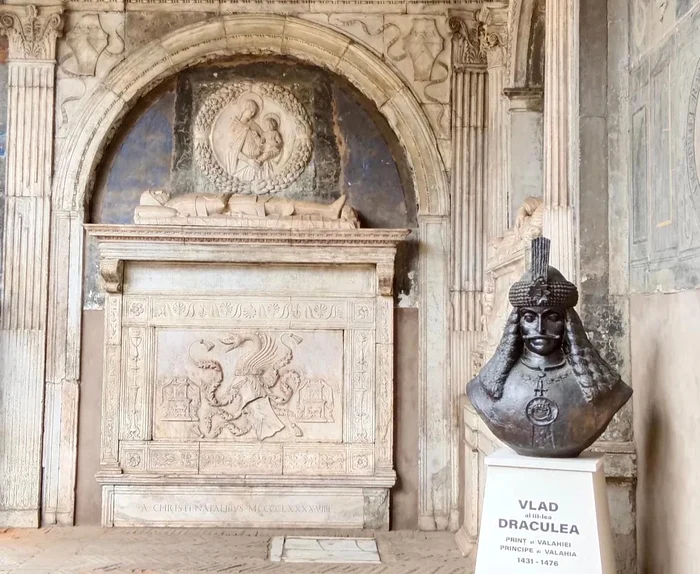
Italian researchers claim that Vlad Țepeș's tomb is at Naples: Instagram
After ten years of research, several scientists in Italy say that they have come to the conclusion that Vlad Țepeș's tomb is in Naples. The studies focused on an old inscription, and its interpretation would have led to this hypothesis. Although it is not clear what message the inscription contains, the researchers say that, unofficially, they can support this conclusion.
Italian hypothesis: Țepeș, saved by his daughter
According to this theory, Vlad Țepeș would not have died in battle, but would have been captured by the Turks. His daughter, Maria, would have fled from the way of the Ottoman invasion and would have taken refuge in Naples, where she was adopted by a noble family. Later, she would have redeemed her father for a large amount of money.
The researchers believe that Vlad Țepeș lived for a period in Naples and, at his death, would have been buried in a funeral chapel initially intended for Maria's father-in-law. The tomb can be visited today, in the Napoli Monastery, and access costs only 5 euros, according to Digi24.
What Romanian historians say
The official version accepted in Romania is different. According to historical sources, Vlad Țepeș was killed at the end of December 1476, and his body was beheaded. The head would have been sent to the Ottoman Sultan, who would have stuck it in a sting, as a symbol of victory.
Over time, it has been assumed that Vlad Țepeș was buried at the Snagov Monastery, located on an island near Bucharest. However, recent research has shown that the “tomb” in Snagov contains only a few horse bones, dated from the Neolithic period, and not the remains of the voivode.
The historian Constantin Rezachevici supports another theory: Vlad Țepeș was buried at the Comana Monastery, a place of worship that he himself founded.
Until an official confirmation, Vlad Țepeș's remains remain the subject of debate between historians, researchers and passionate about medieval history. The Italian hypothesis adds a unique note to the legend of the ruler who inspired Dracula's myth.