The giant from China is considering a great investment in Poland, but adds: We do not ignore geopolitics [WYWIAD]

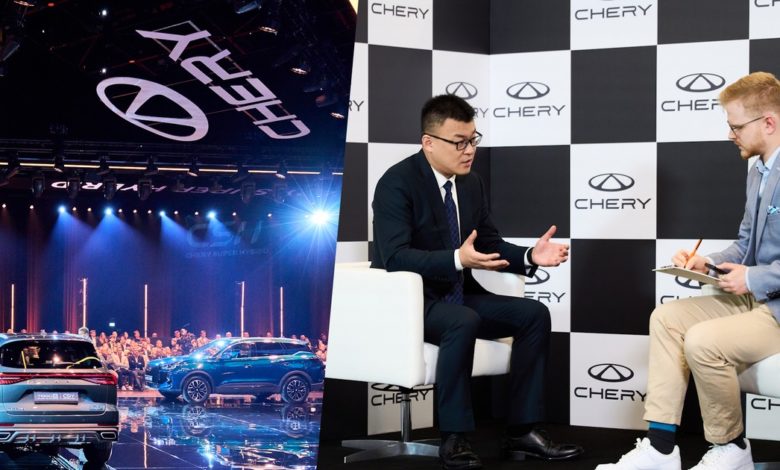
Grzegorz Kowalczyk, Business Insider Polska journalist: Why Chery – one of the most important companies of the Chinese automotive industry and the main Chinese car exporter – decided to organize the premiere of its vehicles in Poland?
Charlie Zhang, Vice President of Chery Automobile, Vice President of Cherry International Executive: We are not unconventional. It is true that some brands sometimes choose Germany or France for the premiere of new cars, and we preferred Poland. Why? The answer is simple – our results here are really very, very good. Customers and dealers are very open to us and it can be seen in the data.
Today, my colleagues have told me that we already have over 500 orders, and they think that there may be up to 800-1000 before the official premiere. This is the best proof of how open Polish clients are. In this Poland is a big, positive surprise for me. So the choice was simple.
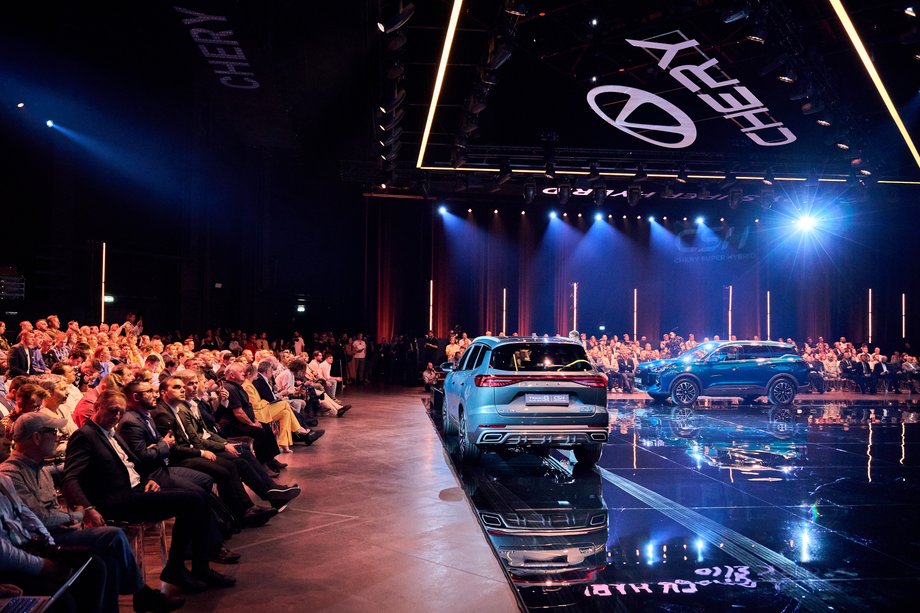
Chery has introduced four Tiggo models to the Polish market. This is the first European market for the brand. As a concern, it is already in Europe with two others: omoda and jaecoo
|
Cheers
Polish customer for the Chinese giant – who is he?
What is the difference between a Polish client and that of Western Europe?
This is my personal observation, but I think there is a difference. First of all, people like larger cars here than in France or Italy. They also want more safety technology – and this is something I really appreciate.
However, you decided to produce in Spain. Do you consider investments in production capacity in Poland?
Everything is on the table. Poland is known for its very solid supply chain in the automotive industry and this makes it really attractive. I also know that some other manufacturers already have their own plants here. We definitely want to develop activities in Europe. As long as we have good results and a growing market share, we must absolutely consider the possibility of local production here in Poland.
What is the most important factor for Chera when planning production capacity in Europe?
Of course, there are several key, dynamic factors. At present, the geopolitical situation is very important – we cannot ignore it. In Spain, the government is very friendly, open and proactive in attracting foreign investment. I have to say that it really helps in support for production plants.
In Europe, government support occurs at many levels – from the EU, through central governments to local governments. All this must be taken into account.
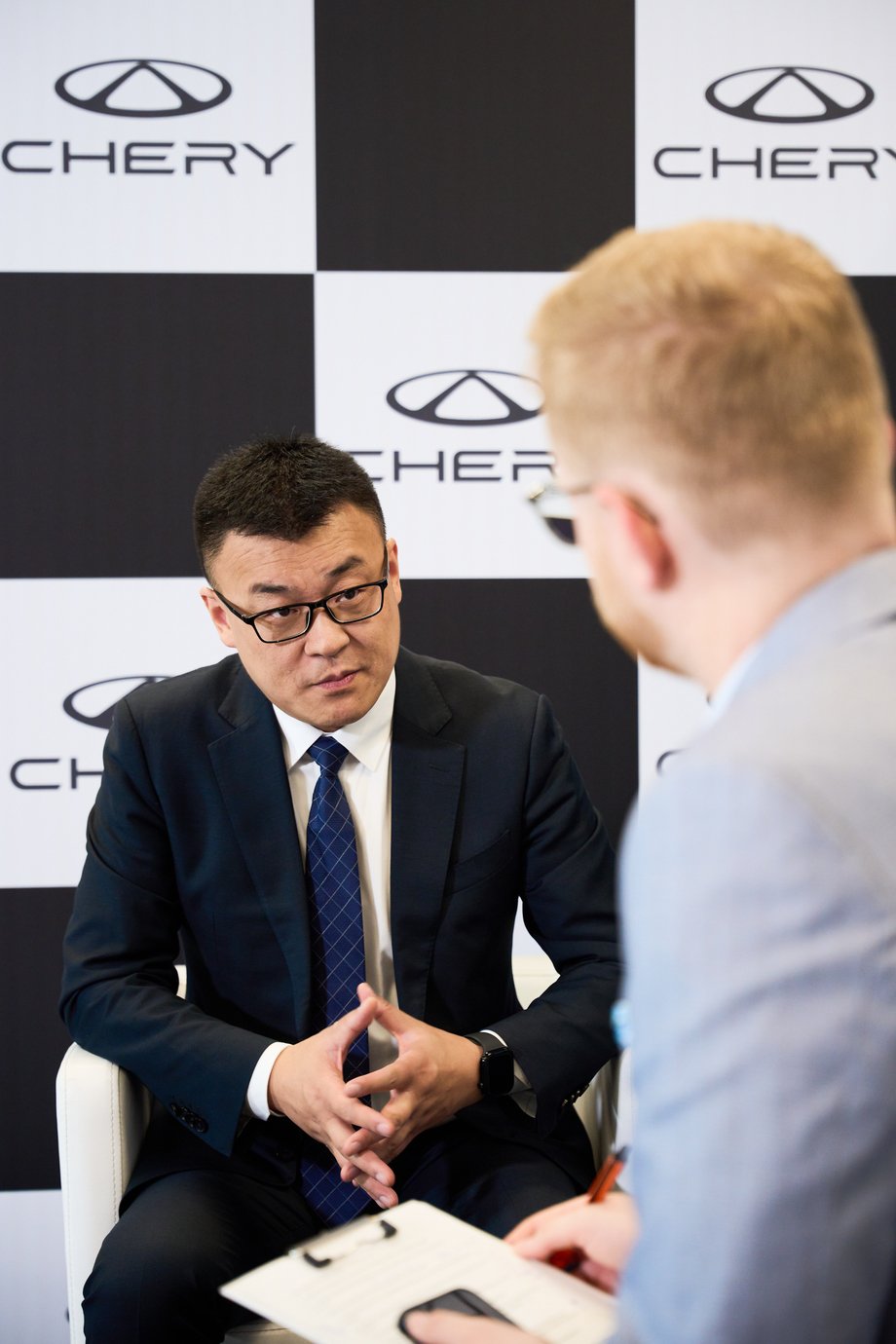
Charlie Zhang in an interview with Business Insider
|
Cheers
For the automotive industry, supply chains, value chains, workforce, productivity are important – all this is important. This is not just a simple calculation based on labor costs. The cost of work is one of the key factors, but of course there are various aspects and different weights. We must complete all this before making a final decision.
Polish investments in electromobility. The giant from China is assessed
Have you heard about the project Electromobility Poland and Geely partnership to create new car brands?
Yes, I heard.
How do you assess it?
I think it can be a very good product. In our case, we did something similar. We have the Ebro brand in Spain – it is a local Spanish brand. We established cooperation with them and rebuild it. This solution is beneficial for both sides. The government is satisfied, employees have a job, and everyone is happy because we create jobs and revive local, recognizable brands. I think it could be a very similar situation to Electromobility Poland. As long as there is a real business justification, I believe that it will be beneficial for the country.
The rest of the article under the video:
Could Chery take part in a similar project?
I can't refer to this, but I think that as long as there is a real business justification, it is the most.
During this premiere, you enter Europe with internal combustion and hybrid versions. Why don't you try to conquer Europe with electric cars?
It changes. I will share numbers after a year and a half of our activity in Europe. As for new deliveries and orders, new electric cars constitute almost 65-70 percent. This is happening to our great surprise – we thought that on the European market electric drives will be about 50 percent. sales. Meanwhile, we see more and more plug-in hybrids and fully electric cars than combustion.
This is really encouraging news. I think that probably by the end of this year the share of internal combustion vehicles in our sales in Europe will be small. We want to focus more on electric cars and we work on it.
Then why do you introduce hybrids and internal combustion cars now?
We perceive electrification as a future, and our long -term strategy in Europe is clearly focused on new energy sources. But we also understand that different markets are at different stages of this transformation.
That is why we now offer both hybrids and combustion cars – to give customers real choices in this important passage. In many parts of Europe, infrastructure for full electric cars is still developing. Hybrids and effective gasoline models serve as a bridge, helping people smoothly switch to electrification.
This is part of our strategy “in Europe, for Europe” – we adapt to what local users need today, preparing for tomorrow.
Is EV interest greater in China? How would you compare the EV market situation in China and Europe?
There are large differences. When customers buy an electric car, they take into account the price attractiveness, charging infrastructure and availability, as well as the third factor – range, or how far the car can drive. These three factors are crucial.
In Europe, electric vehicles are definitely more expensive, and charging infrastructure is still insufficient. I think that thanks to new technologies this market will develop quickly. For example, our fully electric cars can reach a range of up to 800 km or even 1000 km.
Why are European cars so expensive compared to Chinese? The European Commission mentioned significant subsidies of the Chinese government in the introduction of duties on Chinese electrics.
It is a matter of the entire value chain, supply chains, labor costs – a combination of various key factors. I think there may be many reasons. I can't comment on our competitors' activities.
Chery plans for Europe
What will be the next step in the development of Chery in Europe?
This year we want to be present all over Europe. We want to become one of the key automotive players and introduce more brands.
Will you find yourself in the top ten sellers in Europe? Or maybe in the top five?
We aim high and we hope to soon enter at least the top ten. But above all, we want to grow comprehensively. I always remind the team that we need to pay more attention to after -sales service, the availability of spare parts. That is why we already have large warehouses of parts in various European countries.
Other companies sell a lot, but do not necessarily ensure the availability of parts. In our case, I do not think that we have problems with supply and service.
How many cars are you planning to sell?
Europe is a huge market – about 15 million cars a year. If we want to be in the top ten, we would have to sell at least a million cars, and this is not easy. We are at an early stage of our presence in Europe. Every time I come here, I learn something new. We have to listen to the voice of customers and remain humble. If we compare ourselves to other large European, Korean or Japanese producers – we are still very small. A long way ahead of us.
What is the biggest challenge to succeed in Europe?
Humility is necessary. You can't success for granted or be arrogant. A product that sells well in China and other markets must not necessarily be well received in Europe, because customers here – also in Poland – have different tastes and preferences.
We have to adapt to local markets and even introduce some modifications. For example, we usually offer leather seats, but not necessarily in this case – customers also like material upholstery with appropriate heating. Adaptability is very important. Another big challenge are regulatory requirements, e.g. European emission standards, safety standards, GDPR, ESG – such issues. We are preparing for these challenges. I don't think there are critical obstacles, but we must be very cautious.
The automotive sector in the face of commercial wars. “We will find solutions rather”
You mentioned geopolitical tensions. We live in the times of commercial wars. How can this affect business like Chery?
We try to adapt because it is beyond our control. We can't help it. Our motto is, as I mentioned, “in Europe, for Europe” and we hope that we do it well. We have local research and development centers-European R&D centers. By the end of this year we will have two centers in Europe: one in Frankfurt, Germany and one in Barcelona, Spain. We also have a factory in Barcelona. We talk about using local parts and components.
We have many European suppliers of Tier 1 such as Bosch, Autoliv, Valeo, as well as many local distributors. We have a commercial company and seven other subsidiaries or domestic commercial companies in other markets here. We adapted to the requirements of the GDPR and ESG. We want to be part of the local community – this is very important. I think that as long as we provide good products and services, create jobs, follow local regulations and try to be a “good citizen” of a corporate, we can minimize geopolitical risk.
What can be the consequences of commercial tensions between the USA, Europe and China for the entire automotive industry? Is this a kind of crisis?
It depends. I think that there are now very positive signals between China and the USA after two rounds of bilateral talks. One took place in Geneva, the other in London. I think they brought very positive effects, beneficial for everyone. I also think that the relations between China and the EU are one of the most important in the world. And I don't think China or the EU will reach for trade wars. Rather, we will find solutions.
Chery is a state -owned company. This is quite unusual on the European market. Where did this idea come from and how does it affect decision making?
Yes, Chery is a state -owned company, which may seem unusual in Europe. But in China, this structure supports long -term investments, innovations and global competitiveness. Although we are a state -owned company, our business is market. We make decisions based on the needs of consumers and international standards. What really distinguishes us is our global strategy: “We operate locally, for local markets.” This means that we adapt to each of them – from product design to service – based on local needs. We don't only sell cars in Europe; We build R&D centers, parts and service networks adapted to European customers. Even with a different model of ownership, our goal remains the same: to provide quality, innovation and trust in every market on which we operate.
Grzegorz Kowalczyk, Business Insider Polska journalist talked