Transnistria separatist region does not have enough gases: receives an amount of almost three times smaller

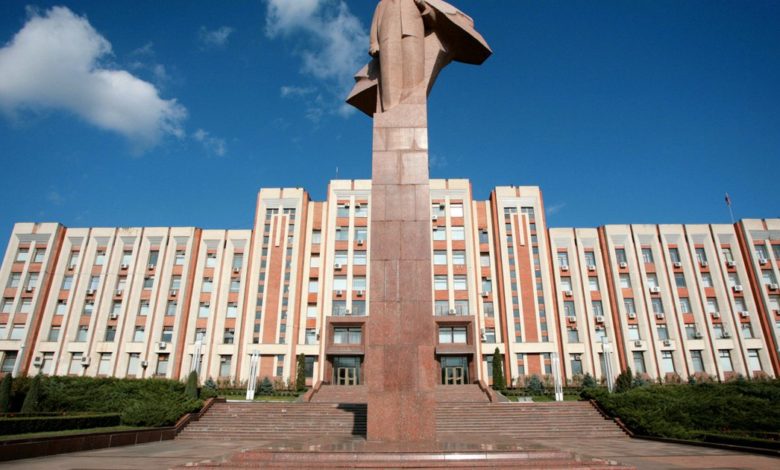
Transnistria receives daily up to 900 cubic meters of natural gas, insufficient quantity for the separatist region, left without energy resources from the beginning of this year by Moscow, Alexandru Slusari, a member of the Board of Directors of Energocom, said for “Adevărul”.
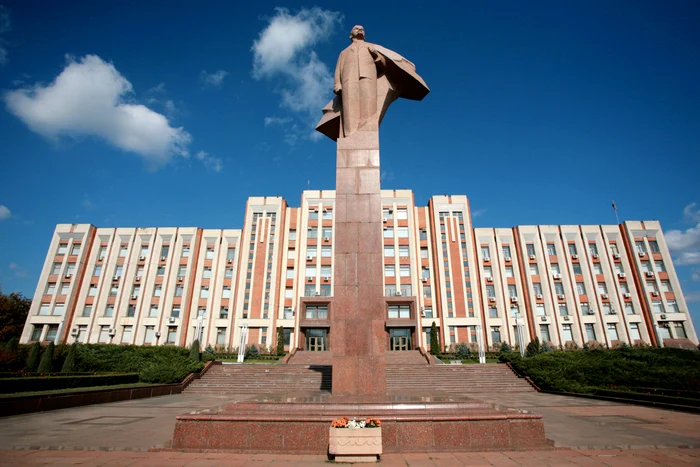
Transnistria separatist region receives an insufficient amount of gases. Photo: Archive
According to Alexandru Slusari, the current quantity is much smaller than the one received in the last week, being 2.6 million cubic meters daily.
“It is a minimal amount. They did not close the methane supply stations, but due to the low voltage they supply the cars in half ”mentioned Alexandru Slusari, a member of the Board of Directors of Energocom from Chisinau.
The member of the Board of Directors of Energocom, Alexandru Slusari, claims that the gas deliveries in the Transnistrian region are unstable from February, since they are delivered to the border of the Republic of Moldova by a Swiss company controlled by Hungarian investors, but paid by a company from Dubai.
“The deliveries are very unstable, and already three companies from Dubai, which pay these deliveries, have been changed”, added Alexandru Slusari.
Exhausted reserves
Previously, the separatist leader Vadim Krasnoselski said that in the Transnistrian region all reserves are exhausted, which is in an economic decline after the severe energy crisis caused by the Kremlin at the beginning of the year.
Chisinau, through the Bureau of Reintegration Politics, reacted, emphasizing that Tiraspol did not ask for help and that, in February this year, he refused a conditioned aid of 60 million euros from the EU. They also stressed that Chisinau “He is always willing to support his citizens in the region and to avoid the challenge of humanitarian crises to affect the right bank of the Dniester.”
The officials of the Moldovan Ministry of Energy stressed that this crisis was intentionally generated against the background of the September parliamentary elections in the Republic of Moldova, warning that the situation could escalate.
“In the Republic of Moldova the elections are approaching and, respectively, the scenario that was in winter is repeated, but the crisis as such does not exist. It is a scenario directed by Russia and this is their choice. The crisis could escalate is true, but let us remind that it is a region that we do not control and regarding this part of the Dniester, the Ministry of Energy together with the institutions that are subordinated to the state do everything possible to ensure the citizens of the Republic of Moldova with both electricity and natural gas ”,,” declared the Secretary of State of the Moldovan Ministry of Energy, Cristina Pereliatcu.
Region used for destabilization
And the Moldovan government, through Daniel Voda, spokesman, mentioned that the Transnistrian separatist region is used by Moscow in its plan to destabilize Chisinau.
“Prime Minister Dorin Recean has sent a public warning that this region is used in the context of destabilization actions to the Republic of Moldova. Being aware that the Transnistrian region is used by the Russian Federation as part of its plan to destabilize the Republic of Moldova, we say very clearly that we will not be provoked.”added Daniel Voda.
Since January 1, Gazprom, a company controlled by the Kremlin, refused to honor its contractual obligations and deliver the Gas to the Transnistrian separatist region through other routes, after Kiev refused to extend the transit contract of energy resources to Europe, invoking a alleged debt of Moldovagaz, not infirm by an international audit.