Humanoid robots, ready for the battlefield? The Ethical and Technological Dilemmas of Silicon Valley's New Arms Race

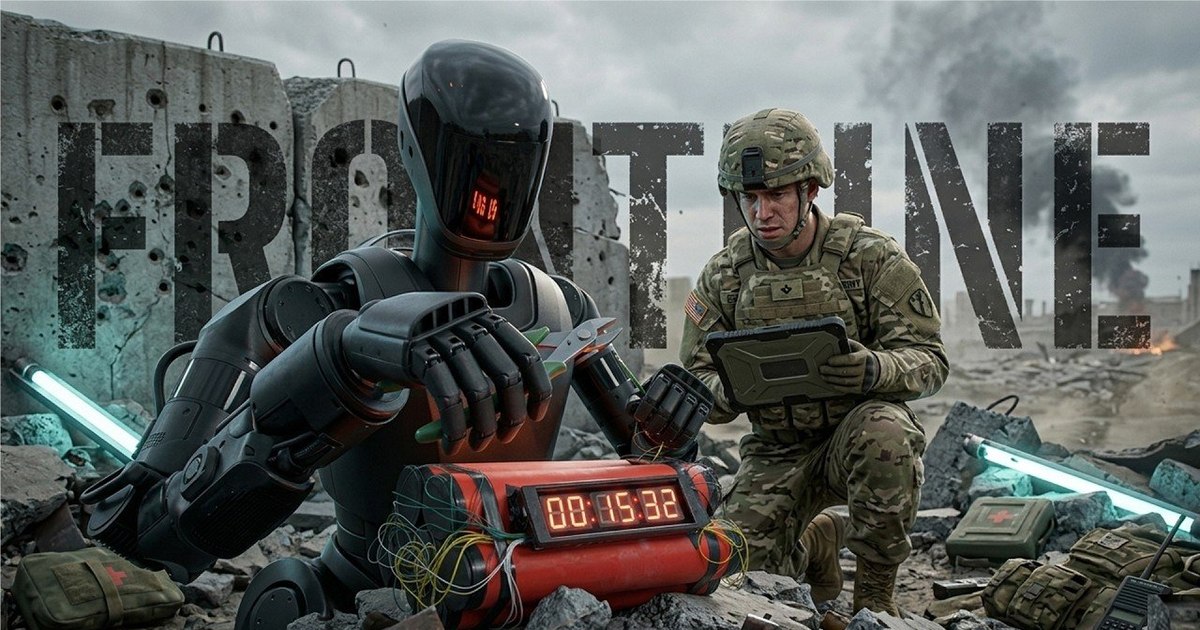
In an industrial space in the technological heart of San Francisco, the image of a military humanoid robot, taken as if from the apocalyptic scenarios of the future, is expected. Instead of a menacing fighting machine, the 'Phantom' prototype – a black, shiny, faceless figure – is captured by BBC journalists in a 'free play' session, moving colorful blocks for children.
humanoid robots could reach the front/FOTO:X
“We need data obtained from its simple interaction with its environment…that's today's menu”explains Sankaet Pathak, co-founder and CEO of the start-up Foundation Robotics.
Founded just two years ago, the company develops the Phantom project for both civilian and military applications, assuming a highly controversial pioneering role in the American market.
From logistics to “armament on the front line”
While IT and robotics giants are designing androids for factories, warehouses or home assistance, Foundation Robotics is the only firm in the United States that is openly betting on the defense sector.
The company's plans aim at two distinct levels:
1. Support roles: Transporting supplies, reconnoitering the terrain, inspecting high-risk areas and evacuating the wounded from the battlefield.
2. Combat Missions: Directly engaging and neutralizing threats, a concept Pathak euphemistically calls “front-line weaponry.”
The main argument of the supporters of this technology is saving human lives. Robots could clear trap buildings or tactical choke points where human infantry take the heaviest losses. Moreover, ground-based autonomy would theoretically be far more accurate than drone airstrikes, reducing collateral damage.
However, the current technical reality is still far from the geopolitical ambitions. The first model, the Phantom MK-1, is dependent on cables (it doesn't have its own battery), isn't waterproof or dustproof, and if it falls over, it can't stand up on its own. Robotic hands – one of the biggest engineering challenges today – lack dexterity and strength.
Geopolitical stakes and investors from the pinnacle of power
The race against time moves to the company's secret labs, where the MK-2 version is being assembled. It promises a six-hour battery life and wrists capable of handling and firing infantry weapons. The assumed objective is the production of 40,000 units per year by the end of 2027, at a cost per unit of less than $20,000.
A winning tandem: Ukrainians develop tactics to use ground robots with maximum efficiency
The international context accelerates these deadlines. Pathak warns that Beijing is moving fast in this area, and the West cannot afford to miss the start. In his vision, armies of the future will field hundreds of thousands of humanoid robots guided by Artificial Intelligence (AI), acting as a major deterrent to conflict.
The military is already interested. Foundation Robotics has secured $24 million worth of research contracts with the US military and, crucially, is already testing two units on the frontline in Ukraine. If in the USA the tests are limited to the handling of equipment, in Ukraine the evaluations also include the use of weapons in real war conditions.
The project has already attracted the attention of elites in Washington. Eric Trump, son of the US president, has joined the company as an investor and strategic advisor. For Pathak, the success of this initiative also represents a personal rehabilitation stake after his previous financial services firm, Synapse, went bankrupt in 2024.
Expert skepticism and ethical caveats
Beyond Silicon Valley's optimism, the expert community remains skeptical about the effectiveness of the human form on the battlefield. Dean Fankhauser, a consultant at Robozaps, points out that quadrupedal platforms (dog robots) or tracked vehicles are much more stable and fast on rough terrain.
“If a major conflict were to break out in Taiwan today, the scenario of China sending humanoid robots to fight effectively is pure fantasy. Current technology can barely handle packing in warehouses, let alone opening a door in a hostile environment.”says Fankhauser, adding that a realistic time horizon would be at least 5-10 years.
For his part, Robert Griffin, a researcher at the Florida Institute for Human and Machine Cognition, points to the inability of autonomous systems to manage the radical uncertainty in a theater of operations. In the simulations, the human soldiers each time managed to fool the AI algorithms with unusual gestures, such as performing tumbles or covering their heads with cardboard boxes.
The most serious alarm signals, however, come from the area of human rights. Nicole van Rooijen, executive director of the global coalition Stop Killer Robots, warns that lethal autonomous weapons dehumanize war and dilute legal accountability for war crimes.
In addition, the humanoid form carries a major psychological risk: using these machines in civilian life could make them seem familiar and trustworthy, masking the real danger they pose when sent to kill. In the absence of strict international regulations, the technology risks opening a Pandora's box that the global community will no longer be able to close.