Interview “While they were in the anti-aircraft shelters in Kharkov and Mariupol, the parents left after the water and on their return did not find them. They had taken their soldiers.” The drama of Ukrainian children kidnapped by Russia

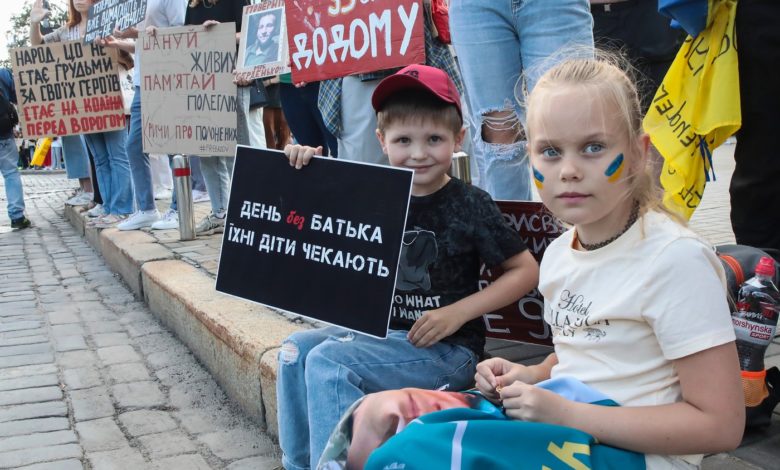
The official data in Ukraine shows that almost 20,000 children were taken from this country and taken to Russia by the military, from the beginning of the war. There are cases documented by the international press that shows that many of these children have arrived in Russian orphanages, and others committed suicide because they could not return home. About these dramas he told the public Hotnews Daria Kasianova, the head of the Ukrainian network for children's rights, an organization that helps to repatriate children in Russia and their subsequent integration.
- Of the 19,546 Ukrainian children documented that they were forced to Russia, from the beginning of the war until now, only 1359, following the negotiations between Moscow and Kiev.
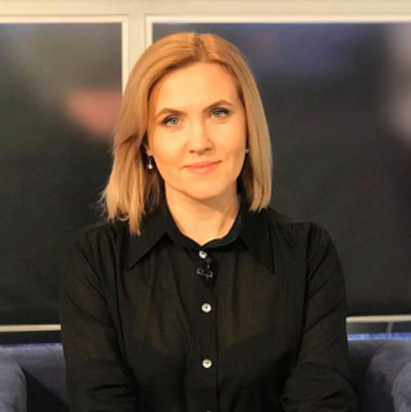
- The above data were gathered by the Ukrainian network for children's rights, which still endeavors to return children at home. The director of this institution, Daria Kasianova, gave an interview through the zoom, the hotnews correspondence in the Republic of Moldova.
- Daria Kasianova has been active in the field of child rights in Ukraine since 2007.
“Some of the children say they had very good conditions in Russia.”
– From the data known so far, almost 20,000 Ukrainian children have been deported to Russia since the beginning of the war. Who are these children?
– Daria Kasianova: It is a good question, because the groups of children concerned are very different.
There are children who have parents and in some cases they are deported with their parents. There are children without parental care and can be from adoptive families, such as guardianship, some are from specialized institutions, whose parents are Ukrainian military and, of course, are children who live on occupied territories.
We are talking about the regions of Herson, Zapuijie, Donețk, Luhansk. These children lost their legal representatives. After that, Russia decided to deport them.
Since the beginning of the war, about 20 thousand children have been deported to Russia. These figures are based on those with identified names and birth data, which are indeed in our database, but I am sure that the real number is much higher.
– I read that about 1,300 children were returned to Ukraine. I saw some interviews about Russia conditions for these children, including ideological pressure. What do the children, those who returned to Ukraine, what were the conditions for them in deportation?
– We have our own research in which we try to analyze the living conditions of these children in Russia or in the Crimea camp, for example.
The children said the situation is very different. Of course, some of them say they had very good conditions, for example, especially if we talk about poor families, families in difficult situations. These children say they saw the sea.
But most of them talked about very strong pressure and the fact that, every day, they were told that they did not need their country, Ukraine, and their families. And, of course, it was a traumatic experience.
More important is that when these children want to return or meet with their families, they have heard that it is impossible because of the war. Because their parents cannot go on the territory of Russia. It was a shock to them.
Moreover, of course, we had cases in which Ukrainian children were placed in Russian adoptive families, for example, even if they have their own families, mother and father, sisters and brothers in Ukraine, and these families would like their children to return to Ukraine.
I found a very strange situation: initially, I read that the Russians adopted Ukrainian children, then they began to write that it was not about adoption, but guardianship and adoptive families, and that these children could be returned to these families. But the problem is not that they are in adoptive families, but why they were there, if these children wanted to return home.
The case of Ukrainian child who committed suicide to the adoptive family in Russia
– I read at least about a case in which an Ukrainian boy He committed suicide while he was in the Russian adoptive family. His friends told Alexander suffering from depression and wanted to return to Ukraine. How widespread are such cases?
– I know what case you are talking about, I analyzed it myself. This boy wanted to return to Ukraine and had the documents made. But he did not know this, because the Ukrainian part did not have direct communication with the adoptive family in which it was placed.
This is, in fact, the main problem that these children are forbidden to communicate with the Ukrainians, with the specialized services for children, who are authorized and responsible for those without parental care, who have remained in the occupied territories.
I had another case in which a girl had left the Kiev region in Poland for studies. She entered the territory of Belarus, and from Belarus was taken somewhere far away, in Russia.
My mother was waiting for her, but she didn't know where her child was. And after about a month, the girl got in touch and said she was in a shelter on Russia.
There are also situations where we do not really know how the child came to Russia. Especially when we say that these children have parents, relatives who are looking for them.
In most cases, the soldiers (Russians-no) entered the busy territory, entered the house, saw the children, climbed them into transport and sent them somewhere, first in a shelter, then on the territory of Russia. There, not all necessarily get into adoptive families or placement centers. Many of our Ukrainian children are in institutions of admitted type on the territory of Russia.
– But at this moment, when, for example, the Russian soldiers enter, the parents can be at work, that is, somewhere in the locality?
– We have documented facts when they entered, the mother was at the garden, and the children were staying at home and the mother saw, came, did not allow her to enter, took the children and did not talk to her.
There were cases when a child with mental disabilities was home, the mother left to buy some foods, turned, and the neighbors told him they came and took the boy, and the mother tried to recover it.
They returned it when the mother left the region occupied by Herson, and the boy was returned from the territory of Russia, where he was in a boarding school.
Also, in 2022, when the children especially from Mariupol, Kharkov, were sitting in anti -aircraft shelters, the parents left after the water. When they returned, the children were no longer.
The military came and took all the children who were in shelters. The situations are very different. There are situations in which the children were in the sanatoriums, they had parents, they rested there at the time of the war.
“Mothers must ask Russian citizenship”
– I understand that the return of Ukrainian children is one of the key points that Kiev insists in trying to negotiate with Russia. How do Russian representatives respond in this process? It is not about political prisoners, for example, why do they insist so much to leave these children in Russia?
– I think it is not a coincidence that the first file opened by the International Criminal Court is Putin's arrest warrant, precisely because they kidnapped Ukrainian children. And they have tried for a long time to tell everyone that they did not do so, that they protected the Ukrainian children.
We have lists, we have contact with the children, even with those who were forcibly taken to the territory of Moscow in 2022. We know about these children. These children have parents, they have brothers and sisters. Until now, they have not been returned to us. A list of 31 children, a well-known list, which has been transmitted to us since 2022 German journalists.
There were 31 children on that list, of which, if I'm not mistaken, 5 or 6 were returned. But we know about all the other children who are on that list. And there are registered the name, first name, date of birth, from where these children are, who are their parents.
Although I certainly know that, for example, Ilia Volnov wanted a lot to return to his mother, he communicated with her, but the mother was impossible to meet: to come to Russia, to obtain Russian citizenship, to formalize the adoption, and only then will the child be returned. And the mother has a military husband, who defends Ukraine. He was an adopted child, but who, in any case, lived for many years in Ukraine.
If we are not talking about parents, but about relatives, for example, not long ago I helped a boy from Makiivka, who is in the Donetk region, occupied since 2014. The boy's mother died, his sister has been in touch with him all this time.
First of all, it is impossible to get to the busy territory now, because you can simply go there, it is dangerous.
Secondly, she completed all the documents in accordance with the Ukrainian legislation, and there, on the already busy territory, she was told that she cannot obtain guardianship on this boy, but only if she comes effectively and, in accordance with the Russian legislation in occupied territories, to obtain the guardianship. That is, it will also receive Russian citizenship, passport and, according to it, it will obtain custody, because in these years the conditions have become even stricter.
In Istanbul, Ukraine sent a list of 339 children. Indeed, there are not many, but it is to understand if they will agree with it or not to return.
So far they have not agreed. And I heard from public sources that it could consider the return of only 10 children from that list. Therefore, I understand perfectly that there is no kindness to return our children.
Why? I think it is clear: because it would recognize that the mandate issued and the international conviction are really fair.