As soon as the American and Israeli bombs have stopped falling on Iran, the country's theocratic leaders and the security forces came out of the bunker and launched a new campaign, this time against their own people, aimed at supposed spies, dissidents and opponents of the regime, reports Wall Street Journal.
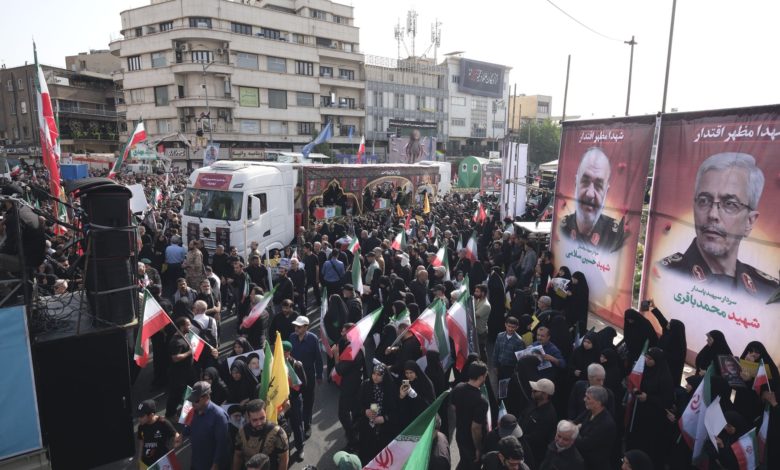
Tens of thousands of people gathered on Saturday in Tehran for the state funerals of military officials, scientists and civilians killed in the Israeli attacks from the beginning of the month. The participants, most of them completely dressed in black, chanted “Death of Israel” and “death of America”, according to CNN.
The Iranian Irib State television station broadcast patriotic music over the images from the state funeral ceremony, which showed how the bereaved stretch to reach the coffins covered with the flag of Iran. President Masoud Pezeshkian was seen in the crowd, along with security officers.
The portraits of several killed military figures were displayed on one stage, including images with General Hossein Salami and General Mohammad Bagheri. Some members of the crowd also wore photographs of the Supreme leader of Iran, Ayatollah Ali Khamenei, while the protesters were chasing anti-American and anti-Israeli slogans, Tasnim Iranian semi-official agency reported.
“The situation is more dangerous than before the war”
Control points were installed throughout the Tehran, as the authorities are trying to reaffirm their control and hunt those suspected of helping Israel's attacks on air defense, nuclear installations, generals at the top of the party and scientists who worked in the nuclear program, in a 12-day war.
While the smell of explosives still floated in the air of the capital, the police and the intelligence services arrested hundreds of people, and their number increases daily, reports WSJ. Armed paramilitary police officers patrol the streets. People are stopped and they are searched for cars, phones and computers. The government announced the execution of at least six men.
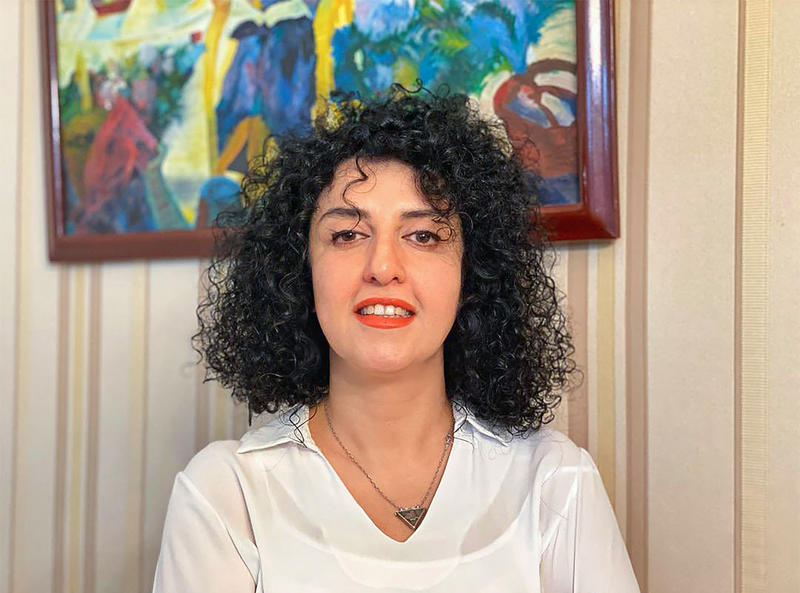
“The situation is more dangerous now for the Iranian people than before the war,” said Narges Mohammadi, activist for human rights and laureate of the Nobel Prize, one of the most prominent voices of the Iranian opposition. She said the regime does everything she can to strengthen her power and tightens the repression.
According to Amnesty International, over 1,000 people have been detained in the last two weeks for the alleged collaboration with Israel.
Esmail Qaani, the commander of the Quds force, the elite unit of the Guardians of the Revolution, which was rumored to have been killed, appeared at a pro-regime meeting in Tehran just hours after the beginning of the armistice, according to a video posted by the Tasnim news agency, affiliated to the Guardians of the Revolution.
Wearing a black beret, Qaani appeared on a crowded street, surrounded by supporters who waved Iranian flags.
“The Morality Police returned”
The Shiite Islamist regime has also intensified the application of strict rules regarding the behavior and clothing considered “appropriate”.
“The Morality Police returned,” said a 44 -year -old woman who said she had run out of Tehran during the war. “The police stopped us and interrogated us because the socks of the woman we were were too transparent.”
The Israeli and American air blows were the first time since the eight -year war with Iraq in the 1980s when Iran was intensely attacked on its own territory. The capital, Tehran, has become a real battlefield, and the guards of the Revolution were among the main targets.
During the attacks, the supreme leader Ali Khamena hid in a bunker outside the Tehran, inaccessible to anyone except for his close friends, according to an Arab official and to a counselor of the Guardians of the Revolution. Its isolation complicated the discussions in Geneva with the European countries that were trying to mediate the conclusion of the war.
Thursday, Khamenei spoke for the first time on June 19, trying to minimize the damage and unite the nation under the Iranian flag.
“The Islamic Republic was victorious and, instead, hit the image of America hard,” he said, in a hoarse voice.
“Everything happened right under our eyes”
The attacks showed how deeply infiltrated the Israeli Mossad in Iran. Explosive drones and other weapons were introduced in the country, where they were used by agents to destroy air defense and assassinate high -ranking targets.
“The Israelis organized infiltrations, bombs and explosives and recruited people from within,” said Mohammad Amin-Nejad, Iran's ambassador to France 24. “Everything happened under our eyes. There were vulnerabilities.”
The atmosphere in Tehran remains tense, while people are trying to resume their daily lives, the residents contacted by telephone.
The Iranian state media announces new arrests and confiscations of weapons daily. Authorities said on Tuesday that they had opened 24 files against alleged Israeli spies in Hamedan, a city in western Iran, whose air base was badly damaged on the first day of the attacks. The suspects “sent information, photos and videos to the enemy”, according to a report.
Internet access was restored on Wednesday after a week of interruptions. But an official warning against the use of messaging services such as WhatsApp remains valid. The regime claims that it is afraid that Israeli spies will not intercept the conversations.
On Wednesday, the Ministry of Information in Iran has asked citizens to report any suspicious call. Previously, a guide with tips on how to recognize a spy had been distributed.
Among the suspicious signs indicated: neighbors who go out and enter strange hours, use excessive masks, hats and sunglasses, or produce metal sounds in the house. The spies, according to the guide, could live in houses with “curtains drawn even during the day”.
The internal repression adds to the generalized feeling of anxiety caused by the war. Dozens of Israeli strokes targeted Tehran, aiming at nuclear and missile installations, as well as symbols of the regime and repression, including the famous Evin prison, where political prisoners are held.
“The leadership resisted, the streets remained quiet”
Tehran's northern and rich neighborhoods, inhabited by many nuclear scientists and high -ranking military commanders were among the most affected, which shaken the city's elites. The Tehran was bombarded intensely even in the hours before the entry into force of the armistice.
The inhabitants spent many nights without sleep, sometimes pursuing the war on balconies and roofs, while the rockets illuminated the sky, followed by explosions and fires.
The Ministry of Health of Iran said that over 600 people were killed and over 4,800 injured during the war, according to the state press, without specifying how many of them were military.
While Iran remained defiantly, he took caution measures by transferring some of his most precious assets abroad. After Israel began to hit the energy infrastructure, Iran has transferred large quantities of crude oil, Homayoun Falakshahi said, an analyst at the KPER data company.
On June 22, the oil stock on the island of Kharg – the main export point of Iranian oil – decreased, while the quantities stored near Singapore and China increased. About five million transferred barrels are worth about $ 375 million, at the prices of that time.
Last week, Iran sent at least four civil planes to the capital of Oman, biting, for preservation. One of them was the A340 presidential Airbus, which landed there on June 18, according to flight pursuit.
Arab officials were surprised to find out that the planes were empty. Instead, they transported liquid money and other goods, forbidden by sanctions. The planes themselves were considered “emergency outings” for top leaders.
These precautions show the huge pressure exerted on Iran leaders during the war. Now he has to find a way to go further without control over the airspace and without the support of the Allied militia.
A overwhelming burden of sanctions will make reconstruction even more difficult.
“It was one of the most serious security breaches in the history of the regime, but it was not a turning point. The leadership resisted, the streets remained quiet, and the system again showed that it is built not for popularity, but for survival,” said Narges Bajoghli, professor at Johns Hopkins University.
“The Iran system is designed to withstand shocks,” Bajoghli said. “The regime has not collapsed. It adapts, and the new frames in the IRGC and the paramilitary forces – many of them more radical than those who died – take over.”