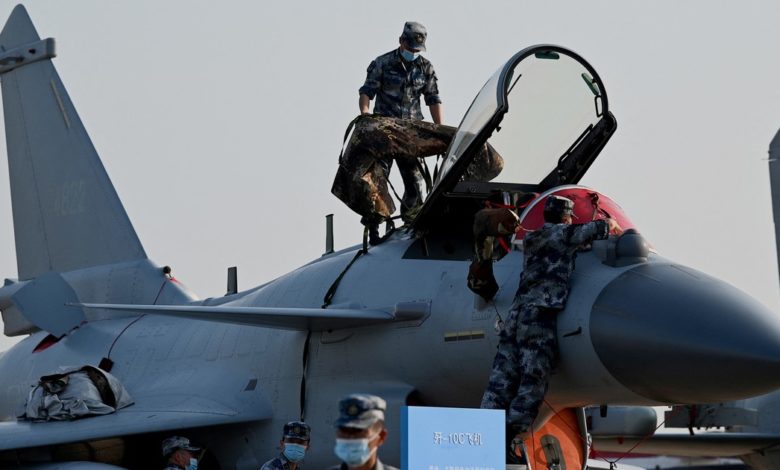
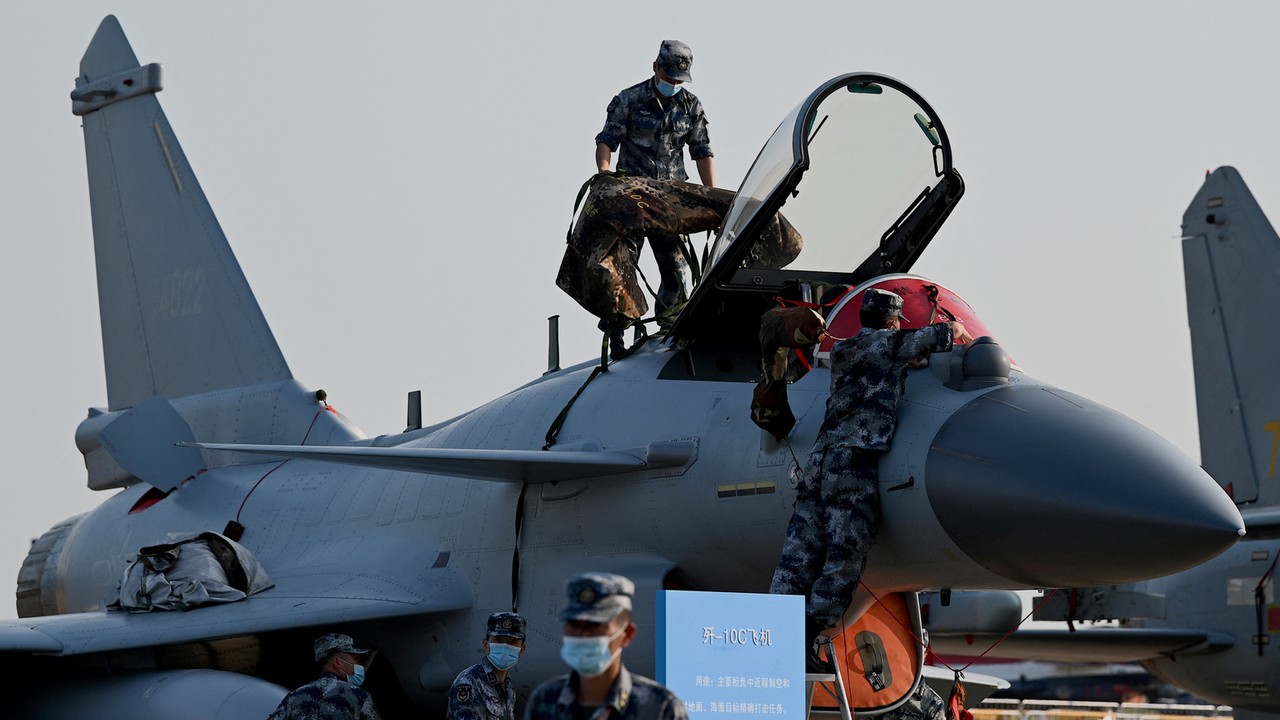
Iran has been interested in Chengdu J-10C for about two decades. In 2015, he began preparations for the conclusion of a contract for the supply of 150 fighters, but the transaction was stalled: Beijing insisted on payment in a foreign currency, while Tehran, struggling with the deficit, proposed barter settlement with pus and gas. The UN embargo was also an obstacle to the supply of weapons to the Islamic Republic of Iran.
In 2020, these restrictions were lifted and negotiations were resumed. The scale of the transaction has decreased to 36 aircraft, but the parties were not able to agree on payment terms again. Currently, the situation has changed: June 24, the United States has allowed China to officially buy oil from Iran without threatening sanctions, which increased the chances of concluding the contract.
According to Military Balance for 2025, before the war with Israel, Iranian air force had about 150 fighters. These were mainly outdated American production modelswhich went to the country before the Islamic revolution. Among them were F-4 Phantom II (64 pieces), F-5E/F Tiger II (35) and F-14A Tomcat (41). 18 MIG-29A/UB aircraft, delivered at the turn of the 1980s and 1990s, are also equipped, however, Most of them lost their combat capacity due to the lack of spare parts and maintenance difficulties.
The last foreign fighters, whose purchase was agreed by Iran, were the Russian Su-35, ordered in 2023. In total, Tehran ordered 50 aircraft, each of which currently costs over $ 100 million. (approx. PLN 361.5 million), but Due to the war in Ukraine, the delivery should not be counted in the near future.
Iran lost almost 30 percent outdated aircraft
Chengdu J-10C is a single-engine multi-purpose fighter, which is praised by China as a more affordable alternative to Western F-16V and Gripen E. The price for one piece ranges from $ 60 million. (approx. PLN 217 million, basic package) up to $ 90 million (approx. PLN 325 million, with spare parts, warranty, armament and pilot training).
The 12-day war in the Middle East, which began on June 13 with Israeli raids on Iran's nuclear facilities in Ford, Natanz and Isfahanie, revealed the advantage of the Jewish state in the air. F-35 and F-15 fighters destroyed the majority of the Iranian air defense system, including radars and Russian S-300 anti-aircraft sets, which allowed them to act freely over Tehran. On June 22, the United States joined the operation, carrying out raids to the same objects using B-2 Spirit bombers and submarines. As a result, according to the Iranian tape agency, the Air Force of the Islamic Republic of Iran lost to 30 percent. outdated aircraft, including the F-4 Phantom and F-14 Tomcat, purchased during the time of Shah.
Iran asked Putin for new air defense systems after the destruction of the previous ones by Israel.