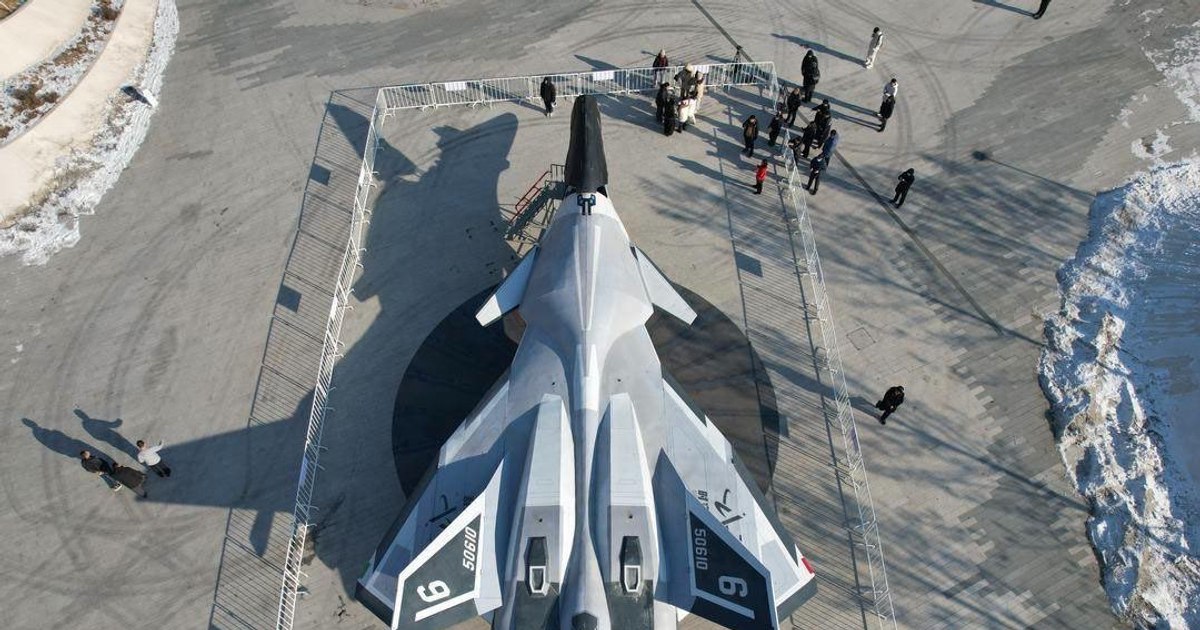
Do the third World War Passover because of the Israeli-Iranian conflict? Expert: “worrying is the possibility of extending the conflict in the chain”

There are serious fears that the war broke out in the hottest region of the world, the Middle East, could be exported to other continents. Expert in the Middle East, Raluca Moldovan explains, in an analysis for “Adevărul”, how big this risk is and to what extent Romania would be affected.
A great war risks encompassing the world. Photo: Shutterstock
The United States of America and Israel have massively bombed the sites in which Iran would prepare its first nuclear weapons, and the Tehran responded with reprisals against the Jewish state and the American bases of Qatar. However, US President Donald Trump claims that an armistice has been signed between Iran and Israel, already confirmed by the first. In contrast, Israeli forces continued the attacks on Tuesday, June 24, without taking into account the statements of the Washington leader.
Beyond the severity of the situation, the question that experts have not yet agreed is whether the US and Israel really acted correctly by attacking Iran. And those who claim that the two forces have done wrong bring the statements of the American spy leader, Tulsi Gabbard, who contradicted Trump and said Iran would be far from nuclear weapons. However, later she returned to her statement.
The causes of a devastating war
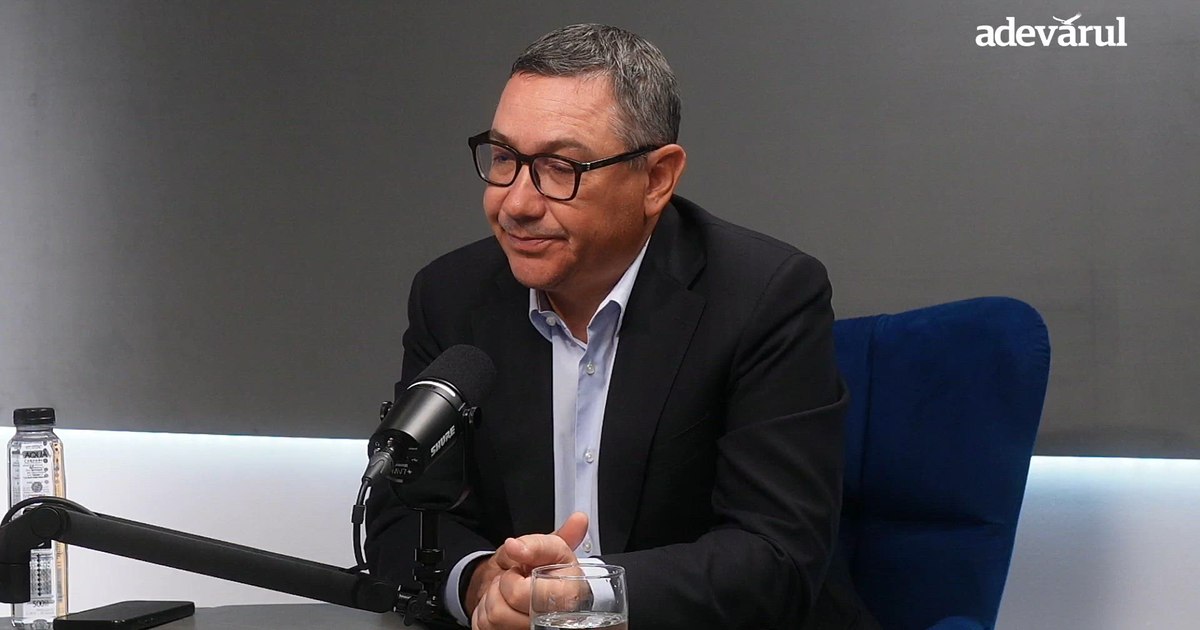
Raluca Moldovan is a doctor lecturer at Babeș-Bolyai University and is specialized in the problems of the Middle East. In an analysis for the “truth”, she explains the reasons underlying the old Israeli-Iranian conflict, but also in what context there would be the risk of escalation of this conflict and, especially, if they could lead to a new World War.
“The current conflict is the result of a long series of accumulated tensions, especially around the Iranian nuclear program, considered by Israel an existential threat. From the Israeli perspective, the attack on Iranian nuclear facilities was a preventive movement, in order to delay or stop the ability of Tehran to produce a nuclear weapons. From the history of the Jewish state, because we can mention here the case of the six -day war in 1967, when Israel acted in the face of an imminent threat from Egypt of Gamal Abdel Nasser), even if justified in the prism of national security, comes with major risks and opens the way of an extended regional conflict”Says the expert.
She also recalls that the first massive Israeli attack came exactly one day after the officials of the International Atomic Energy Agency confirmed that Tehran does not comply with the provisions of the Nuclear Non-Proliferation Treaty.
“I do not think it is accidental that the Israeli attack on June 13, prepared, it seems, for a long time, has occurred one day after the board of the International Atomic Energy Agency announced that Iran had violated the provisions of the Nuclear Non-Proliferation Treaty.” says Raluca Moldovan.
On the other hand, the expert believes that it has been done too little to prevent this armed conflict.
“From a diplomatic point of view, too few real efforts have been made in recent years to defuse this crisis, and the lack of an efficient international framework has contributed to the current escalation. So, although Israel considers that it acts defensively, the war could be avoided if it was seriously invested in diplomacy and the construction of an American mechanism. Renegocia The nuclear agreement with Iran, signed in 2015, from which the US came out in 2018, no progress was made in this regard for 4 years ”she adds.
A controversial attack
Raluca Moldovan also commented on the strange attack on Monday, June 23, by Iranians, on the US military bases, of which there is information, confirmed by Trump, that it was announced by Tehran with diplomatic paths, precisely to avoid victims, and the damage will be minimized. This is the operation “Basharat fath” (Victoria's promise). And it would not be for the first time that Iran and the US are exchanging such information before attacking. Raluca Moldovan believes that it is a plausible scenario and explains why Iran would have acted.
“It is a plausible scenario. Iran has a vast experience in the symbolic use of force, in times of crisis, to save its face, as it is said. The regime of Tehran is equally concerned about the internal image and avoiding a total conflict with the United States. Direct devastating ”says the expert.
It is a typical game for the complicated region of the Middle East, an area that apparently sits on a decades powder barrel, she explains.
“The fact that there were no American victims after these attacks supplies the idea that Iran wanted to convey a political message, not to trigger an irreversible escalation, especially since, apparently, the Tehran authorities announced their Qatare counterparts about the targets to be hit. For the internal audience than for the real military result. supports Raluca Moldovan.
Where does the risk of a World War come from
Even though the US and Iran seem to avoid climbing at this time, Israel continues to hit Iran, although Trump had announced an armistice. Many experts argue that the Israeli-Iranian war is heading towards an escalation that could lead to its extension first throughout the Middle East, and then to its transformation into a new World War. Raluca Moldovan does not fully agree with this hypothesis, but admits that there is a risk of serious escalation. And the risk would start in particular from the terrorist organizations supported by Iran.
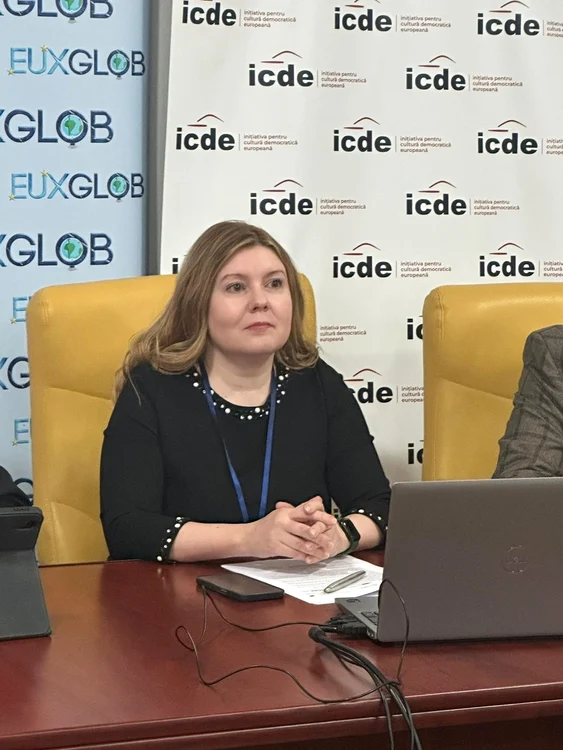
Raluca Moldovan. Photo: personal archive
“The current conflict is unlikely to turn into a new World War in the classic sense of the term. However, we are talking about a regional crisis with a global potential, as major powers – USA, Israel, Iran, but also Russia and China are involved in the equation. What is truly worrying is the possibility of enlargement of the chain conflict: the involvement of Hezbollah in Lebanon (even though the Lebanese terrorist group is much weakened after last year's conflict with Israel), the pro-Iranian militia in Iraq, the destabilization of the Persian Gulf or attacks on maritime and energy transport. I have already seen that the Iranian Parliament has voted for the closure of the Ormuz straits, a vital artery for the transport of oil from the Gulf to various points of the world. If these developments remove major energy markets from the game or bring NATO into an indirect conflict with Iran, then the effects will be felt worldwide. Therefore, we are not talking about a classic “World War”, but we can talk about a systemic crisis with a global impact – economic, political and security “, explains Raluca Moldovan.
Such as affected Romania by an extension of the Middle East war
Obviously, Romania would be affected by an escalation, even if they did not reach a conventional war. And the situation already seems to be complicated. It would be primarily about economic problems, says Raluca Moldovan.
“Romania would feel the impact in several plans. First of all, it would increase the prices for energy and fuel, in the context in which the Middle East is a key supplier for the global market. Any disturbance of exports from the region also affects Romania, especially through the European market. Secondly, new waves of migration could appear in the Mediterra. On the security policy of the European Union.”, Points out the expert.
On the other hand, Romania would be very important, given that it hosts the Deveselu anti-racket shield.
The “Deveselu anti-rally shield would thus become a key strategic point in defense of the NATO's eastern flank, because, in rigor, it has the ability to intercept drones and rockets launched from Tehran to our region. Last but not least, the climate of uncertainty will be able to affect the confidence of the investors and the regional economic stability, under the conditions in which the states are not strong in the area. depreciate such shocks ”, she explains.
When will we have peace
The bad news is that, although it has been talking about peace in the Middle East for decades, it seems hard to reach. In order to even hope that one day it will be here, more conditions would need to be met. Raluca Moldovan explains what it is:
“Peace in the Middle East already seems, for so long, an extremely difficult to reach, but I would say that not impossible. In this sense, four key elements would be needed: A. A real commitment from the great powers-first of all the US and the EU, but also China or Russia, who have good relationships with many actors in the region, including Israel, Iran, B. A new nuclear agreement with Iran, accompanied by the gradual verification and disassembly of the military program. says the expert.
“Peace will not only come through treaties signed at the peak, but also through measures to build long -term trust between actors with a long history of animosities and conflicts. Currently, none of these conditions is met, not even far, because we see that neither traditional allies and European states are understood in a common position, diplomatic in a horizon of time for now. ”concludes Raluca Moldovan.