
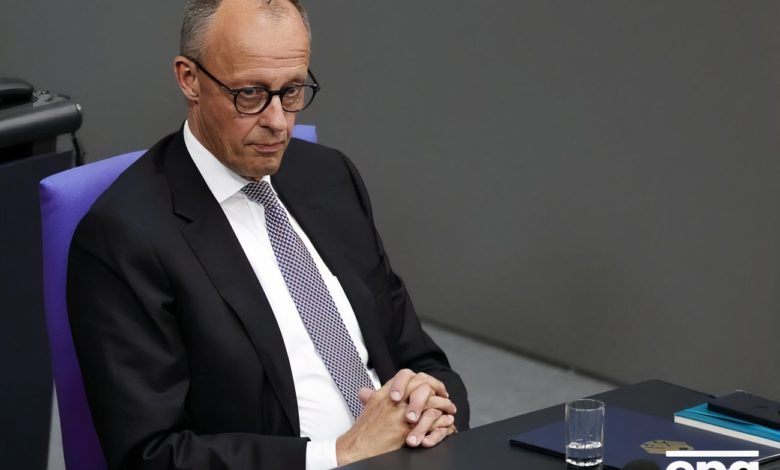
According to the publication, the German government plans to increase defense expenses to € 153 billion in 2029 compared to € 86 billion this year, which is “the most ambitious efforts of Germany to re -engage in the end of the Cold War.”
Mertz noted that the decision on this was not made in order to “appease the US President Donald Trump.”
“We will decide to invest much more in our security. Not in order to provide the service of the United States, but because Russia is actively threatening the freedom of the entire Euro -Atlantic region,” the Chancellor emphasized.
Germany also promised to provide Ukraine with € 8.3 billion military aid next year, the article says.
Politico notes that this year the NATO summit in The Hague is focused on increasing the targeted expenses of the defense alliance from 2% to 5% of its gross domestic product. Despite the fact that partially such an increase was due to pressure from Trump, Mertz said that German support “was based on realism, and not on transatlantic respect.”
“[Нелегитимный президент России Владимир] Putin only understands the language of power, ”Mertz emphasized.
Context
November 7, 2024, Rutte said that Trump prompts Europe to large defense costs.
On December 20, Financial Times wrote that after taking office as president in January 2025, Trump will probably put forward to the member countries a demand to increase defense costs to 5% of the gross domestic product (GDP).
January 22, 2025 Head of the European Defense Agency (EDA) Kaya Kallas The EU countries called on the increase in defense investments not only to prevent the war, but also to be prepared for it. Indeed, according to reconnaissance services, an aggressor country can attack Europe in three to five years. According to Kallas, Moscow spends almost five times more budget funds than Brussels. According to The European Commissioner for Defense Andryus Kubilyus, Russia will spend 40% of the federal budget for defense and safety this year, which is 9% of GDP.
February 1, then the USA Mike Waltz said that The Trump administration will put pressure on NATO allies, who do not increase defense costs.
On May 15, US Secretary of State Mark Rubio said that before the Summit in June, NATO will agree to increase defense costs to 5% in 10 years.
On June 22, Reuters wrote that all NATO member countries agreed on an increase in their defense costs to 5% of their GDP, only Spain was against.


