The German Chancellor criticizes the “too complicated” strategy of the EU from discussions with the USA


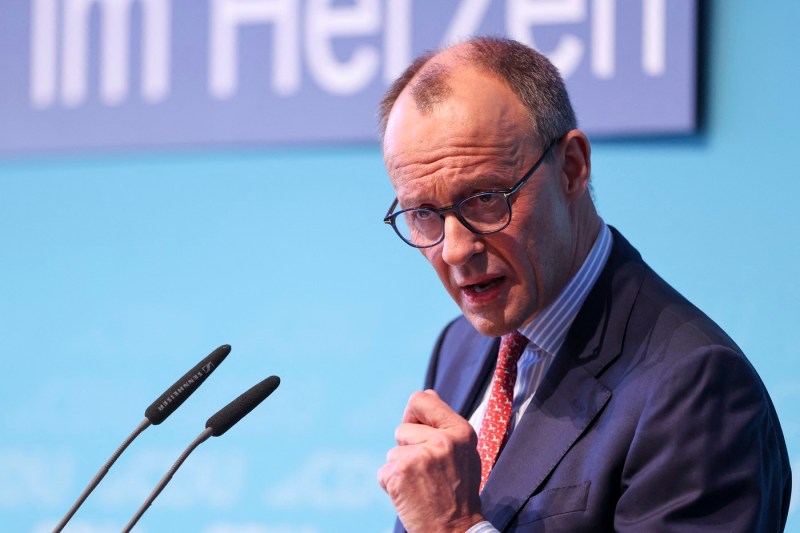
German Chancellor Friedrich Merz Photo: Christoph Reichwein / AFP / Profimedia
Germany Chancellor Friedrich Merz said Monday that the European Union approach in commercial discussions with the United States is “too complicated” and has asked Brussels to quickly reach an agreement with US President Donald Trump, AFP reports.
“We need common, fast decisions for four or five major industries now,” Merz said in an event hosted by the German industry Federation.
The German Chancellor believes that such an agreement must cover sectors that are “vital important” for the European economy. He mentioned as examples the automotive industry, chemical industry, pharmaceutical industry, mechanical engineering, steel and aluminum.
“I think we can do this,” said Friedrich Merz, adding that such an agreement, with a limited scope, is in accordance with the approach adopted by Washington.
“The Americans (…) concentrate relatively simple on the conclusion of agreements with us in terms of four or five major industries,” the German leader said.
The EU, on the other hand, negotiates “far too complicated,” Merz claimed. It was the “inappropriate time” to “negotiate 400, 500, 600 different customs codes with the Americans,” he added.
Friedrich Merz said that he, French President Emmanuel Macron and Italian Prime Minister Giorgia Meloni will insist on the summit of the European Council this week for the EU to get a quick agreement.
“We do not want the best of the best, but rather what is more important of what is needed,” Merz explained, referring to the agreement between the United Kingdom and the United States.
Dozens of countries are engaged in negotiations with Washington to conclude a kind of commercial agreement to mitigate the impact of US customs duties.
Trump imposed a 25% rate for the car sector and a 50% rate for aluminum and steel, as well as a 10% basic tariff for all imports.
The European Union is also facing a 20%rate, supposed “mutual”, which is to enter into force on July 9.
The United Kingdom became, in May, the first country to reach an agreement with Washington to avoid higher rates, including reducing import taxes for British luxury machines and their full steel and aluminum lift.