
How strong is the Marina Iran, who threatens to close the hormuz strait? The most plausible scenario and what options have on the US table

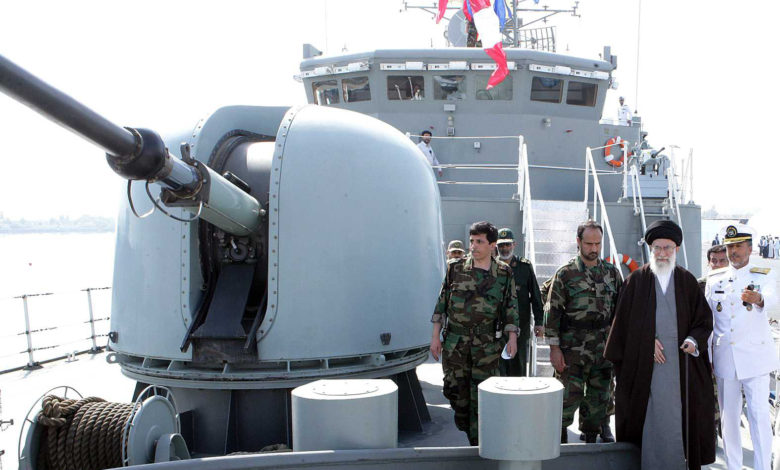
Marina Iranian has expanded her capabilities in recent years, through submarines and advanced war vessels in strategic locations, her fighting power returning to public attention after the Tehran threatened to close the Ormuz Strait, which transits a large part of the world's oil production, EURONEWS and Ekathimerini shows.
The Legislature in Tehran adopted a resolution that requires the closing of the straits through which 20% of the world and oil and oil deliveries passes on Sunday afternoon. Prices for petroleum products reacted immediately to the opening of financial prices on Monday, increasing for several reference brands.
Although Iran is often perceived as a continental power, the Persian Gulf and Oman Gulf represent both the first and its last line of defense.
Since 1979, with the Islamic Revolution, Tehran has worked on the construction of a stratified naval structure, divided between the regular army and the body of the Islamic Revolution Guardians (IRGC), combining large war vessels and rapid attack boats, conventional and recently, Drone.
Even though the Iranian navy is not able to compete with the world's great naval powers, it has developed a specialized force based on the asymmetrical war, on the local technologies and on strategic development starting from the naval bases it has in the region.
The Iranian navy has over 100 ships
The Iranian Marina (Irin) is the officially responsible military branch of the operation of the regular naval fleet, which includes submarines and large war vessels. The force has over 18,500 soldiers and more than 100 ships. Its operations cover both the Persian Gulf and the Caspian Sea, with objectives such as the protection of the territorial waters of Iran, the security of the vital maritime routes and the discouragement of any violations of the Iranian sovereignty.
According to the Global Firepower report in 2024, Iran's navy ranks 37 in the 145 world naval forces. Although this position does not place it among global naval superpowers, it still reflects the growth of Iran's naval capabilities, despite international sanctions and technological constraints. The ranking indicates that Iran maintains a medium-sized naval force, capable of asserting its presence in its area of regional influence.
The most notable feature of the fleet is the considerable diversity, which includes:
- Modern destroyers such as “Zulfiqar”, “Sahand” and “Zagros”, who have entered the active service one after the other and are designed to launch precision missiles and carry out information missions;
- The frigates from the classes “Alphand” and “Moj” – some of British manufacture, others built in Iran – play an essential role in medium -level naval operations;
- Ampibies of assault and corvettes, used for the transport of troops and fast attacks;
- Perhaps the most notable element of the Iranian fleet is its submarine force, which includes between 19 and 27 units. These include three diesel-electric submarines in the “Tareq” class (“Kili” in Russia, the country from which Iran bought them in the 1990s), used in strategic operations, such as placing me and launching cruise missiles.
Iran also holds a large number of mini-submarines in the “Ghadir” class, extremely maneuverable in shallow waters.
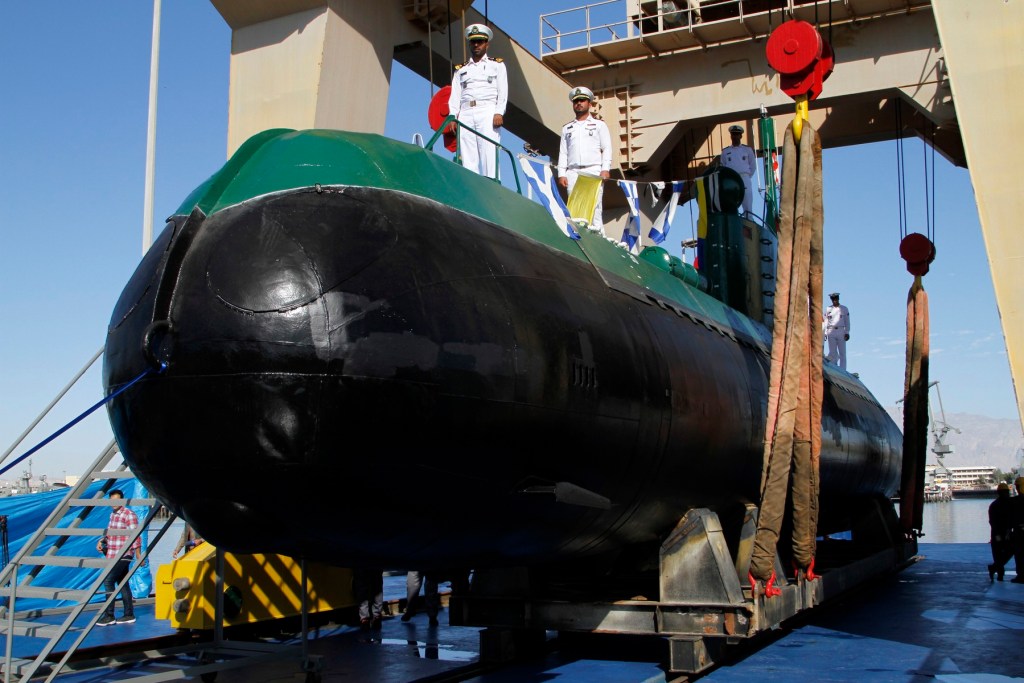
The Fleet of the Guardians of the Revolution, pregnant to bear asymmetrical war
In 2023, an Iranian naval group completed an mission that lasted over eight months, during which it traveled 63,000 kilometers and reached the Magellan Strait, which separates South America from the “Fire Country”. It was a premiere in the history of the Iranian navy. The fleet included the destroyer “Dana” and the support ship “Makran”, transmitting a clear message that Iran wants to expand its presence in international waters.
In August 2024, the Iranian Marina received 2,640 rocket and drone systems, including cruise missiles that Tehran claims cannot be detected by radars. He has also successfully conducted test launch tests on a small submarine, a clear sign of the evolution of its offensive capabilities.
In addition to the regular navy, Iran also has the naval forces of the Islamic Revolution Guardians (IRGCN). These are based on another form of operations, known as “asymmetrical war”. They include the use of rapid rocket boats, placement of me and hit-and-retract attacks.
These forces do not have large or submarine vessels, but they are noted for speed and maneuverability, which makes them a constant threat to any hostile naval presence.
Can I even close Iran Strait Ormuz?
An analysis published on June 10 by the CNBC financial television, following the consultation with a number of specialists from the energy sector, concluded that such a move is unlikely.
Most analysts believed that Tehran would refrain from such a move as it would strongly affect China. The second largest economy in the world is not only the largest Iranian oil buyer, but also the main commercial partner of Tehran.
“China does not want the oil flow in the Persian Gulf to be interrupted in any way and does not want the price of oil to increase. So it will use all its economic power to press on Iran,” said CNBC, co -founder of the Washington Ivy Advisors consulting firm.
However, the analysts expressed their point of view before US President Donald Trump was ordered American bombings on Iranian nuclear installations. US Secretary of State Marco Rubio asked China on Sunday to encourage Iran not to close the Ormuz Strait, after American aviation hit the main nuclear installations of Iran.
The head of American diplomacy warned that Tehran would make “still a terrible mistake”, if it will close the Ormuz strait.
Bakr Arana, the head of the Department of Analysis for the Middle East and Opec+ at the KPER analysis company, had stated for CNBC earlier during the month that “[închiderea strâmtorii] It is an extreme scenario, although we are in an extreme situation. “” That is why I do not completely exclude this option. We must take it into account, “she urged. /
But a major uncertainty is related to the actual ability of the Iranian armed forces to impose a blockade on a waterway which, even at its narrowest point, has a width of over 30 kilometers. Despite the threats formulated over the years, Iran has never resorted to such a move.
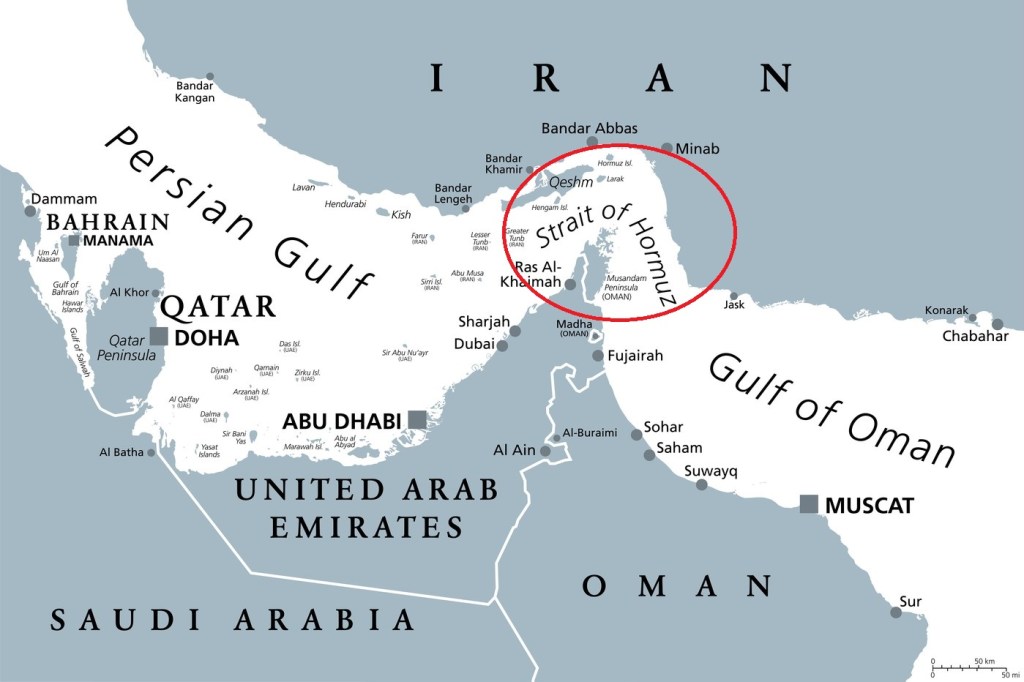
The most plausible scenario: Iran could try to move the Strait Ormuz
Security analysts believe that Iran could try to block the straits by placing me, instead of trying to impose a block itself with its surface and submarine vessels.
“Many of the options of Iran are the strategic equivalent of a bomb suicide attack,” Karim Sadjadpour, an expert in Iran at Car Cargie Endowment for International Peace, after the US attack on Iranian nuclear installations. “They can cause huge damage to others if they mine the hormuz strait, destroy the oil facilities in the region and launch a rain of rockets on Israel, but it may not survive the reprisals,” he says.
Iran can make it extremely expensive and dangerous for the American navy to carry out what, most likely, would be a demination operation that would take weeks in the Strait Hormuz, according to a former US Marine officer who was stationed on a dragon in the Persian Gulf. He and other navy officers said that neutralization of mines in the straits could expose American sailors to a direct danger.
It is believed that Iran has a variety of types of naval mine. These include small magnetic mines, which contain only a few kilograms of explosive and are placed directly on the cake of a ship by swimmers, usually exploding after a predetermined period of time. Iran also has larger, anchored mines, which float immediately below the surface of the water and release an explosive force of over 45 kilograms when it comes in contact with an unprepared ship.
The more advanced mines stand on the bottom of the sea. They use a combination of sensors – such as magnetic, acoustic, pressure or seismic – to detect the presence of a ship nearby and explode with hundreds of kilograms of explosive force.
US have a couple of demination vessels in the Persian Gulf area
The American navy has four vessels for draging mines in the Persian Gulf, each with about 100 sailors on board, stationed in Bahrain and specially trained to cope with underwater dangers.
If Iran would place me in the Strait Hormuz or other areas of the Persian Gulf, a small contingent of the Navy of Bahrain, called “Task Force 56”, would intervene.
Usually led by a senior officer specialized in the neutralization of explosive devices, this unit would use technologies such as underwater vehicles, which can scan the seafront with the help of sonars much faster than during the period when Iranian mines represented a threat in the straits.
And, although the American navy experiences with underwater robots for mining, the unit will still have to use small teams of divers specialized in the defamation of explosives for the difficult and dangerous pregnancy to approach each mine underwater and to carefully place loads to destroy it.
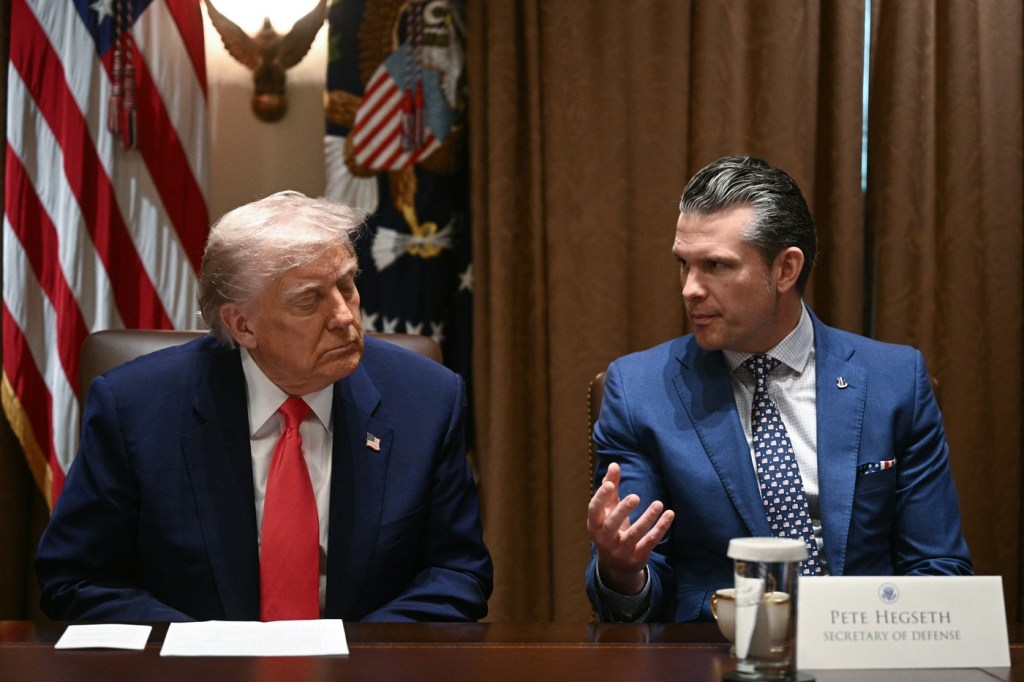
An invitation to strong reprisals from the US
In an own analysis, Forbes note on Sunday that such an action would almost immediately attract a naval and air response from the United States. President Donald Trump is unlikely to stand aside and allow the strait to close. In addition, Iran would exhibit its own coast and all ports of a massive attack from the aerial arsenal and upper naval of the Americans. Nearby, in Bahrain, is the fifth fleet of the US Navy.
Moreover, such a maneuver may not even have the chance to start, as at least four of the combined American fleet groups regularly patrol into the Persian Gulf and the Straits, and their supervision would eliminate the surprise element.
However, minor confrontations and harassment actions cannot be excluded in the body of the body of the Islamic Revolution in Iran, but not only – Tehran could launch attacks on energy transports that, for example, are not intended for its main customer, China.
There is also the possibility of random piracy acts on energy transports in the straits, a precedent that already exists. However, a total blockade would be difficult to initiate and even harder to maintain in the long run.
“Overall, Iran has threatened for years that it will close the Hormuz Strait, but has never really tried to do it. Although the region is now in an unknown territory and there is always a 'first', this is quite relevant,” concludes Forbes.


