Bucharest people breathe an increasingly toxic air: 60% of the pollution comes from traffic

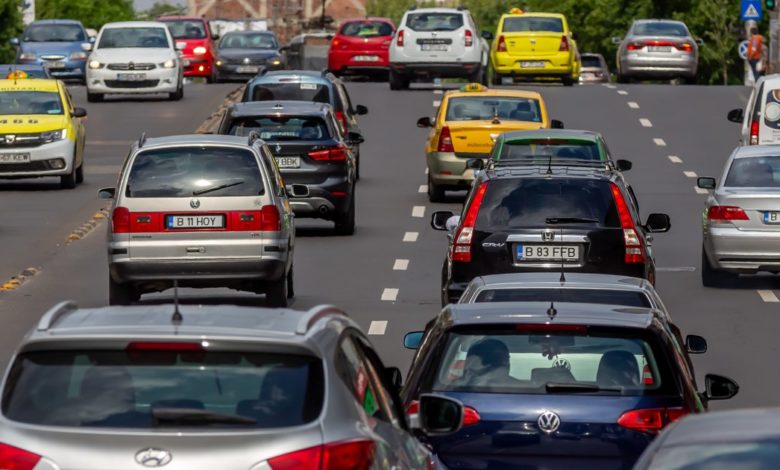
The state of the environment is degraded from year to year in Bucharest and imposes urgent measures for better quality of inhabitants. Air pollution already reaches alarming levels, road traffic being the main responsible for 60% of the pollutants, according to a specialized report.
Bucharest people breathe an increasingly toxic air. Photo shutterstock
According to the report “The state of the environment in Bucharest”, Made by the Bucharest Community Foundation through the Environmental Platform for Bucharest, the urban nature is insufficient in relation to the indications of the European Union, the gray infrastructure and the waste crowds the capital, and the climatic changes bring considerable risks for Bucharest.
The report thus highlights the need for a clear strategy to improve air quality and structural action from the city authorities, organizations and inhabitants, through sustainable long -term measures.
Intense traffic, waste burning and the activity of large industrial power plants make the air in Bucharest increasingly difficult to breathe. The city is suffocated daily by a large number of cars, of which over half are over 10 years old, and more than one third are equipped with diesel engines, road traffic being responsible for 60% of air pollution. The thermal power plants also pollute significantly, being the main source for more than three quarters of sulfur dioxide emissions and for much of toxic gases such as nitrogen oxides and carbon dioxide. To all this is added the smoke resulting from the burning of waste in the localities around the capital, which brings in the air dangerous substances.
In many neighborhoods in Bucharest there are frequently exceeding the legal limits for several pollutants. An increasingly accentuated problem is also the ozone from the ground level, which is formed on the hot days and favors the appearance of the photochemical smog, a type of dangerous pollution that especially affects children, the elderly and people with respiratory disorders.
These overcoming come in the context in which Bucharest is facing climatic changes that lead to increasingly hot summers. The year 2024 was the hottest in the history of the city, with an average temperature of 27.43 ° C, with almost 6 ° C above the usual average.
Almost 80% of the city's surface is covered by asphalt or construction, which means less natural coolness and more discomfort. At the same time, the capital has a great minus in the chapter of urban vegetation. The report on the state of the environment shows that Bucharest has lost over 500 hectares of green spaces from 1990 to the present, and only 60% of apartments and 55% of houses are less than a kilometer from a park. Moreover, the capital has an average of 0.88 trees for each inhabitant, over three times less than the recommendation of the European Union for 3 trees at each inhabitant, and the dry trees proposed for cutting in 2024 are almost as many as those planted.
Although rarely mentioned, urban biodiversity is an essential component of the city's ecosystem. Last year, over 60 calls were registered for 112 for wild animals such as snakes, foxes or deer, a sign that nature exists even in the most unexpected places, but it is not yet protected by a clear plan.
New constructions continue to suffocate the city, and sustainable transport is ignored
Between 2010 and 2023, over 268,000 homes were built in the capital, many on former green or industrial spaces, without adequate investments in infrastructure. In parallel, sustainable mobility is ignored. Only 1% of the inhabitants use the bicycle, and the related infrastructure is insufficient. Bucharest has not yet started the transition from motorized transport to more sustainable options that contribute to improving the quality of the environment. Only 1.25% of the registered vehicles are electric, and the efficiency of the transport network requires significant improvements, the city having urgent transition to non -polluting solutions.
Last but not least, waste management remains deficient. Of the nearly 564,000 tons of waste generated annually, only 42% are treated, the rest being stored. Selective collection is poorly implemented, and urban agriculture is almost non -existent. Bucharest remains dependent on external sources for food supply, and the circular economy, although mentioned in strategies, still requires a lot of work, shows the report of the Bucharest Community Foundation.
“The capital urgently needs a healthier environment. The current state is an impetus to change in several key areas with the environment, for a better quality of life and a better city. concrete because a better future and a healthier environment in the capital ”says Alina Kasprovschi, executive director of the Bucharest Community Foundation.
Civic organizations constantly draw attention to environmental problems in Bucharest and are involved in identifying and analyzing relevant measures for environmental protection and improvement. A survey conducted among 26 NGOs and 9 civic initiative groups shows that the biggest challenges are the lack of green spaces, air pollution and deficient way in which waste is managed. Nearly 73% of the respondent organizations believe, however, that these problems can be solved and already involved, in partnership with public institutions, in the process of decision making and elaboration of public policies for a better environment in Bucharest.