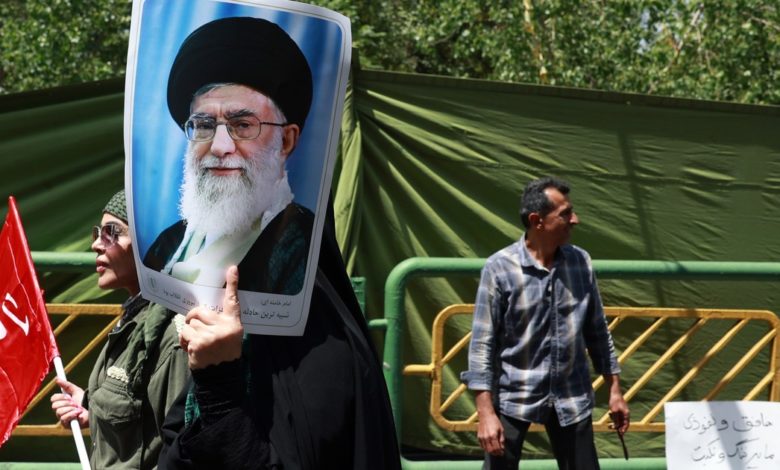
Just over a week ago, the highest leader of Iran, Ayatollah Ali Chamenei, could be part of a breakthrough in relations with America. Talks with the participation of both countries were heading towards the decisive time. The Americans offered the abolition of sanctions in exchange for the withdrawal of Iran from the nuclear program.
Some talked about diplomatic relations between the Islamic Republic and its eternal enemy. Those more optimistic even predicted that there would be a meeting of two highest leaders who would embrace their hands.
Now, however, Chamenei has returned to his Manichean comfort zone. Since Israel attacked Iran on June 13, Ayatollah throws bile out of himself, talking about the “Zionist terrorist entity” and his American principals. Israeli officials, including Prime Minister Binjamin Netanyahu, threatened to death. Donald Trump claims that he is an easy target. “We do not intend to eliminate it (kill!), At least for now,” said the president in social media. He added, however: “Our patience is exhausted”
Chamenei had uphill from the very beginning. He was born in 1939 as one of the eight children of a poor Islamic scholar from northeastern Iran. He followed his father and went to study to the city of Kom, the capital of Shiite teaching. From the very beginning, he thought that God needed help from man. In addition to the Koran, he listened to music, recited poetry and read novels, such as “Wędzniki” and “Grona of Wrath”, which show secular fights with oppression. He also became interested in the works of Sajjid Kutba, some of which translated into Persian.
Continuation of the material under the video
The first positions he held after the Islamic Revolution in 1979 did not have much to do with God. He was a deputy defense minister and a commissioner in the newly created body of the Islamic Revolution Guardiansthe most powerful regime security forces.
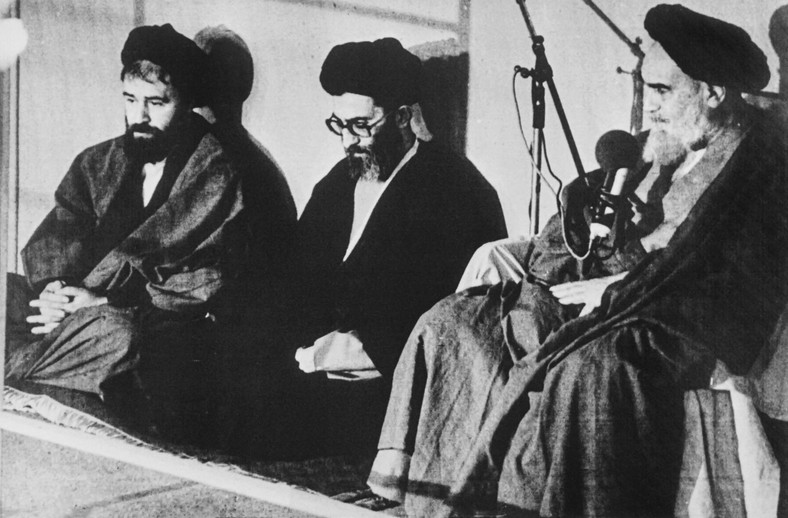
In 1981 he won a strictly controlled election for the president of the Republic. As an obedient and deprived of charisma, the candidate was favored by Ruhollah Chomejni, the father of the revolution. Chamenei held this largely ceremonial position for eight years, obtaining re -election in 1985.
His opponents consistently underestimated him. After the death of Chomejni Ali Akbar Haszem Rafsandjani, a sly adviser to a deceased clergyman, pushed Chamenei to the position of the Supreme Leaderwhile he took over the presidency himself, where he counted on strengthening.
AFP / AFP
Ali Chamenei (in the middle), appointed the third president of the Islamic Republic of Iran by Imam Ruhollah Chomejni (on the right). Tehran, October 9, 1981
Chamenei did not have religious qualifications of the highest lawyer – many clergy did not even consider him to be Mariai.e. the source of imitation for secular Shiites. He was just Hujjat al-Islamthe equivalent of a Catholic medium rank. It was only after succession that he began to take the title of great Ayatollah and fate.
Atojallah divides and rules
Chamenei turned out to be expert in playing Iranian state institutions against each other – presidency against the parliament, army against the guards of the revolution. In this way he became the final arbiter.
He also had an obvious advantage over Rafsandjani and his successors as the president, many of whom wanted to transform Iran into a more classic Islamic Republic. While they limited their limit of two terms, he was appointed for life.
He also had his advice of guards, an organization consisting of clergy and lawyers, which verifies the candidates in elections. Increasingly, she disqualified everyone except Chamenei's favorites. The competing Ayatollahs and their acolytes were co -opted for government money and jobs.
PAP
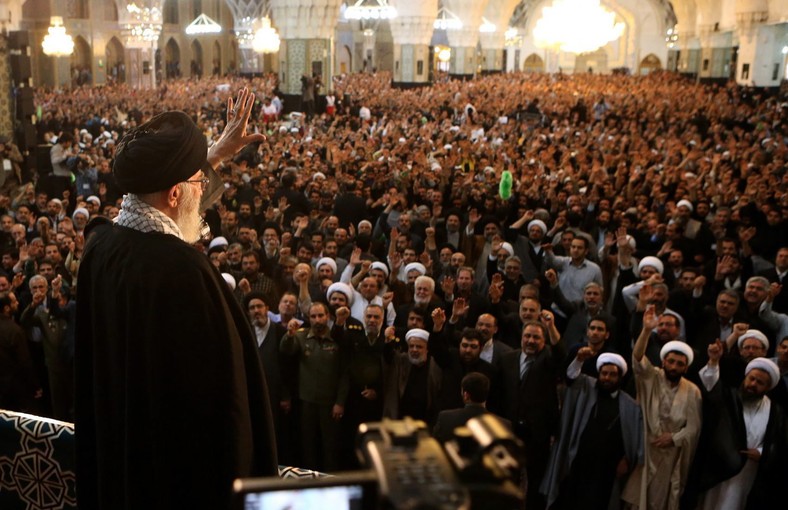
Ali Chamenei during the Iranian New Year celebrations. Meszhed, March 21, 2015
In the meantime, the office of the Supreme Leader has grown into a huge camera with commissioners in all government departments, provinces and military units. He even chooses the winners at the Book Fair and gives name to Iranian cars. Paramilitary forces of over 1 million people, known as bass, enforce ideological discipline. Once a modest priest of a hundred and at the forefront of powerful theocracy.
Chamenei never gives way
It is also worth paying attention to his business empire. Chamenei himself can live sparingly, but Controls assets worth tens of billions of dollars. Shortly after taking power, he took over from the government Shiite charity organizations and transformed them into huge conglomerates that won state contracts.
They outbid competitors because they did not pay taxes, and Thanks to American and international sanctions, they had little foreign competition. Ayatollah also took over the real estate that people abandoned, escaping from the revolution. A quiet man from Meszhed finally owned the land.
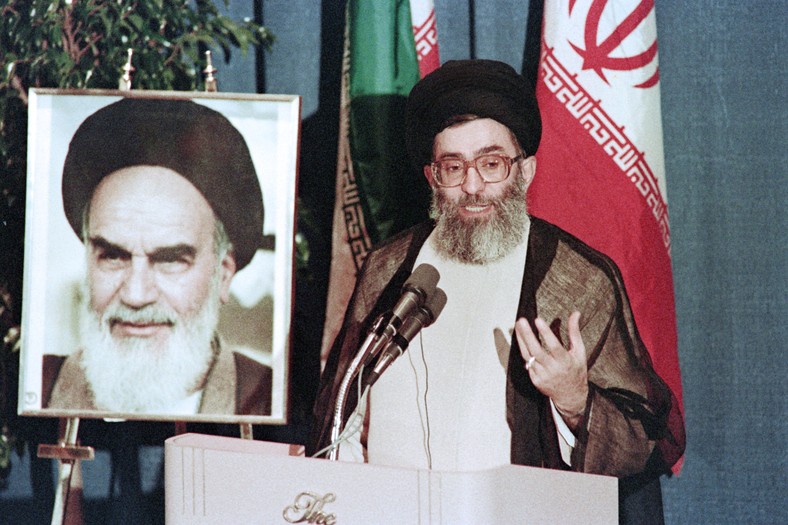
Increasingly, however, the descent of Iran from hybrid democracy to the dictatorship aroused objection. While Chamenei celebrated Iran's isolation from the cultural impurities of the West (he visited America only once, in 1987), Most Iranians wanted to have access to the world. Women had for the wrong enforcement of clothing regulations, which required them to wear scarves and black coats.
Don Emmert / AFP
Ali Chamenei during a press conference. New York, September 23, 1987
During the protests in recent years, participants chanted not only about the overthrow of Chamenei, but also about his death. His answer has always been the same: beating, shooting, prison and hood courts. The lesson he had from the fall of the Shah was to never give way. The attack of dissident revolutionaries in 1981, which paralyzed his right hand, only strengthened his determination.
The irony of fate is that In his pursuit of power, Chamenei became similar to the Shah. He can even dream of his own dynasty. Many initiated indicated his second son, Mojtaba as his successor.
War can thwart these plans. If Netanyahu doesn't get him, his own safety can do it. In Tehran, there are rumors about the new Council of the Guardians of the Revolution, which takes power, while Chamenei is locked in a bunker and deprived of contact with the world. His latest opponents, however, should remember not to underestimate him.
I’m Ashley Davis as an editor, I’m committed to upholding the highest standards of integrity and accuracy in every piece we publish. My work is driven by curiosity, a passion for truth, and a belief that journalism plays a crucial role in shaping public discourse. I strive to tell stories that not only inform but also inspire action and conversation.