June 24, the birth of Saint John the Baptist, the Christian feast eclipsed by fairies. Unknown traditions and secrets

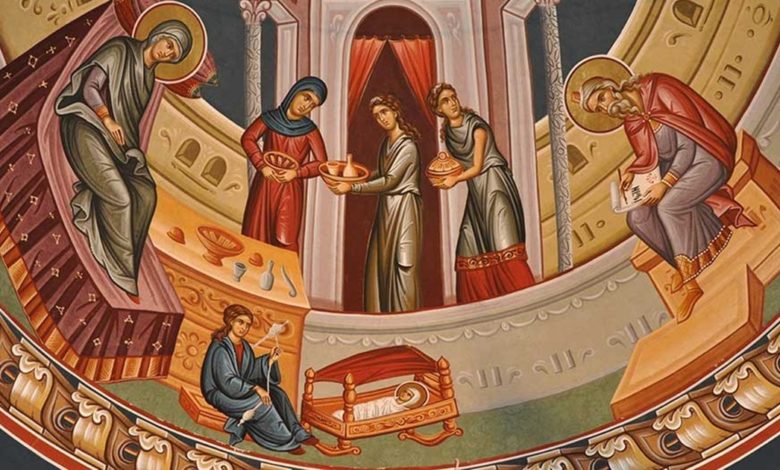
On June 24, the Orthodox calendar marks one of the most important Christian holidays: the birth of Saint John the Baptist – the only saint, apart from the Mother of God, to whom the Church honors his birth, not just death. Considered the forwarder of Christ, he was the one who prepared the way of the Lord and baptized the crowds in the waters of the Jordan.
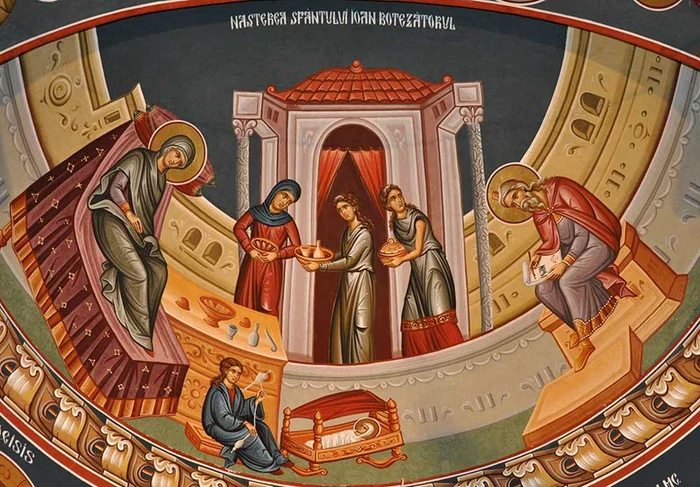
St. John the Baptist, the only one, apart from the Mother of the Lord, to whom the Church honors the birth
In the popular tradition, this day was an opportunity for prayer, silence and joy. In the old villages, people were going to church, they were holding a black post until lunch and lit candles in honor of the one who announced “The light of the world” – The coming of Jesus Christ. Perhaps not by chance, in some regions, the holiday was also known as Drăgaica – a name that, although it retains a religious wave, was gradually loaded with pagan symbols and rituals and fertility.
Today, June 24 remains a special day, located on the border between the altar and the wheat chain, between holiness and myth, between what is spoken in jobs and what is whispered in the old stories. It is a holiday that continues to bring together Christian spirituality and archaic memory.
A separate article will be dedicated entirely to the Mysteries of June 24: about the magic of the Sânziene, the fairies that dance among the dreams, the signs of the time, the superstitions transmitted in a whisper and the power of the yellow flower that does not fade – when the flowers gain secret powers, and the tranquility becomes ritual.
When “magic” occurred. How did the Sânziene eclipsed a church holiday
As Christianity spread in the Carpathian space, the Church has not completely replaced the pre-Christian beliefs, but often strategically overlapped them over their own holidays. Thus, in the collective imaginary, St. John met with the fairies of the field, and people began, without realizing, to celebrate two worlds on the same day: one of heaven, another of the earth.
The fascination for the miraculous, for the unseen and for the beauty of the ancient ritual caused, over time, the Sânzienes went out in the foreground, symbolically dethroning Saint John in the center of folk attention. Not for lack of faith, but from a deep desire of the simple man to reach the sacred with his hands-through flowers, dances, dreams, water, fire and song.
A double holiday: between the icon and the flower wreath
Today, few know that June 24 is, in fact, a big religious holiday. For many, it became the day of Ia, of the photos on Instagram with flowers in the hair and ethnic festivals. Perhaps this overlap reflects the essence of the Romanian spirit: a pendulum between faith and myth, between the Church and the Fairy Field.
Perhaps St. John did not lose in oblivion, but withdrew humbled, as he did all his life, leaving the place of others to shine. And the Sânzienele … dance around him.
Traditions that still retain the balance between the altar and the field herbs
Even though, in the urban space, the Sânzienele became a visual and folkloric festival, in the Romanian villages, the rituals are still preserved in which the birth of Saint John the Baptist and the beliefs related to Sânziene go hand in hand.
In churches, the job of the morning of June 24 is still respected with solemnity. Fragments are read from the gospel that announce the birth of the prophet and special prayers are made for the health of the babies and cleaning the soul.
After the job, the women go out on the field and collect Sânziene, which they sit at icons, gates, to wells. It is believed that the flower thus acquires both the blessing of the Church and the mysterious power of nature. Some older women even encourage this practice, considering it “common law”compatible with the spirit of the place.
In some villages in Suceava, Neamț or Hunedoara, the priest comes out after the job and blesses with agheasma the wreaths made by girls. It is a reconciliation between the two planes: the sacredness of religion and the sacredness of nature.
There are also rituals in which the elders give one another, saying prayers to Saint John for Health and Protection. It is said that if you put them under the pillow, but you also say the name of the saint, dreams become “clean” and do not bear the trick.
Currently: Between Revival folkloric and spiritual forgetfulness
As traditions come back in force through festivals, the Universal Day of Ia – officially recognized since 2013, handicraft fairs and dances in wheat chains -, a question arises: how much do we actually know about what we celebrate?
If you ask a young man from Bucharest why he wears June 24, he will probably answer you “For Sânziene”. If you ask an old woman from Sălaj, she will tell you that “It's Saint John's Day and it's not working “and the fairies are “Just a beautiful story for the dreamy girls.”
Maybe the truth is precisely in this duality. Maybe June 24 is, more than any other time in the calendar, a bridge between the worlds – between what is written in the holy books and what is said in whispers, between the altar and the wheat chain, between the church and the fairy circle.
Sânzienele or Drăgaica and Saint John: The connection that crossed the centuries
Ethnographic research mentions a unique fact that took place centuries ago, in relation to the Sânzienele in Bucovina, which perfectly illustrates the combination between the religious and the popular dimension of June 24: “In the year 1589 … On the night from Sânziene … The bells of the monastery began to sound out”.
So, on a Sânziene night of more than four centuries ago, a mystical event marked the transition: in a monastery in Bucovina, the bells began to beat alone, in the middle of silence, a sign considered both mysterious and sacramental. The next day, June 24, not only became the day of the birth of Saint John, but turned into a collective celebration between religion and folklore-the exact bridge between the altar and the wreath of flowers.
It is probably the oldest documented episode in which the mystery of faith and the spell of ancient customs were merged under the same heaven-a mysterious moment, spent in Bukovina, which seems to have visibly marked the synthesis between Sânziene and the birth of Saint John. Although the tradition has spread throughout the country, this record remains, to this day, one of the few written evidence of the birth of a deep connection between the sacred and the popular, placing a syncretic ritual that has longed for centuries.
This moment marks the moment when the Christian significance of the holiday – the veneration of Saint John the Baptist – is nourished and expanded through folk rituals: pilgrimages to the monastery, the blessing of the sânzian flowers, dances and dreams under the influence of the old beliefs. Thus the holiday acquires a “exposition” Double: a vertical one, to heaven – by church tradition; the other horizontal, to the earth – through ancient habits.
“On June 24, the Romanian does not make the difference between fairy and holy. He puts them together in the same crown of Sânziene, leads them to the icon and prays them as well: for health, love and good weather. This is not confusion, it is a deep form of popular wisdom,” said ethnologist Ioan H. Ciubotaru, a researcher at the Institute of Romanian Philology “A. Philippide” from Iasi.