An important step in the world of technology. A two -dimensional computer was built without the use of silicon

2025-06-22 15:00
publication
2025-06-22 15:00
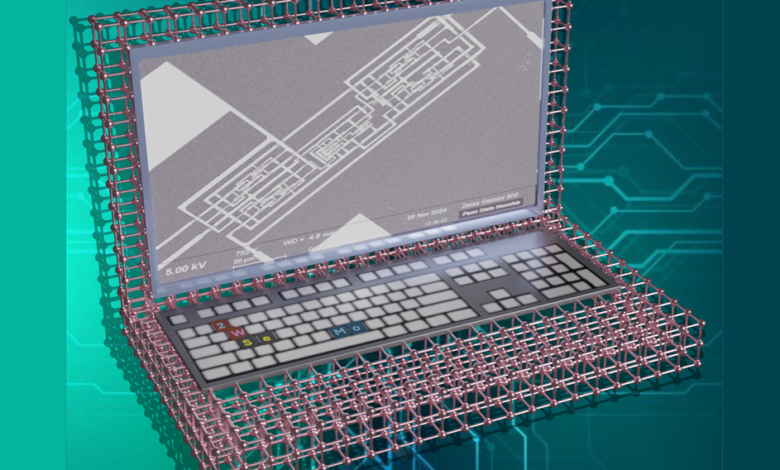
Scientists for the first time used a two -dimensional material with a thickness of only one atom to create a simple computer. This is a step towards thinner, faster and more powerful electronics.
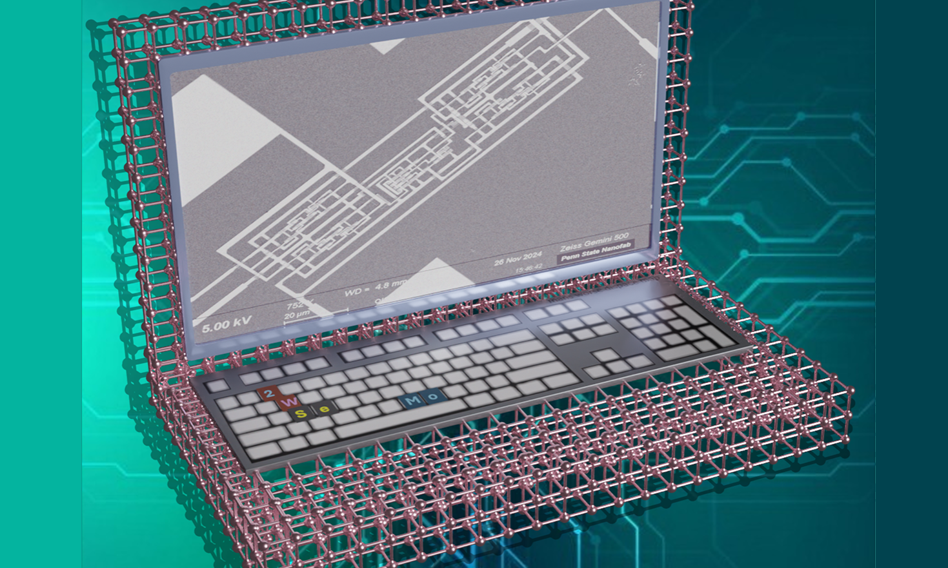
Currently Silicon semiconductors are the basis for the construction of all electronic devices. Meanwhile, scientists from Pennsylvania State University described the world's first experiment in which a two -dimensional (measuring only 1 thickness atom) material was used to build a computer capable of making simple calculations.
According to researchers, this achievement is an important step towards a thinner, faster and at the same time consuming less electronics.
Scientists based their system on CMOS technology, which is the basis of almost every modern electronic device. However, they did not use silicon. Instead of him They used two different two -dimensional materials to develop both types of transistors necessary to control the flow of electric current in CMOS systems – they used molibdenum biposar and tungsten dissery for transistors.
“Silicon has fueled unusual progress in electronics for decades, enabling continuous miniaturization of field transistors,” emphasizes prof. Saptarshi Das, author of the study described in the Nature magazine.
“However, as the sizes of silicon devices are reduced, their performance begins to deteriorate. Meanwhile, two -dimensional materials retain their unique electronic properties even at one atom thickness, which makes them a promising direction of development.”
Earlier studies have already indicated the possibility of creating small systems based on two -dimensional materials, but scaling them to complex, functional computers remained unattainable.
“This is a breakthrough in our work. For the first time, we demonstrated a CMOS computer built entirely of 2D materials, combining transistors from molybdenum diulf and tungsten dissery produced on large surfaces,” explains the expert.
The team used the so -called The technique of embedding from the gas phase using metal organic compounds – the production process consisting of, among others on evaporating ingredients, causing an appropriate chemical reaction and embedding its products on the ground. In this way, large sheets of the Dipup -Molibden Dipup and tungsten dissee were created, and over a thousand transistors of each two basic types.
“Our CMOS computer based on 2D materials works at low power voltage, uses a minimum amount of energy and can perform simple logical operations with a frequency of up to 25 kilohers,” informs one of the researchers, Subir Ghosh.
“We have also developed a calculation model, calibrated based on experimental data and taking into account the differences between individual devices. This allowed to estimate the performance of our CMOS computer with 2D materials and compare it with the latest silicon technology. Although there is still space for further optimization, our work is an important step in using two -dimensional materials for the development of electronics,” he adds.
Scientists point out that further work is needed to develop a approach based on CMOS computers from 2D materials, if they are to be used. At the same time, they emphasize that this field is developing extremely quickly compared to silicon technology.
“The flint -based technology has been developed for about 80 years, while research on 2D materials is relatively new – in fact they started only around 2010,” says prof. Das. – “We expect that the development of 2D -based computers will also be gradual, but what we have achieved is a big step forward compared to the pace of development of silicon technology.”
Marek Matacz (PAP)
mat/ zan/