2030, the deadline for the war in Ukraine and for Europe. The scenario that changes NATO strategy


The war in Ukraine may have a clear deadline: the year 2030. At least that is the assessment of one of Europe's top military officials, who warns that the remaining time must be used to prepare for a wider confrontation with Russia.
The war in Ukraine could last until 2030/FOTO: Profimedia
Belgian General Frederik Vansina, fighter pilot and current Chief of Staff of the Armed Forces of Belgium, claims that regardless of developments in the relationship with the US, Vladimir Putin will not be able to win the war in Ukraine. However, this is not guaranteed without a major effort from Europe.
In an interview with Le Soir publication, the military official pointed out that the American-Israeli offensive against Iran must not divert attention from the conflict in Ukraine, which is still considered the main threat to European security.
The warning is shared by other Western military officials, who point to Russia as the major risk in the short and medium term. Although the conflict in Ukraine appears locked in a stalemate, the reality on the ground is far from reassuring: Moscow maintains between 650,000 and 700,000 experienced military personnel, supported by a war economy capable of producing weapons on a daily basis.
“We are not yet talking about an immediate danger for Brussels, but we must not delude ourselves”warns Vansina, pointing out that the war in Ukraine is only a few hours' flight from European capitals.
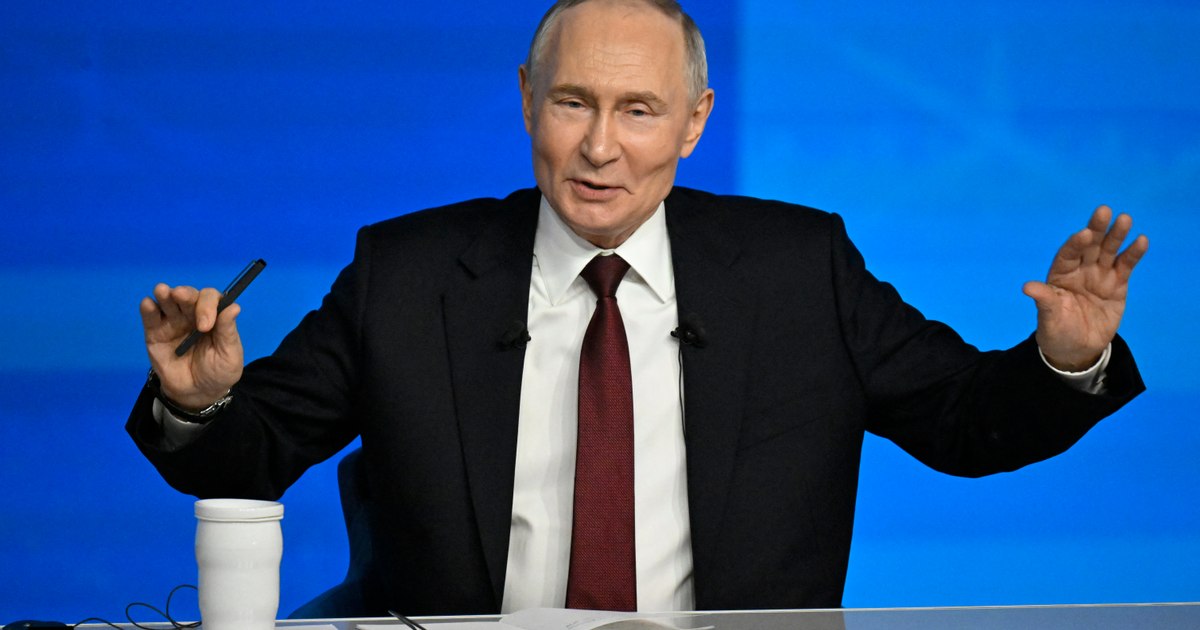
At the same time, the signals coming from the Kremlin remain aggressive. Russia is expanding its military ambitions, and Vladimir Putin has already talked about an army of up to 1.5 million men. In parallel, there are episodes that fuel regional tensions, including references to separatist projects in the Baltic states.
However, the Belgian general does not anticipate an imminent attack on Western Europe. The danger, however, is one of perspective: after the end of the war in Ukraine, Russia could be left with a considerable military force, capable of putting pressure on the continent.
Europe is still far from the goal of strategic autonomy
“By 2030 we must be strong enough to tell Putin that he cannot win a war against Europe, even without American support“, Vansina pointed out.
In this context, the official admits that Europe is still far from the goal of strategic autonomy. Although defense budgets are increasing, the threshold of 2% of GDP is no longer sufficient to face the new challenges. The defense industry is advancing, but at a rate considered too slow.
His estimate is that 2030 will be a critical year: by then, the war in Ukraine may be over, but Russia will remain a major military power. Only towards 2035, he believes, could Europe achieve a real level of strategic autonomy – if investment continues.
An essential element in this calculation remains support for Ukraine. “We have this time because of the sacrifice of the Ukrainians,” says Vansina, suggesting that Kiev's resistance gives Europe a window of preparation that it cannot afford to waste.
At the same time, there are still uncertainties related to the American military presence in Europe. Although troops have not been withdrawn and F-35s remain deployed at strategic bases, European allies have not yet been given a clear timetable on possible cuts.
In this tense context, against the background of Donald Trump's critical statements towards NATO, the scenario of building a security structure that would work even in the absence of American support is being discussed more and more often in Europe.
The Belgian general's message is clear: Europe still has a few years to prepare. After that, the balance of power could become much more fragile.