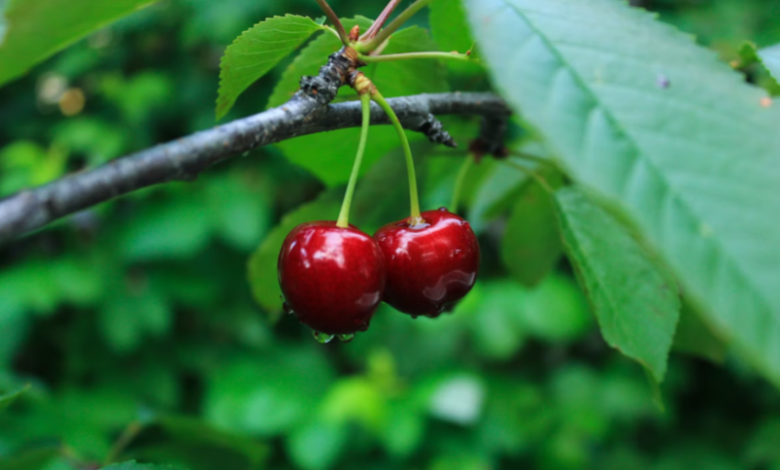
Cherevishna (or Duke) is a hybrid of cherries and cherries, bred at the beginning of the last century. The goal of breeders was simple, combine the winter hardiness of cherries and the sweetness of the southern cherries. The resulting plants have become an independent culture that is ideally suitable for the conditions of central Russia.
Cherevishni live up to 25 years resistant to frost and fungal diseases. Their fruits are large, sweet, but with a slight sourness and a characteristic aroma. At the same time, they are less productive than classic cherries, and require cross -pollination, since most varieties are selfless.

Popular varieties
Night. A compact tree with a height of up to 3 m. The berries are juicy, with a bright taste, fruiting begins in the third year. Productivity reaches up to 30 kg from a tree. The variety is partially self-fertile, but gives more fruits in the presence of cherries or cherries-pollinating.
The nurse (she is also dessert Sychev). Medium -sized variety for cold climate. Gives up to 13 kg of berries weighing 8 g. He begins to bear fruit from 3-4 years, tolerates frosts well to 34 degrees.
Wonder Wish. A powerful tree up to 4 m high. The fruits are large, bright, the taste is saturated. The crop is stable, but the variety requires a soft winter. With frost from 25 degrees, the shoots can be frozen.
Dobrynya. A low shrub up to 1.5 m. The berries are rounded, dark, sweet with sourness. It can bear fruit without pollinators, but with a joint planting with cherries, the crop increases.
Spartank. One of the most frost -resistant varieties. It withstands temperatures up to 38 degrees of frost. A medium -height tree with a spreading crown, the berries are small, but the taste is bright.
How to plant a cherry proper
These trees love the sun and areas protected from the wind. It is important to choose a place with deeply lighting groundwater, at least two meters.
The soil needs loose, fertile, neutral acidity. The pit under the seedling is prepared in advance: they are applied humus, peat, ash and mineral fertilizers. When landing, the roots are straightened, the seedling is installed on the mound, the root neck should be at the ground. After planting, the earth is compacted, watered and mulched.
Cutting for cunning
In open ground, it is not difficult to care for the plant if you follow the basic principles. Only attention to details and regularity is important.
Watering and food
Young seedlings need constant moisture, especially on hot days. The earth in the trunk circle should remain moderately wet without drying out, but also without stagnation.
Top dressing begins in the second season. In the spring, at the beginning of the growing season and before flowering, the plants are supported by nitrogen fertilizers. Ammonia or calcium nitrate, 40-50 g per tree, acts well. You can use the infusion of mullein (in a proportion of 1:10) with the addition of wood ash. Such top dressing stimulate growth and strengthen immunity.
The fight against diseases
Even before the buds, the preventive treatment of trees in Bordeaux fluid is carried out. 300 grams of 3% solution are added to the water bucket. This helps to prevent fungal infections to which Dukes are especially sensitive in wet years.