Film versus reality: Nuclear radiation from postapocalipalized landscapes vs nuclear medicine and its role in today's treatments. Dr. Irina Strugari: “We are not talking about massive and uncontrolled exposures, but about small quantities, which can save lives”

Regina Maria supports the Transilvania International Film Festival (TIFF), edition 24.
In the postapocalptic film “You are my world”unfolded in a distant future, radiation from accumulated nuclear waste destroys slowly but surely, life on Earth. This apocalyptic image-of the radiation escaped under control-is often encountered in the scientific-fantastic worlds, evoking a deep fear. It contrasts strongly, however, with the current reality, in which the branches of nuclear sciences bring extraordinary benefits. An example is nuclear medicine, the diagnosis and medical treatments based on radiation being crucial today in the case of many conditions.
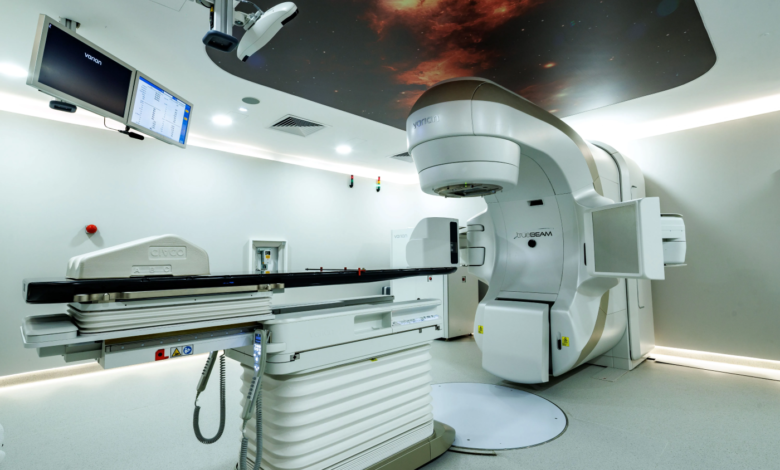
“Nuclear medicine is a branch of imaging and therapy that uses radioactive substances to visualize organs or to treat certain diseases. Basically, we injure the patient a poor radioactive compound that” locates “in the targeted area (for example, in bones, heart or tumors). Special rooms detect the radiation emitted and so we get functional images – not only what an organ looks, but also how it works. In the treatment, we use isotopes that go directly to the sick cells and destroy them precisely, protecting the healthy tissue around ”explains Dr. Irina Strugari, a specialist doctor, nuclear medicine, within the Regina Maria health network.
What is the greatest fear of patients on using radiation? “In reality, the radiation used in medicine are very precisely”
Despite the safety of today's medical procedures, a reluctance to them can exist among patients, fed by the fictional worlds encountered in the cinema, and not only. “The most common fear is that” radiations harm “or that they can cause cancer – influenced, of course, by apocalyptic images from famous nuclear accidents.”detailing Dr. Irina Strugari.
“In reality, the radiation used in medicine are very precisely dosed and have a therapeutic or clear diagnosis.adds the doctor.
Moreover, patients are protected by potential harmful effects, due to extremely strict calibration and regulations. “Everything starts from the doses: they are calculated with great care, depending on the patient's weight, the type of affection and the purpose of the investigation or treatment. Also, the radioactive substances used have a short life – they are rapidly eliminated from the body, usually through urine or sweating. In addition, the environment is controlled, the staff is trained, – precisely to minimize any risk ”points out Dr. Irina Strugari.
What will nuclear medicine look like in the future? Personalized radioactive molecules
Similar to other health specialties, nuclear medicine is expected to evolve significantly in the coming decades.
“One of the major directions is personalized radiopharmaceutical therapy – that is, targeted treatments, which use radioactive molecules adapted to the tumor profile of each patient.”mentions Dr. Irina Strugari. “This approach combines the diagnosis and treatment in a single molecule: first identifies the disease, then treats it. Basically, we are not just about to see the cancer, but about the real-time consequences and treat with almost surgical precision, but without a scalpel.”
30 as in movies: Queen Maria to TIFF 24
The film “U have the universe“(“You are my world” – 2024) is part of this year's program of TIFF 24, within the section “Tomorrow is Fear“.
Queen Maria loves TIFF since 2014, being a constant partner of the community in Cluj and of the film lovers and creating with each edition a bridge between the passion for cinema and health care.
Article supported by Queen Mary