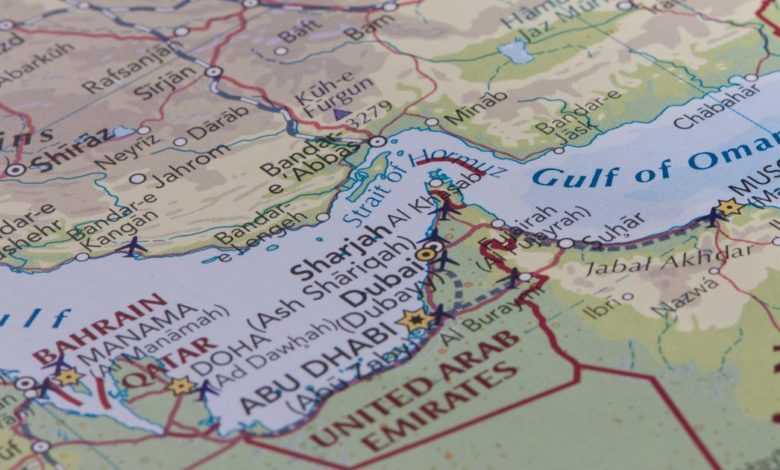
The commander of the Guardians of the Revolution, Sardar Esmail Kowsari, told the local press that Iran is considering closing the Ormuz strait, a vital artery for global oil transport. But does Iran have this capacity?
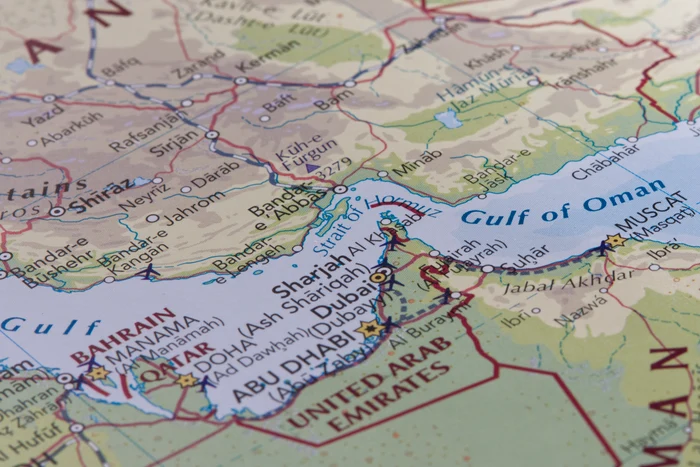
Closing the Following Strait would have Global Shutterstock PHOTO
“We have a free hand to punish the enemy, and the military response was only part of our answer,” said Kowsari, who is a member of the Iranian Parliament Commission.
Through the Strait that connects the Persian Gulf to the Sea of Arabia, about 20 million barrels of oil and petroleum products are transported daily, the equivalent of 20% of oil transport globally, and a possible lock would trigger chain effects on energy markets, CNBC wrote on Friday, on the day of Israel.
However, the experts consulted by the US television station said that the closure of this waterway is unlikely and probably even impossible from a practical point of view.
Iran would have no “net benefit” and, in addition, could attract negative reactions from the largest Iranian oil client, China, said Ellen Wald, co -founder of the energy consulting company Washington Ivy Advisors,
China buys over three quarters of Iran's oil exports and is the most important trading partner of Iran.
“Their friends will suffer more than their enemies, says Anas Alhajji, a partner at Energy Outlook Advisors, another energy company.
Blocking this route would be a “curse” rather than an advantage for Tehran, given that most consumer goods for Iran reach the Ormuz Strait.
“It is not in their interest to create problems, because they will suffer the first,” the analyst points out.
The threat of closing this waterway was a recurrent rhetorical tool for Tehran, but has never been implemented. Many analysts say that, first and foremost, it would not be possible that the strait has a width between 55 and 95 kilometers.
“Let's be realists about the Ormuz Strait. First of all, most of them are off Oman, not Iran. Second, it is large enough that Iran cannot close it,” Subllinia Alhajji.
“Any blockade of the Ormuz Strait will be a last instance option for Iran and probably conditioned by a direct military conflict between the US and Iran,” believes Vivk Dhar, research director at the Commonwealth of Australia.
Helima Croft from RBC Capital Markets has suggested that, although there may be some disturbances, a total block is unlikely.
“Our assessment is that it would be extremely difficult for Iran to close the strait for a long time, given the presence of the fifth US fleet in Bahrain. But Iran could launch oil attacks and mine the strait to disrupt maritime traffic,” she says.
Can Iran occur the threat of closing the Ormuz Strait?
Over the years, the Iranians have accumulated an arsenal of cruise and ballistic missiles, Kamikaze drones, as well as a series of maritime capabilities, such as naval mines, which would theoretically allow them to close the narrow navigable pathway that connects the Persian Gulf to Oman Gulf, writes The War Zone. At the same time, it is not clear the extent to which Israeli attacks could have undermined the ability of Iran to complete such a threat or even if the Tehran regime would like to take such a drastic measure, which would have global ramifications.
The original source of Kosari's remarks, which also holds the rank of brigadier general in the body of the Islamic Revolution (IRGC) guards in Iran, seems to be an article in the news network of the Islamic Republic (Irinn), administered by the state.
The Hormuz Strait “remains open and there are no indications of an increased threat to the maritime environment,” said Hapag-Lloyd maritime spokesman for TWZ NILS HAUPT.
Iran has repeatedly threatened to close the Hormuz Strait, which has a diameter of about 20 nautical miles at its narrowest point. It is an important route for the circulation of liquefied natural gas. About 3,000 ships use it to reach and return to the Persian Gulf every month.
Naval mines are one of the simplest options that Iran has to try to stop the sea traffic in the Hormuz Strait. These mines could be planted relatively quickly by a wide range of ships, including the extensive fleet of small Rapid attack boats.
The separate fleets of the Iranian navy, including its submarines, could easily play a role in the location of me. Certain commercial vessels, especially those with cranes on board, could also contribute.
And if Iran seriously takes into account the closing of the hormuz straits, a number of other threats would be added to prevent the efforts of demination and block maritime traffic.
First of all, the ships of Irgc and the Iranian navy could attack directly or otherwise harass the war vessels and commercial vessels. Iran has also demonstrated the ability and availability to use teams moving in small boats to directly plant me on the corner of civil ships, as well as to approach and confiscate.
Many of the Iranian military ships are armed with anti -ship cruise missiles. Iran has surface war vessels, semi -submissible and submarine, which can launch attacks using torpedoes, anti -tank guided missiles, unechaded artillery missiles and other weapons.
In recent years, Iran has also detached a series of freight vessels transformed into “mother ships” for launching cruise and ballistic rockets and drones, as well as what it claims to be a “drone bearer”.
Iran has also constantly developed surface vessels without crew and submarine vehicles capable of launching kamikaze attacks.
Iran, along with his Houthi allies in Yemen, has long been a pioneer in this area.
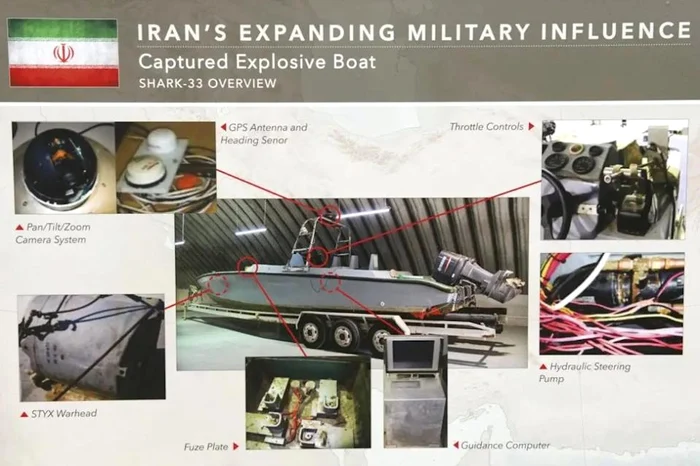
Antinava ballistic and cruise missiles launched from the shore are another key component of the threats that Iran could bring to the Strait Hormuz. This situation is aggravated by the narrowing of the waterways, which offers a very limited maneuver, especially for large ships, in front of large attacks.
On the other
A satellite image made by Planet Labs on June 12 also indicated the likelihood that Israel targets the Naval assets of the IRGC at a base in the Persian Gulf. However, it is not a location that the Israeli defense forces (IDF) have so far included in their, otherwise extended lists, regarding targets attacked in Iran. The “drone carrier” Iranian Shahid Bagheri and the mother ship Shahid Mahdavi were also observed leaving their port of origin from Bandar Abbas, where they would be very vulnerable to attacks.
At the same time, Iran has a significant ability to disperse its ballistic and cruise missiles. This aspect makes them extremely difficult to track and prevent preventively and create additional uncertainty about where threats might suddenly occur
The US Marina and other organizations have made efforts to alleviate these risks, including using surface platforms and submarines without crew. However, depending on the number of me that Iran can place, a definitive removal operation could take possible weeks or even months.
It is worth noting here that, starting in October 2023, the ThiThilor Campaign in Yemen against commercial shipping and foreign war vessels in and around the Red Sea has already demonstrated many of the capabilities and tactics that Iran could use in the Hormuz Strait.
Despite the fact that American and other countries are patrolling the waters around the Red Sea and directly attacking the Houthi targets on the shore, commercial trafficking through that region has largely collapsed.
Iran has already threatened to target American forces and other foreign forces in the Middle East if they help to defend Israel from its rocket and drone attacks.
The Red Sea can be bypassed, but there is no other exit for commercial shipping from the Persian Gulf than the Hormuz Strait. Therefore, even an attempt by Iran to block this waterway would present much broader regional and global implications, which would attract reactions to different levels from powers around the world. In particular, the Arab states of the Gulf, already in historical conflict with Iran and aligned with the United States, would be pressed to act or at least support a certain type of intervention, given the impact on their highly dependent oil and natural gas.
Revenue from oil and natural gas transport are vital to Iran itself and could be even higher as a result of the current conflict. Disturbance of maritime trade would have another impact on the Tehran regime. In recent months, reports have stated in particular that Iran has intensified imports of chemicals from China, which can be used to produce fuel for its missiles. The Iranian armed forces also import other types of military equipment in China, as well as from Russia.