Europeans are asking me how to help in the fight against Putin. My answer is simple


If I were to describe the movement that my husband Alexei Navalny created in a few words, I would say this: we are a pro-European movement.
We believe that Russia is an inseparable part of European civilization and that the European model of development is best suited to our country.
Hence our belief that the dark years of Putinism are not a historical inevitability but an aberration. And that when Vladimir Putin's regime comes to an end, Russia will have a chance to return to the European path.
But what does this “European way” actually mean? From Hungary to Portugal, from Sweden to Greece, Europe is vast and diverse. Its nations differ in both their governance and political evolution.
Moreover, 2025 was a difficult test for the continent's countries, even in the context of recent years. Putin's war with Ukraine continues and the EU faces intense political pressure from both outside and inside. The economic situation is also far from ideal, as EU countries are forced to significantly increase defense and security spending, which gives new ammunition to populists of all stripes.
Things that seemed obvious until recently now seem more uncertain. Marginal views on fundamental issues – from humanistic values to migration, environmental policy, minority rights and relations with dictatorships – are suddenly being expressed from the highest platforms. Not long ago this would have been unthinkable.
When Alexei Navalny spoke of a “beautiful Russia of the future”, he had in mind a peaceful, democratic and prosperous European state. But what does it mean to be a European country today?
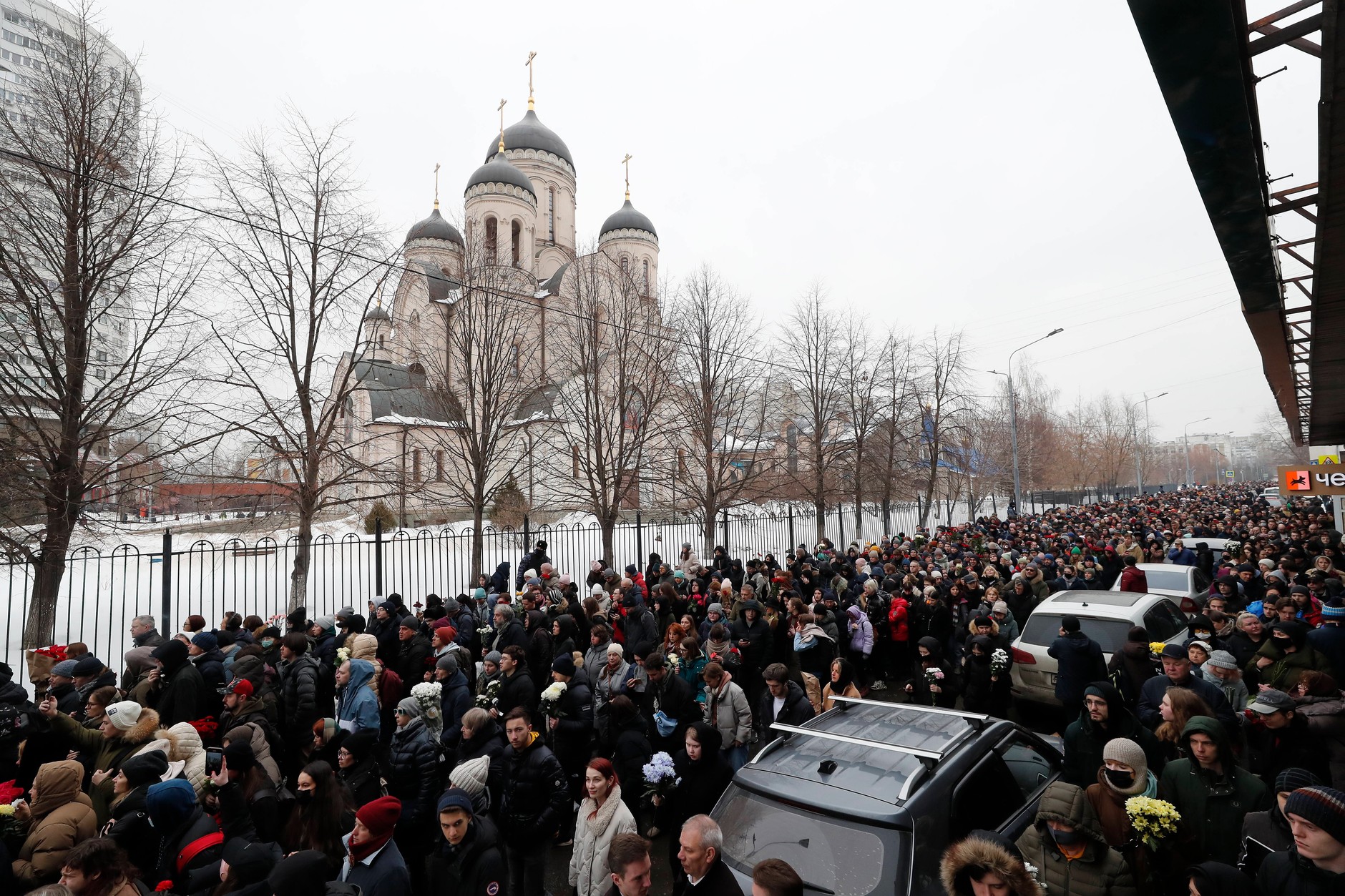
Crowds of Russians follow the hearse carrying the coffin of late Russian opposition leader Alexei Navalny outside the Church of the Icon of the Mother of God during his funeral in Moscow, Russia, March 1, 2024.MAXIM SHIPENKOV / PAP
Despite all its internal challenges, contradictions and misunderstandings, Europe has always been – for me and for many Russians – a symbol of prosperity.
After World War II, Europe became a remarkable example of a progressive society based on mutual respect. Racism, colonialism, militarism, imperialism and, above all, the rejection of democracy and human rights have become unacceptable. The values enshrined in the European Convention on Human Rights served as a guide for anti-dictatorship movements around the world – including in Russia, inspiring Soviet dissidents in their unequal and heroic struggle against communist tyranny.
The same values have always been at the heart of our program, creating a coherent, not situational, opposition to Putin.
You should understand that our main disagreement with Putin is not tactical, but based on values. I, my husband – who was murdered by Putin – and many of our allies opposed him long before he invaded Ukraine, back when he was welcomed in European capitals. We will continue to oppose him if he remains in power in Russia after this terrible war ends.
We are not asking for anything extravagant or extraordinary. We simply want Russia to be a country that cares above all about the dignity, rights and future of its citizens – just like European countries do. We want the same basic rights and freedoms that Europeans consider to be an integral part of everyday life.
We fight for the priority of human rights over state interests.
We demand true freedom of speech and assembly, so that anyone who disagrees with the government can campaign and criticize openly without fear of being imprisoned, exiled or murdered – as was the case with my husband.
We strive for democracy. For the right of every citizen to compete and earn the trust of voters in free and fair elections.
We support federalism and local self-government so that people can elect their representatives not only at the national level, but also in their districts, cities and towns. In a multi-ethnic country like Russia, this is crucial. Only thanks to functioning self-government can its inhabitants preserve their culture, language and identity.
We also fight for independent and fair courts.
We defend the right to private property. At the same time, we believe that a country as rich as Russia must be generous to its citizens and that revenues from natural resources must not be stolen by the ruling elite or spent on wars.
Of course, we also strive for peace, because the very idea of war seems as absurd to us as to any normal European. We want Russia to be a good neighbor and a reliable partner for all countries around it, both in the East and in the West.
These are European values that unite hundreds of millions of people, from Tallinn to Lisbon, despite all the apparent differences and polarization that characterize today's politics.
Rule of law, not arbitrariness.
Respect for the institution, not personal whims.
A state that serves the people, not the people who serve the state.
As you can see, we are not radicals. We are all very different in our views, but we have one thing in common: we are enemies of the Putin regime, which has brought war, dictatorship, corruption and terror to our country. We oppose not only Putin, but his entire authoritarian, anti-democratic, anti-parliamentary, militaristic, xenophobic and chauvinistic worldview. Putinism has no ideology – it is simply a denial of the values of modern European civilization.
We are normal Europeans who share basic European values.
When I talk to European politicians, they often ask me what they can do to help our movement, our fight against Putin and his war. My answer is simple: be strong, follow the principles and be consistent. It is in our common interest that Europe remains united and successful – only then will it be able to meet the challenges of our times, including helping those who continue to fight for freedom. Europe is more than capable of standing up to hypocrisy and double standards. It is more than capable of reaching out to tens of millions of pro-European Russians — and helping to increase that number.
Thanks to this, the beautiful Russia of the future, for which Alexei Navalny gave his life, will be peaceful, democratic and prosperous – in other words, a normal European country.