
How China is preparing to dominate the bottom of the oceans, to take advantage of the mineral riches in the depths

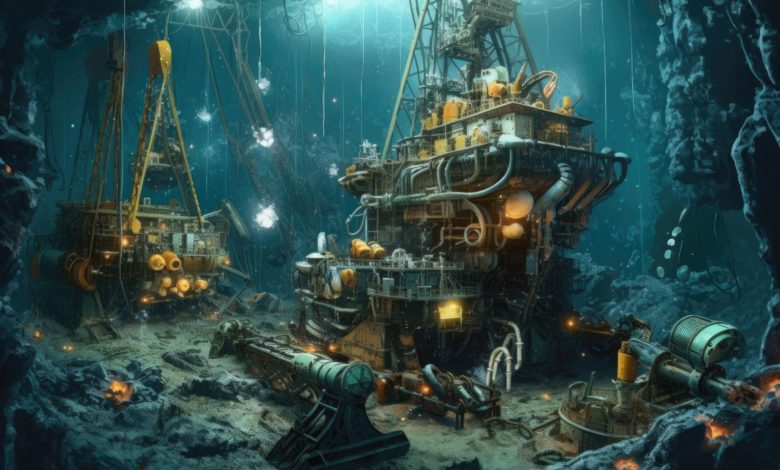
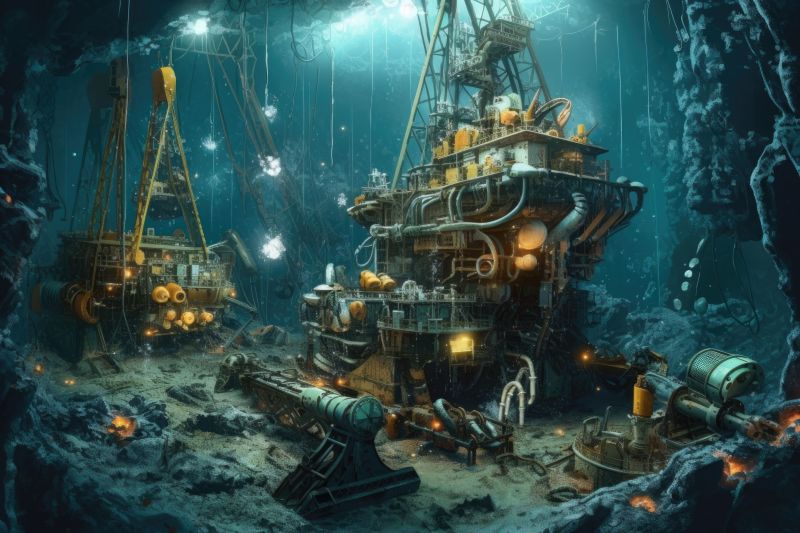
Submarine mining, imagined generated with AI (source altitude, dreamstime.com)
China patiently prepares her strategy that allows her to obtain important revenues from a controversial activity that is only at the beginning, but promises enormously. China makes partnerships with small states in the Pacific, develops technologies and is based much on geopolitical power, to become a force in the submarine mining. Recently, a prototype of extraction machine has reached a depth of 4,000 meters.
China is not in a hurry but is persevering
Because it has huge energy needs, China is looking for resources everywhere, and the bottom of the oceans represents the next “border”, AFP shows in an analysis.
The bottom of the ocean is a promising place. In national or international waters, the depths are rich in cobalt, nickel or copper, strategic resources for energy transition, and especially for electric vehicle batteries.
The mining of resources on the bottom of the oceans is extremely difficult, especially since we are talking about areas with huge pressure and total darkness. The equipment must be robust and specially designed for this hostile environment, the costs of development, maintenance and operating would be huge.
It is hard to get to resources, even when you know exactly where they are, because they are difficult to collect without damage and are often scattered on large surfaces and are found in small quantities per square meter,
China is not a technological leader in the field, but has continued to do research and recover the gap to the countries that started for a long time.
For example, the Chinese state recently concluded an agreement with the Cook islands in the Pacific, for mining in their territorial waters and has understood that it wants a proximity to the state of Kirbati, also from the Pacific (in the equatorial area).
In July 2024, the “Pioneer II” extraction prototype of the University of Jiao Tong has achieved an important test over 4,000 meters deep, a record for China. A company named Beijing Pioneer says he intends to perform a polymetal nodules collection test in the second half of 2025.
Taking advantage of the opening offered by former US President Donald Trump for mining offshore, the Canadian company The Metals Company (TMC) has submitted the first operating license in international waters.
China is not as technologically advanced as the company TMC, the gap being estimated somewhere between two and five years, shows AFP experts.
China has a great advantage over actors such as TMC, who depend on partner companies, for collection and processing. Chinese companies are financially supported by the state, and the country already has the necessary infrastructure for metal processing, AFP notes.
China, through several state -owned companies, holds five of the 22 exploration contracts with the ISA (International SeaBed Authority) authority
Why is the submarine mining controversial
The submarine mining is controversial for several reasons, but mainly due to the high risks for the marine environment, due to the lack of clear regulations.
Mining generates clouds of sediment that can suffocate marine organisms, can affect algae photosynthesis and modify water chemistry.
Mining operations produce intense underwater noises that can seriously affect marine mammals, such as whales and dolphins, which depend on sound for communication and orientation.
The international authority that should supervise the submarine mining in international waters is accused of favoring companies and is a problem that there are not clear, compulsory international rules, which will effectively protect the environment.
Photo source: dreamstime.com


