The unprecedented attacks launched by Israel on Friday against Iranian objectives have not only had the declared role to neutralize a nuclear threat perceived as “existential”. Behind this military objective is outlined a much more ambitious plan: changing the regime from Tehran, reports the BBC.
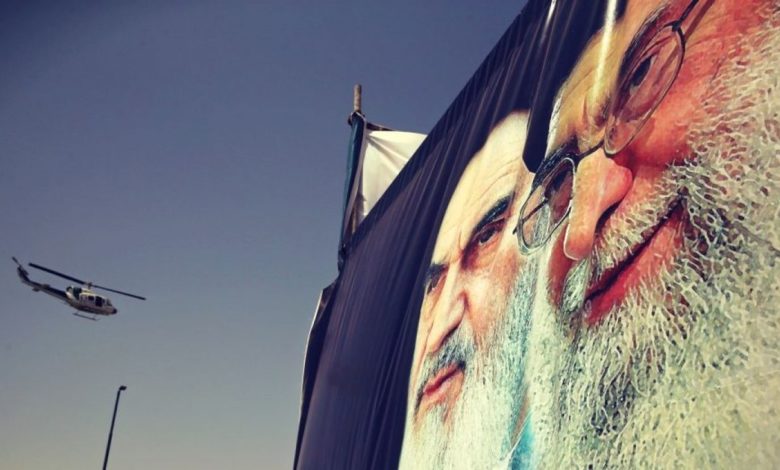
Ali Khamenei, the spiritual leader of Irun/ Photo: EPA/ EFE
Prime Minister Benjamin Netanyahu has left a little room for equivocal in his Friday night statements. He addressed directly to the Iranian people, urging him to “unite around the flag and historical inheritance, in order to gain freedom towards an evil and oppressive regime.”
The message is clear: Israel not only concerns the nuclear infrastructure of Iran, but hopes to trigger an internal reaction that will eventually lead to the collapse of the Islamic Republic. But is this realistic scenario? And, more importantly, what's next if this calculation is wrong?
A blow to the top
Among the targets of the Israeli attacks were some of the most important commanders of the revolutionary guard: the chief of the army, high-ranking leaders of the IRGC-the paramilitary force that constitutes the spine of the regime. Iran's response was quick – attacks on Israeli strategic bases and strategic objectives – but Netanyahu warned: “There are others.”
This spiral of blows risks seriously destabilize Iranian leadership. It is probably what Israel wants: an internal crisis that opens the way of a wave of protests or even a popular revolt.
But this is a dangerous bet. There is no clear evidence that such a chain reaction will take place. And even if it starts, no one can say with certainty where they would go.
Who actually controls Iran?
The real power in Iran is not only in the hands of political leaders. It is concentrated in opaque structures, often non -seed: the Guardian Council, IRGC, religious leadership. They control the army, the economy, the information and – for the most part – the society.
They do not need to take power through a coup. I already own it. And if they feel that the regime is threatened, it could push Iran in a more radical direction.
Another variant, just as worrying, is the institutional collapse. With a population of almost 90 million inhabitants, the collapse of the Iranian state would have devastating effects for the entire Middle East-a comparable script, but on a much larger scale, with post-Saddam or post-gaddafi liba Iraq.
Iranian opposition – fragmented and without clear direction
Even if the current regime collapsed, the essential question remains: who replaces it? Currently, the Iranian opposition is divided, weak and devoid of a legitimate leader recognized internally.
After the massive protests of 2022 – the movement of women, life, freedom – there were attempts to coagulate the opposition from exile, but the ideological divergences and the lack of a common project have made these initiatives quickly.
Reza Pahlavi, the son of the last chess of Iran, enjoys support in certain circles and even visited Israel. But its popularity does not necessarily translate into a real ability to lead a transition.
Another, controversial option is the Mujahideen-E Khalq (MEK) group, which pleads for the removal of the Islamic Republic, but opposes the return of the monarchy. The involvement of Mek in the Iran-Irak conflict, on the side of Saddam Hussein, made him detected by much of the Iranian society. Despite the support received in the past from figures from the Trump administration, the influence of MEK seems to have now decreased.
Other political voices propose either a secular democracy or a constitutional monarchy. But no one has the strength or structure for the time to take over in a possible power transition.
What does Iran want?
In turn, Tehran has limited options. Despite the response attacks launched on Saturday, the Iranian leadership does not seem to trigger an open conflict with the US – a confrontation that would be catastrophic for the regime.
Negotiations with Washington could provide a way out. But returning to the table of negotiations could be perceived internally as a political defeat. At the same time, escalating the confrontation with Israel does not offer any successful guarantee.
Any attack on the American bases in the region would inevitably lead to an extension of the conflict – exactly what Tehran wants to avoid.
A bet without safety nets
Israel seems to have relied on the idea that a strong, well -targeted blow could shake the Tehran regime. But recent history gives us enough warnings: the planned diet changes rarely have the expected results.
It is still too early to fully assess the effects of Friday attacks. But a major escalation, devoid of a clear plane for the “day after”, risks throwing the region into a new instability cycle.
And when the dust is left, the essential question will remain: was this a demonstration of strength or the beginning of a new strategic error with lasting consequences?