The testimony of a Ukrainian who spent two years in the Russian captivity: “They were surprised not to give up”

An Ukrainian who spent two years in Russian captivity reported how the Russian authorities used the beatings, threats with execution and sexual violence as methods of snatching “confessions” for alleged war crimes. The man, who was released last year, tells that he initially had humiliations, but they were compared to what would follow, The Guardian reports.
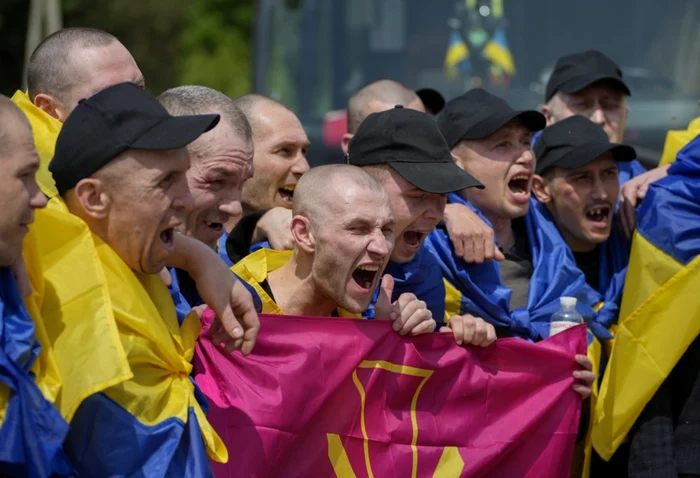
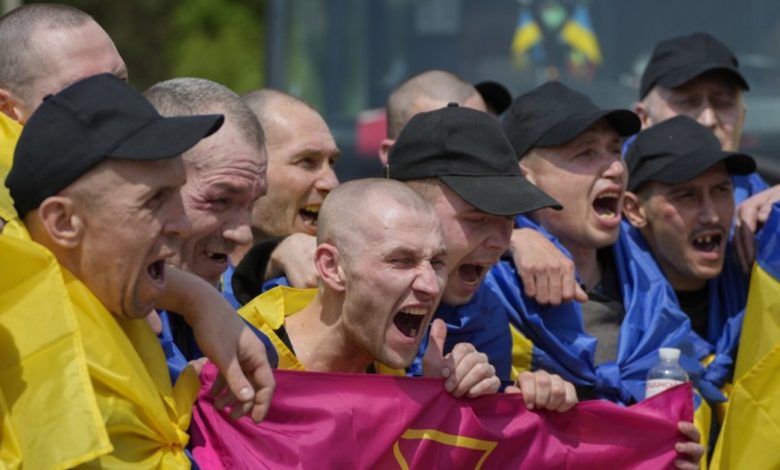
Russia and Ukraine recently made an important exchange of War Prisoners EPA-EFE
Maksim Butkevici was captured with other soldiers after they were drawn into a trap on the eastern front.
“They hit me with my foot and fists,” recalls the man, a former activist of human rights and journalist. After the Russian invasion, he enrolled as a volunteer in the army. “They took our watches and other things. After a soldier took my headphones, he asked me to whom:” Do you give me a gift? ” Although I was on my knees, with the pipe of a weapon at the temple, I refused. “
But that was just the beginning.
Butkevici's testimony adds to non -national evidence regarding the abuses committed by Russia against the captured Ukrainians: staged processes, executions and torture. The Ukrainian had this experience despite a large international campaign for him to have a correct treatment in accordance with the laws of war, after becoming obvious that he was defamed in the Russian media and threatened with a conviction in a simulated trial.
The next stage of Butkevici's journey was a building outside Luhansk.
“He was an officer who behaved much worse with us, trying to challenge us. He wanted to show that he was smarter than the usual soldier. He asked us who was married, while we were kneeling in front of him. He asked where our wives were. One responded” in Poland “and another” in Germany. “
He imagined what their wives were doing sexually, with scabs. I thought, “This officer has serious problems”. The next morning, Maksim and his comrades were presented to a group of commanders and propagandists and they were told they would be filmed to show that they were treated well. “They seemed intrigued by me, being the only officer,” Butkevici recalls. Warned by Russian soldiers on “consequences” if they check online and discover that he has lied about his past, he then confessed that he is a journalist and activist for human rights.
There followed a conversation in which Russian soldiers insisted that the invasion should not be characterized as “war”, and Butkevici replied that he was only interested in the human cost of Russia's actions. “They were surprised that I did not give in, although I did not go into dispute with them.”
Threats with execution
The first explicit threat followed with death followed.
“They said to me,” You probably think you are a prisoner of war. You are not until you are registered. For now you are missing on the battlefield. If you do not behave properly, we can go to the back yard, where we have executed the prisoners who behaved badly. “
The first serious beats took place a few hours later.
“The propagandists left and, a few hours later, the Russian troops returned by the soldier from the special forces. They told me to say that my wish is to hunt and kill my comrades in Ukraine. I replied:” There is nothing personal, but I cannot tell this “.
While the “bad” officer recited what seemed to be a speech of Putin, the soldiers were forced to repeat after him.
“If they were wrong or confused, I was beaten with a wooden stick. I fainted and my hand was swollen. I said,” You will break my shoulder, “and the officer replied,” I know what I'm doing. ” “Then came others, who hit me with their feet and fists, and someone removed a phone and ordered us to say,” Glory to Russia “, and we were asked to talk again about the Russians who hunted our comrades. After that, we were ordered to climb into a truck, where we fainted. ”
Detention
Arriving at a Lugansk prison, the soldiers received old mattresses and towels and were informed that they are in a preventive detention center. “In the cell there was a single tap for drinking and washed, with poor quality water. Although we were fed three times a day, the food was awful. The portions were very small. We started to suffer from hunger.”
It is estimated that between 8,000 and 10,000 Ukrainians are still in Russian captivity. Those who returned to Ukraine following prisoners' exchanges are visible with much weaker.
Only in prison did the serious interrogations began.
“They interrogated each one,” Butkevici said. “In the first weeks, the emphasis was placed on military information, but we did not give them anything. Then they tried to demoralize us.”
The prisoners were taken to what the Ministry of Security of the State of the so-called Lugansk People's Republic was taken, where, according to other testimonies, soldiers were tortured with electric shocks. “They used the method on other soldiers, but they only threatened me,” he said. Butkevici says that later he realized that those who were interrogating them were more interested in his past in the field of human rights and the time spent in the United Kingdom than his volunteering in the army.
“Then I remember because it was my day – I was interrogated by two guys. I had met them before,” he said. “They played the role of the good policeman and the bad policeman,” and they pressed him to interview an “international media organization responsible for Ukraine” as a Nazi country. ” At the same time, he was questioned about the financing he had received for his NGO at the Soros Foundation. They warned him to take care of what he says because they can condemn him as a “war criminal.
The height of torture
Maksim said that since then he has undergone an intense regime of torture and threats, which started with periods of immobilization in painful positions and beats with a rubber cane. They threatened him again with death, but also with rape with the help of a cane with electricles. The torch gave him three options: to sign a confession in which to recognize war crimes and to be “changed very quickly”; to be taken to the place of the alleged “crime”, where he was shot while trying to run; Or to reach a cell with prisoners who would have made his life a “hell”.
He chose to confess. “For a few days, I didn't even know what a crime I had confessed, until I was taken to a psychiatrist who asked me if I understood why I was accused,” he said later acknowledging that he had attacked two civil women in a village where he had never been. “Then I was sentenced to 13 years in a criminal colony with strict regime,” he said.
A Kafkian process
It followed what he described as a Kafkian trial, from the false and coarse accusations to the “peculiarity” that all the legal documents had to be signed, including a lawyer who falsely certified that he was present during the interrogation.
“I realized that, in my case, the Russian troops had intensely bruised a village. When they finally conquered it, they found civilians injured by their own fires and blamed the Ukrainian war prisoners.” It is an advantageous situation for the Russians. In the criminal colony of Lugansk occupied, he was forced to work waiting for the trial.
“Then I discovered that I had a lawyer in Moscow. A human rights lawyer!
On October 17 last year, after more than two years of captivity, he was communicated to the morning call to collect his things. He did not dare to hope he would be released. But he woke up on a neighborhood aerodrome, along with other prisoners of war to be changed against some Russians.
“I do not think that before capturing I had a clear understanding of how much the Russian criminal system reflects the values and methods of the Russian world,” he said about the ordeal.
“It is no exception. It reflects the fundamental vision of people as a disposable material. If you” behave well “, you may be treated well, but you have to obey. There is no freedom of choice. Even the guards said the same about their civil life.”
“It is a fairly faithful image of what Russia is going to bring to Ukraine.”