“It's like a kind of export from America”: what the criminals say about the increasing number of armed attacks in schools in Europe

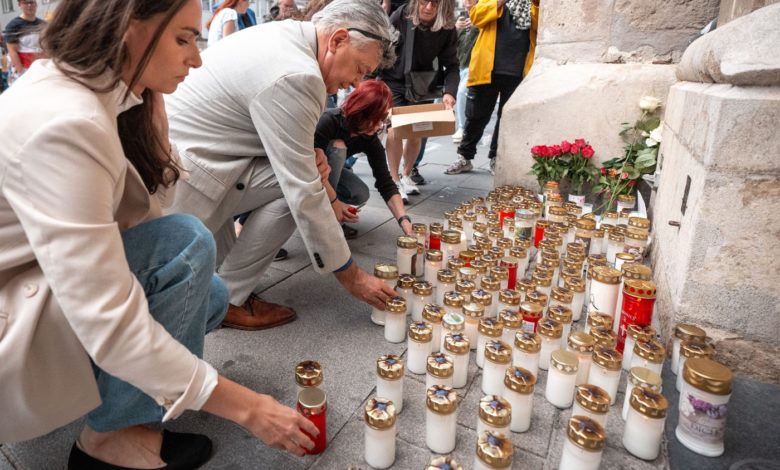
A number of armed attacks in schools in Europe has increased pressure on authorities to approach a problem for a long time to be mainly one specific to the United States, reports Reuters after the last armed attack committed by a young man from Austria, at a school in Graz.
Mass armed attacks remain more common in the United States. But in Europe four of the most serious attacks in schools this century have taken place in the last two years. Two of these-one massacre with 11 dead in Austria and another in Sweden-happened this year.
The attack committed this week in the Austrian city of Graz has triggered calls of political leaders to tighten the laws on weapons, similar to the Swedish government's reaction after the 11 deaths at the Campus Risbergska High School in Örebro in February.
“Mass armed attacks – of which the attacks in schools are part – were largely an American problem, but this balance changes. Their number in Europe and other parts of the world is increasing,” said Adam Lankford, a forensic at the University of Alabama.
“These attackers see what others do”
Lankford recalls, given even the statements of attackers or the history of their searches on the Internet, that in Europe this increase is due to “Copycat” (imitating) attacks, often inspired by US massacres, such as the one from the Columbine High School in 1999.
“It's like a kind of export from America. These attackers see what others are doing and a snowball effect is triggered,” says the expert.
According to research conducted between 2005 and 2010 by Lankford and a colleague of his, the number of attacks committed by people in search of notoriety was twice as high in the United States. However, between 2017 and 2022, the rest of the world reached the US.
Their data also show that Europe now has a greater proportion of total mass armed attacks than in the past.
Lankford claims that for European politicians it should be easier to take measures to prevent such attacks than it is in the United States, because of the central role that weapons play in American culture and identity.
The European Union has left the regulation of weapons and social networks at the discretion of the Member States. The recent killing of several people led to initiatives from several countries for applying stricter rules.
Measures taken in Europe after armed attacks in schools
In Sweden, the Government agreed to tighten the process of verifying applicants for weapons and to restrict the use of semi-automatic weapons, following the Örebro attack.
According to a report by the Swedish authorities, incidents of violence and threatening behavior in secondary schools and high schools increased by over 150% between 2003 and 2023.
In Finland, where a 12 -year -old child shot a colleague and seriously injured another two last year, schools organize door barricading and hiding in front of attackers. The government also proposed tougher penalties for weapons in public.
Following a fatal attack with the knife spent in December in a primary school in Zagreb, the Croatian government restricted access to schools and imposed the obligation of the guards.
Germany has gradually imposed stricter controls on the possession of weapons following school massacres in 2002 and 2009, and last year introduced a prohibition on knives with automatic opening (knight type) and wearing knives at public events, after a series of attacks with white weapons.
Czechia tightened legislation on firearms after the Carolina University attack
Dirk Baier, professor of forensics at the University of Sciences applied in Zurich, says that the tightening of weapons holding conditions was the only way politicians knew how to treat the problem seriously.
“There will certainly be restraints in this regard, from hunters, sports shooters or other lobby groups,” he says. “However, I think the arguments for tightening the legislation will weigh more than the opposite,” he says.
The law of weapons was also an intense political topic debated in the Czech Republic, after a student shot 14 people at the Carolina University in Prague, in December 2023.
The country has imposed the obligation for the sellers of weapons to report suspicious purchases and that doctors check whether people diagnosed with psychological problems have weapon permits.
The UK is conducting a public investigation into an attack on Southport, where three girls were deadly stabbed last year. The series “Adolescence” phenomenon on Netflix, a story about a student accused of murder, explores concerns about toxic culture.
Macron wants to restrict the access of young people to social networks
Meanwhile, in France, President Emmanuel Macron has asked EU regulations this month to prohibit the access of children under 15 years of social networks, following a deadly attack with a knife at a school.
The motivation of the attacker in the Austrian school is still under investigation. Police said he was socially withdrawn and passionate about “shooter” online games, with shootings.
Most of these attacks are committed by young people, and the forensinist Lankford states that there is a global phenomenon of attackers who seek notoriety that they cannot achieve in real life, partially driven by social networks.
“Even if they expect to die, some of them are excited about the idea that they will leave something behind,” says the expert.
Austria has relatively permissive laws on firearms, and President Alexander Van der Bellen said, after the attack, that the legislation deserves a closer analysis.
Austrian political scientist Peter Filzmaier told Reuters that it is likely that the public supports the tightening of the laws for weapons, although a general prohibition for private persons is less plausible.