Romania, the country with overturned priorities: work is charged 14 times tougher than luck

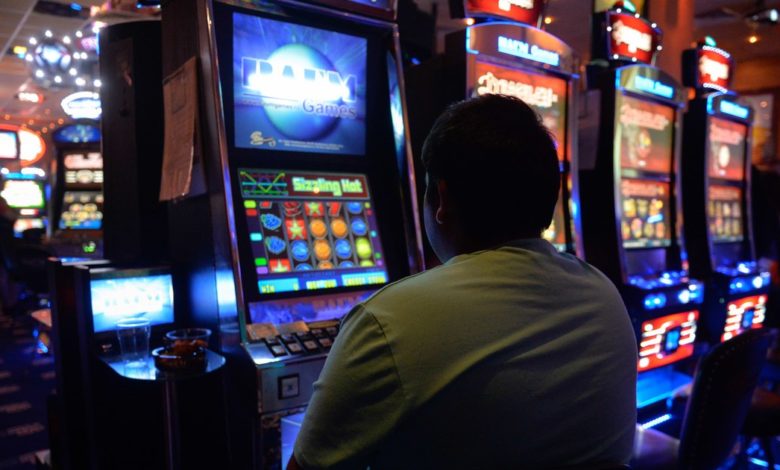
The Romanian state taxes work with 42% of the gross salary and gambling earnings of up to 10,000 lei with only 3%.
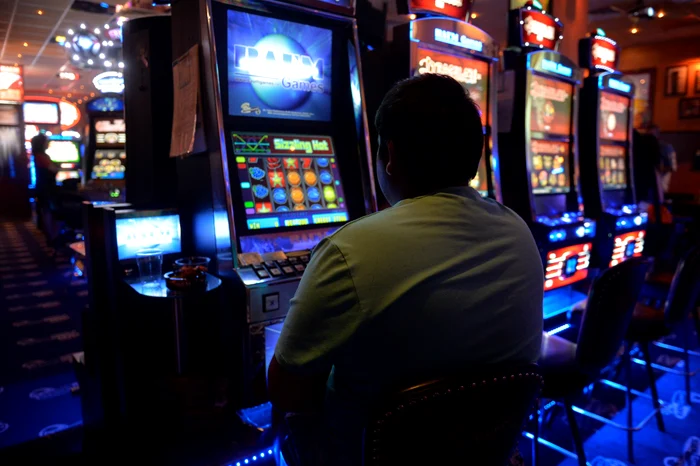
The state taxes work with 42% of the gross salary and gambling earnings by just 3%
“If you go every day at work, the state takes you 42% of your win (gross salary). If you go to every day at the classroom and betsthe state takes you taxes 3% of the win. The betting industry has the slightest taxation of all industries in Romania. Logically, being a vice, it should have the highest taxation ”draws attention to economist Radu Georgescu.
According to him, the small amount of the tax is a tax anomaly, given that hundreds of thousands of people are dependent on tricks and bets, and in almost every block there is a fee, while most online transactions in Romania are done on sports betting.
15% of adults play at least one form of gambling
The latest statistical data shows that almost 100,000 Romanians are experiencing gambling addiction, but their number could be at least 2-3 times higher, given that the data is based on the declared addiction, not the one that is not recognized by the passionate players. According to recent data, in Romania, 15% of adults play at least one form of gambling. At the same time, the incidence of gambling addiction in people over 18 is 0.6%, ie about 98,000 people.
“Gambling has been a huge problem, held under a price for many years. Only lately, they have entered the public attention, in the attention of the decision makers and there are some attempts, at least embarrassing, regulatory. I think the discussion about games is much broader, because the implications of the pathological game can be extremely deep, similar to those of high -risk drug use. Things have taken it crazy, they came out of control, there is no direction, regulatory strategy. Statistics could, in reality, look much worse. There are also dependent minors and people who do not recognize the addiction to gambling.“, Dr. Ovidiu Alexinschi, primary psychiatrist, coordinator of NOADDCT programs, recently said.
How to now tax gambling in Romania
According to art 110 of the Fiscal Code, the tax due for the income from gambling is determined at each payment, by applying the next taxation on each gross income received by a participant from an organizer or payer from gambling:
- Up to 10,000 lei inclusive, the tax rate of 3%is applied;
- over 10,000-66,750 lei inclusive, the tax is 300 lei + 20% for what exceeds 10,000 lei;
- Over 66,750, 11,650 lei + 40% will be paid for what exceeds the amount of 66,750 lei.
For the revenues made by natural persons as a result of participating in distance or online gambling, the tax due and established by applying the tax scale is determined and withheld at each transfer from the account on the play platform in the bank account or similar.
Thus, the natural persons who register winnings in Romania are not obliged to declare them at ANAF, because the Treasury is automatically notified by the organizing company of gambling.
In contrast, if the income is obtained abroad, the natural person is obliged to notify ANAF by completing the unique statement that he will send to the tax until May 25, including the year following the income.
In 2025, the tax rate for the prize income tax is 10% applied to the net income made from each prize.
Spain, Greece and Italy charges the winnings by 20%
The gambling tax system differs from state to state to European Union, there are also countries that do not tax them at all, considering them accidental earnings: Malta, Great, Germany, Belgium or Denmark
For example, France has one of the oldest legislations in the field. Thus, players are obliged to declare their earnings by completing a form. Only the earnings of over 1,500 euros are subject to 12%quota taxation.
In Spain the taxation varies between 20 and 25%. For poker players, the state has established that they are professionals and set a 19% taxation level on the amount collected for EU residents, respectively 24% for non-EU.
In Greece, the taxation applies on the basis of the player's daily profit. No tax is applied for earnings of up to 100 euros, after which it increases progressively, but without exceeding 20%, a percentage that applies to earnings that exceed the threshold of 500 euros.
In Italy the legislation clearly says that players have to pay a 20% tax when withdrawing the profit.
Andrei Caramitru: All income should be taxed the same
In the discussions recently held in Cotroceni on the reduction of the budget deficit, the idea of increasing the tax on gambling to 20%was advanced, regardless of their value.
“I think any income must be taxed as well – salaries, pensions, earnings from any source. That's normal to be. Theoretically, there should be no differentiation depending on the source of income in order not to encourage fiscal optimizations and changed behaviors. I repeat, logically, all income must be taxed as well. Including and especially pensions (there is the thick to be collected extra)“, Economist Andrei Caramitru told” Adevărul “.
Asked if it also refers to the small pensions, given that the social allowances of the pensioners are less than 1,300 lei, the economist said that the taxation could be made over a threshold of 2,000 lei.
“If we put the threshold of 1,500 lei to say then we need the same on salaries. There is no system from what I know in any developed country in which the pensioners do not pay the income tax and health!“, The economist said.
The increase is not agreed by the industry: We already pay 30% of the gross income
The Association of Remote Gambling Operators in Romania (AOJND) said that “The additional taxation of the gambling will not increase the revenues to the state budget but will lead to the massive migration of the players to the Black Square, where they will be deprived of any protection, and the economic and social effects of such a measure would be catastrophic.”
Remote gambling operators already pay, cumulative, taxes up to 30% on gross income and any additional increase would be economically unsustainable. Therefore, much of the additional financial burden will be found in the contribution of the participants to the game, which will lead to their mass migration to the black market of non -valued operators.
According to a survey carried out, the request for AOJnd earlier this year, 14.07% of the participants acknowledged that they have already played on non-bondage gambling sites in Romania. The main reasons invoked are the more attractive prizes and bonuses, 59.46%(which can only be granted by operators who do not pay taxes to the Romanian state), excessive taxation on licensed sites (18.92%) and lack of need to justify the origin of the amounts played (11.76%).
Moreover, the taxes collected to the state budget decreased by almost 17% in 2024, to 689 million euros, against the background of increasing the value of contributions and taxes in the gambling industry, according to the data provided by the National Gambling Office.
The players who will migrate to the black market will no longer benefit from the strict protective measures that the licensed operators are obliged by law to provide, among which the possibility of self -exclusion, betting limits, financial and eligibility checks, as well as information campaigns regarding the responsible game.
“Additional gambling industry taxation It will only push an increasing number of players to unauthorized operators, lacking any form of legal and social protection and generating a significant risk of proliferation of phenomena associated with gambling, fraud and other related illegal activities, ” said Odeta Nestor, AOJND President.