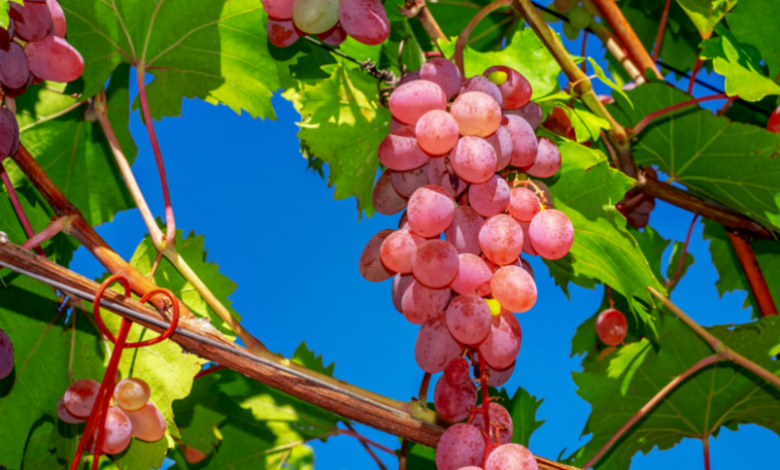
With the beginning of flowering, grapes enter into the most intense phase of growth. The whole future crop depends on how he overcome it. The ovaries are formed, clusters are laid. If the plant does not have enough food, the flowers begin to fall, which reduces productivity.
Modelity is most important
During this period, it is especially important not to act at random. Any mistake with the dosage of fertilizers can turn into problems. An excess of nutrients harms no less than their deficiency. It is better to get a little shorter than overloading.

Natural power sources
Organic fertilizers remain a proven way of recharge of grapes. Burnt manure, compost, bird litter saturate the soil with nitrogen, phosphorus and potassium. These elements contribute to the growth of leaves, the formation of buds and the overall vitality of the bush.
Mineral compositions
If mineral fertilizers are selected, such as nitroammofoska, you need to strictly observe the proportions. For 10 liters of water, 40 g of substance is enough. With separate introduction, 20 g of ammonium nitrate, 10 g of superphosphate and 20 g of potassium salt will be required. Regularity is more important than volume. It is better to fertilize a little, but systematically.
Support with microelements
Complex mixtures marked NPK and the addition of calcium, magnesium and iron have a good effect. They not only strengthen the immunity of the plant, but also contribute to longer and more uniform flowering.
Spraying
Fulfilling top dressing remains an effective method. In the evening or in cloudy weather, the leaves are well absorbed by trace elements: zinc, manganese and sulfur. This is especially useful if the root system experiences stress.
A systematic approach and properly selected top dressing will allow you to get large, sweet and juicy clusters.