The battle in which the Russians lost almost a whole fleet – 8 of the boldest military operations in history

The devastating attack with Ukraine's drones last Sunday, which destroyed over 40 of the Russian strategic bombers thousands of miles away from the front, reminds of the most daring military operations in history. Therefore, we use the opportunity to make a review of eight of the most important.
This article is part of a series performed by using the digital archive Arcanum newspapersin which you can travel 150 years of history of Romania, as it has been recorded in each era by the lens of the journalists of the time, of advertisers, writers and ideologists of all orientations.
The Ukrainian Sunday attack on Russian air bases seems out of a action movie or, rather, from a video game. The damages produced and the psychological and image impact are major.
The Ukrainian operation, whose preparation lasted a year and a half and was personally supervised by President Zelensky, managed to destroy over 40 Russian military aircraft, including strategic bombers worth billions of dollars, on bases thousands of kilometers from the front, according to an Ukrainian officer from the Security.
The method used – hiding the drones in the roofs of wooden barracks transported with trucks to the perimeter of the air bases – talks about the ingenuity and determination of Ukrainian forces, notes Reuters. This kind of surprise attack, which dramatically changes the balance of a conflict through a single operation, is not a novelty in modern military history. From Pearl Harbor to the preventive attacks of the Israeli army, similar operations have also made history in the last two centuries.
The battle of the Tsushima Strait
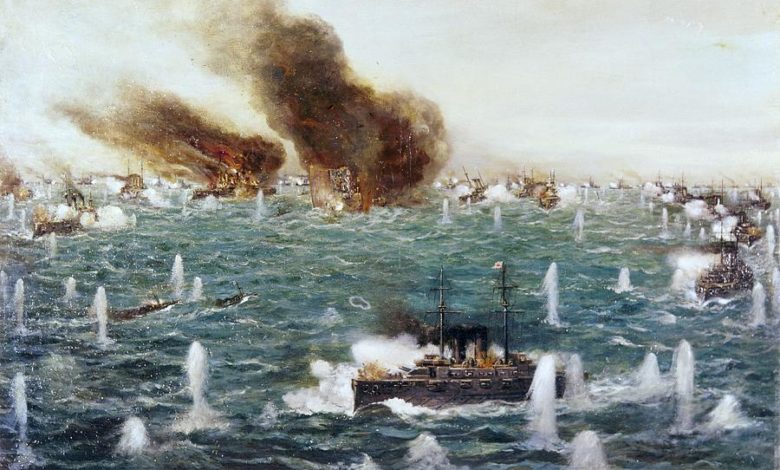
On May 27-28, 1905, in the waters of the Tsushima Strait, one of the most dramatic pages of world naval history was written. The Russian fleet of the Baltic had reached the Far East after an exhausting journey over seven months and 18,000 Nautical miles (about 33,000 km), starting from the frozen ports of the Baltic Sea with the mission to save the honor of the Tsarist Empire in the Russian-Japanese war. Commanded by Zinovy Rozhestvensky, this fleet represented Russia's last hope to change the course of a conflict that had already been disastrous for Tsarist forces.
The Japanese fleet, under the command of the Board of Admiral Togo Heihachiro, waited for the Russians in the familiar waters of the Strait. With faster ships, better trained crews and smarter naval tactics, the Japanese have shown technological and strategic superiority. The confrontation was devastating to the Russians: they lost all their 11 nails (seven sunk and four captured), and from the entire fleet only three small ships managed to reach Vladivostok. By contrast, the Japanese lost only three torpedoes and 117 people, a difference that reflects the extent of the Russian disaster.
The victory in Tsushima marked not only the end of the Russian-Japanese war, but also the transformation of Japan into a world naval power, the first Asian nation that defeated a major European power. The battle has become a symbol of the geopolitical transformation of Asia and has deeply influenced the development of modern naval strategies, demonstrating the vital importance of technological superiority and training in water clashes.
Pearl Harbor
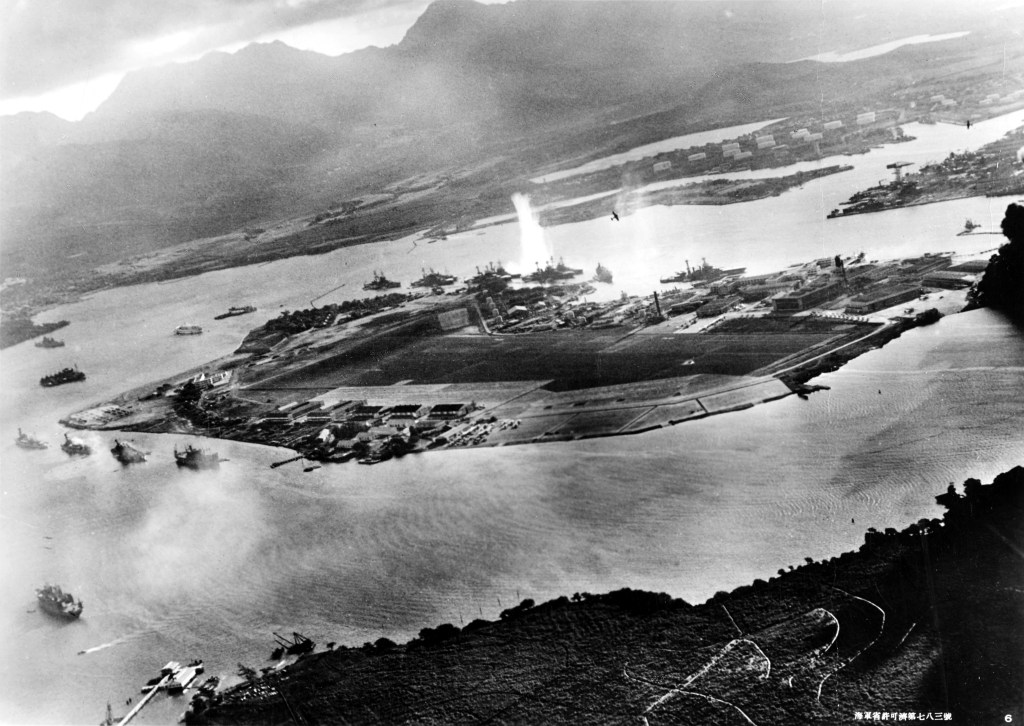
On December 7, 1941, the American Naval Base at Pearl Harbor, in the Hawaii Archipelago, was attacked without warning or a declaration of war, by a Japanese army, from several directions. The two -wave attack completely caught the American forces, which were not ready to defend their base, notes the military historians quoted by National Wwii Museum. Battle lasting as long as a football match. The Japanese killed 2,402 people and injured another 1,282. Only 64 imperial soldiers were killed, writes Magazine Magazine.
The Pearl Harbor attack remains one of the most devastating air attacks in history. Using 408 aircraft launched from six aircraft carriers, the Japanese destroyed 188 American aircraft (155 on the ground) and damaged or sank 18 war vessels, according to the official data of the US Navy. Consequence: United States Entry into World War II. The Americans declared war on Japan and, three days later, they told Hitler, an ally of Japan.
Although the official version is that of a “surprise blow”, there are suspicions that the central authorities were aware of the Japanese plans, which they allowed them to act unstoppable so that they would give America a pretext in a war that the population did not want. However, they did not anticipate the extent of the disaster, completes heroic Romania.
The doololittle raid
The first American response at Pearl Harbor was as daughter as the Japanese attack itself. 16 bombers B-25 Mitchell They took off, on April 18, 1942, from the portavion USS Hornet, Over 1,000 kilometers from their targets in Japan, in a mission considered almost technically impossible, according to the US Navy History page.
Although the material damages caused to the Japanese were minimal, the attack on five cities, including Tokyo, had a huge psychological impact, demonstrating that the Japanese islands were not invulnerable, according to Britannica. The operation was designed by Lieutenant-Colonel James Doololittle and forced Japan to repatriate fighter jets to defend the national territory, notes Defense Department.
Post-factum, things did not go to the plan: “out of 16 planes, 15 came back (on the territory of China), after remained untouched by the attacks of the Japanese. The accidents were due either to storms or lack of communication with the bases, or to finish the fuel,” writes Magazine.
The six -day war
Israeli air forces have perhaps the most effective preventive attack in history on the first day of the six -day war. Using almost all 200 available aircraft, the Israelis destroyed 452 Arab aircraft (most on the ground) in coordinated attacks on the air bases in Egypt, Syria and Jordan, according to data published by Jewish Virtual Library. In just six hours after taking over the first Israeli plane, the war was won by annihilating Arab aviation, according to the military analyzes quoted by The National Interest. The success of the operation guaranteed the Israeli victory on all fronts.
“On June 5, 1967, at 07:10 in the morning, the Israeli army triggers the offensive, as a reply to what it thought is the Arab mobilization for the destruction of the Israel. In half an hour, the Israeli disciplined machine is set: 200 bombers take off and the armor starts to the Egyptian front, Bombard the Jerusalem and the coastal cities near Tel Aviv.
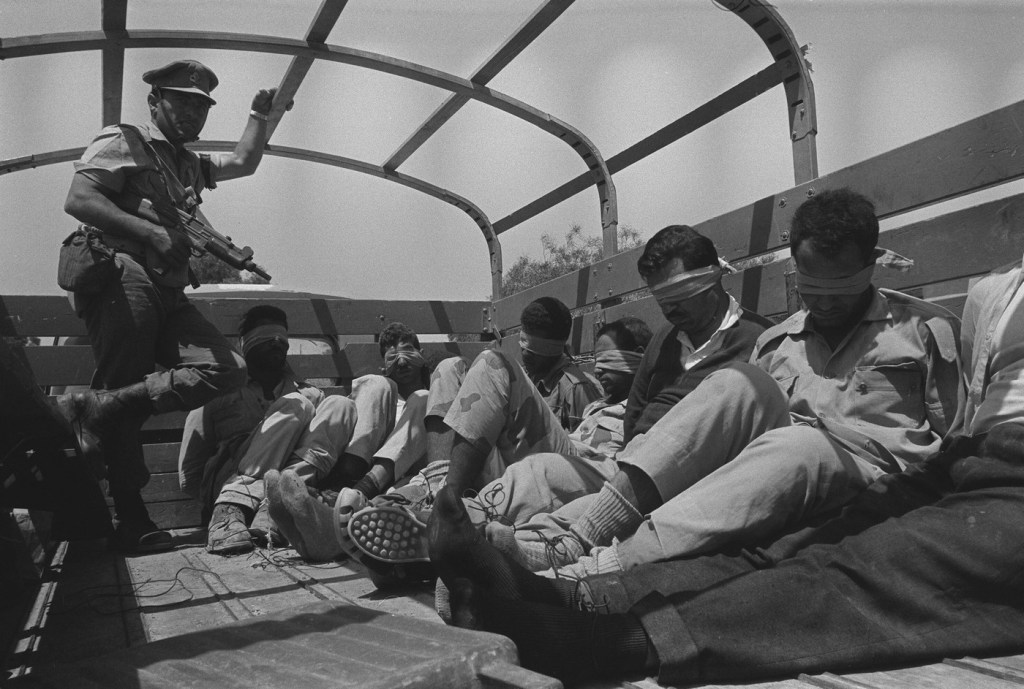
On the oriental principle “eyes for eyes, tooth tooth”, Israeli soldiers invade the Westordan, on the third day from the beginning of the conflict. On June 10, 1967, the war ends with a humiliating defeat of the Arab Coalition. What was to be the heroic elimination of the state of Israel was transformed into an extra territory a gift. In addition to the West Bank and East Jerusalem, Israel occupies the Syrian Golan and Mount Hermon, which dominates Syria and Lebanon, Sinaiul and Fășia Gaza, at that time under Egyptian occupation. The hero of Pan-Arabism, the Egyptian President Gamal Abdel Nasser, is humiliated, Syria and Jordan fail to recover, reign perplexity and confuse.
The 6-day war not only strengthens the state of Israel, but puts an end to the Pan-Arabic current and offers an environment conducive to the first public accents expressed by fundamentalism, molded on the release of Palestinian and Arab territories, ”writes the daily, 40 years after the war that changed the Middle East.
The attack from Taranto
The first attack carried out exclusively by aircraft against an anchored enemy fleet took place on November 11-12, 1940: 21 British aircraft Swordfish They attacked the Italian fleet from the port of Taranto, seriously damaging three Italian quiraasates, writes Imperial War Museums. The attack lasted only 10 minutes, but managed to change the balance of power in the Mediterranean, writes National Wwii Museum. The operation subsequently inspired the Japanese attack from Pearl Harbor, according to the historical analyzes published by the US Naval Institute.
Barbarossa operation
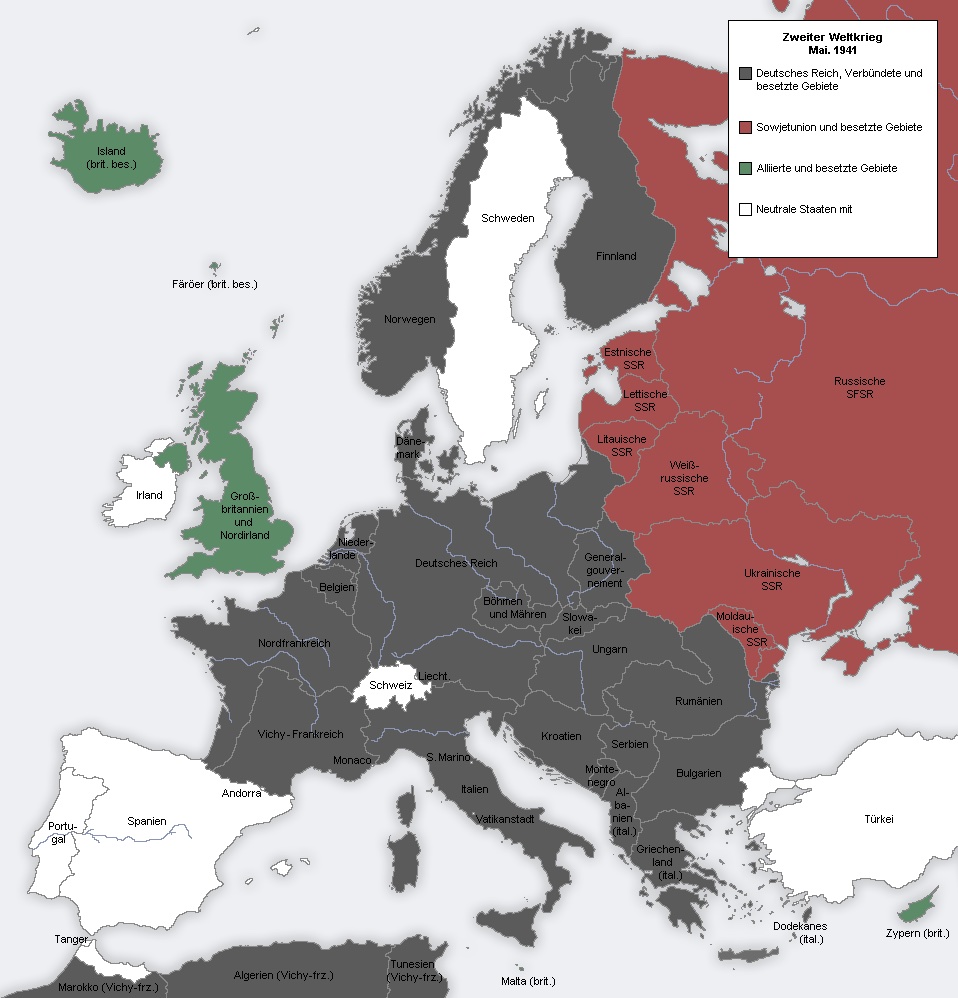
The German invasion of the Soviet Union started with one of the most devastating surprise air attacks in history. On the first day of the operation, Luftwaffe destroyed 1,800 Soviet aircraft, most on the ground, establishing almost instant air supremacy, according to Imperial War Museums. German reports claimed the destruction of 1,489 Soviet aircraft only on the ground, figures that Hermann Göring considered initially incredible, notes military historians quoted in War History online. The attack facilitated the rapid advance of German troops on the Eastern Front.
Babylon operation
Israel executed the first successful air attack against a nuclear reactor, demonstrating the projection capacity of force over long distances. Eight Israeli F-16 aircraft flew over 1,000 miles in the enemy to destroy the Iraqi Osirak nuclear reactor, according to Jewish Virtual Library. The reactor was completely destroyed in just two minutes, without other significant collateral damages, according to Israeli military documents.
“On June 7, 1981, a raid of Israeli aviation was dusting and powder the reactor Osirak. It is said that the Americans also gave a helping hand, materialized in a few last type missiles, capable of penetrating the thick, concrete coating. Bombardment performed after that date would have violated the regulations of the International Agency for Atomic Energy (AIEA) that prohibit the attack of nuclear installations ”, writes the world, in the August 22, 1991 edition.
Orchard operation
The second preventive Israeli attack on a nuclear reactor has demonstrated the evolution of modern military capacities. Eight F-15 and F-16 Israeli fighter jets flew 450 kilometers in Syrian territory to destroy the Al-Kibar reactor, built with North Korean aid, according to Times of Israel. The four -hour operation was preceded by a Mossad break in the house of the Syrian nuclear program in Vienna, where the Israeli agents stole photos from inside the facility, according to New Yorker. Israel officially confirmed the operation only in 2018, after 11 years of silence, and Aiea confirmed that the target was indeed a nuclear reactor, Al Jazeera reports.
Lessons of history
All the attacks presented have in common the meticulous planning, the total surprise and the strategic improper impact on the forces used. They show that, in certain circumstances, a brave military operation can fundamentally change the balance of a dispute, the psychology of the fighters and the international perception.
From the rudimentary bombers used in Taranto to the sophisticated drones used by the Ukrainians, the technology has evolved, but the principles remain the same: the courage, the ingenuity and the well -chosen moment can hit and shake even the strongest opponent. The Ukrainian attack on Russian air bases is part of the tradition of decisive blows that can influence the course of a conflict.
Article made with the support of Digitca Arcanum.