The secrets of the land of strawberries in communist Romania. The village from which the wagons full of fruit to the USSR and Europe left

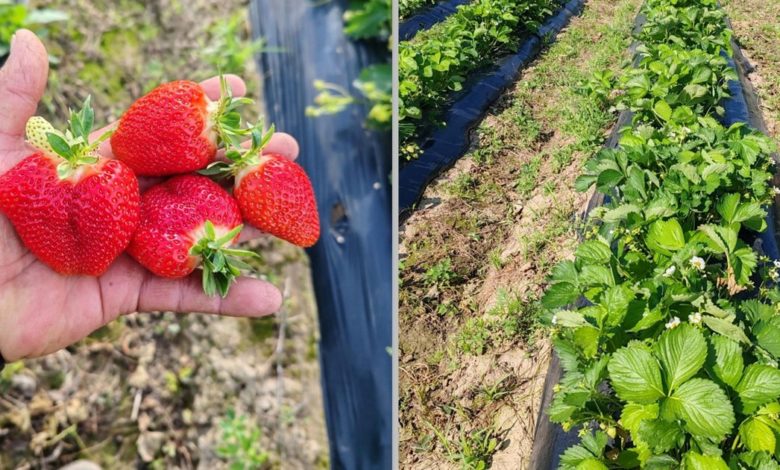
The most appreciated strawberries in Romania were harvested, decades in a row, from Satu Mare, a county that also received the name of “the Country of the strawberries”. His emblem was Halmeu commune, located on the northwest border of Romania, the place where the strawberries were exported to the neighboring countries.
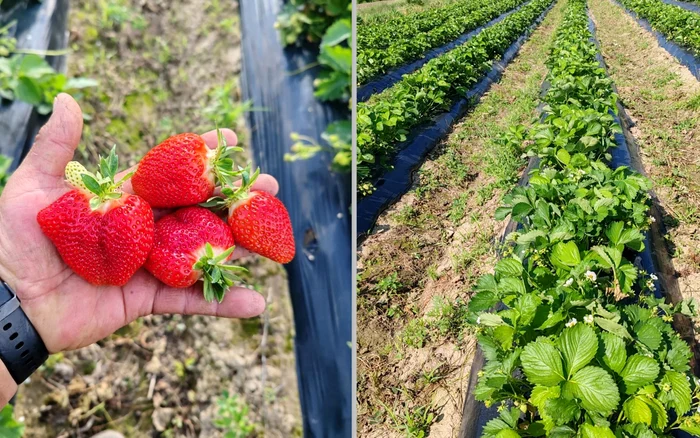
Strawberry plantations in Halmeu. Photo: Halmeu strawberries, facebook
Halmeu, a commune with approximately 5,000 inhabitants from northern Romania, located in Satu Mare county, on the border with Ukraine and Hungary, has become famous since the middle of the last century for its vast strawberries.
“The lands in the Halmeu area are conducive to the cultivation of strawberries. Even before the Second World War, the first strawberries have been brought and cultivated. Halmeu is called by other neighbors of the Country of Strawberries,” informs Halmeu City Hall.
Strawberries, export merchandise
At the beginning of the summer, the strawberries in Halmeu and its neighboring villages in Satu Mare have crowded the markets from all over Romania, being sought and recognized for their aroma, perfume and their size “as much as the fist”, as the traders praise them.
The story of the strawberry plantations in Satu Mare started in the first years of communism, with the establishment of state households, which the communist authorities planned to cultivate strawberries and other fruit shrubs, whose fruits could be exported. Until the Second World War, Romania had not exported strawberries, while states like Bulgaria benefited from the country's trade.
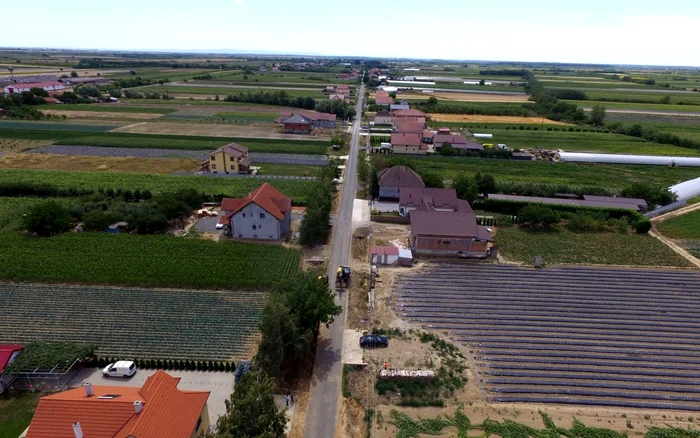
Halmeu. Photo: apaservsm.ro
The fertile lands, the positioning of the town of Halmeu at the former border of Romania with the USSR (currently with Ukraine), its proximity to the border with Hungary, as well as the existence of a railway line, leaving Halmeu customs, favored the expansion of strawberries and other fruit shrubs in the area.
“The strawberry is widely cultivated in the county, to a greater extent than in other areas of the country, and its fruits are highly appreciated on both the internal and export market, due to the pleasant taste and the content rich in nutrients. The fruits are required for fresh consumption, for canned, but also in the food industry, or in the food. For export, offering advantageous prices to producers ”informs the village chronicle, in 1970.
The land of strawberries expanding
At that time, the villages Viile Satu Mare, Viile Turulung, Halmeu and Ardud were noted for a competition regarding the cultivation of strawberries. According to the specialists of those years, the plants had adapted excellently to the local pedoclimatic conditions, being slightly pretentious, easy to multiply through stolons and capable of fruiting since the second year after planting. The establishment and maintenance of one hectare of strawberries was considered extremely profitable, according to the reports in the 1970s.
“The Satu Mare County Agricultural Directorate has developed a plan for the expansion of the production area. In the next five years the growth of the cultivated areas is expected to 2,600–2,700 hectares, of which 1,500–1,600 hectares within the agricultural production cooperatives. Strawberry, each one of the 100 hectares. reported a local daily in 1970.
In the early 1970s, the villages of the “Country of Strawberries” produced over 15,000 tonnes of fruits annually, one part being exported to the USSR, Hungary, Poland, the former Czechoslovakia and the former German Democratic Republic.
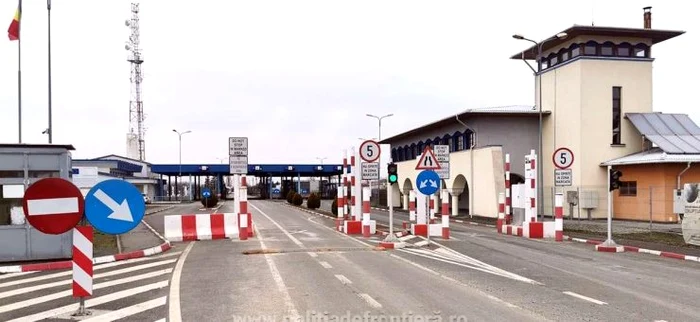
Vama Halmeu. Photo: Satu Mare Prefecture
Although apparently easy, the cultivation and processing of strawberries faced many difficulties, specific to the communist era. Although the plantations were extended, they did not reach the ambitious figures forecast by the communist regime, totaling about 1,000 hectares. The whole process, from planting to maintenance, harvesting and export, was excessively centralized, generating losses for the Romanian state annually.
The business of fresh strawberries full of problems
The harvesting season often took by surprise the local cooperatives: the workforce was insufficient, the storage boxes were missing, and the conditions in the warehouses were inadequate. Much of the production of strawberries, extremely perishable fruits, breaks before it can be delivered outside the borders.
“At Gherța Mare, the acquirer Ioan Baba tells us that he takes about four tons of strawberries daily. However, the processing center does not receive them, and thus, an amount of 4,500 kilograms lies in two days in a shore-in an advanced state of degradation”, informed the local newspaper in 1968.
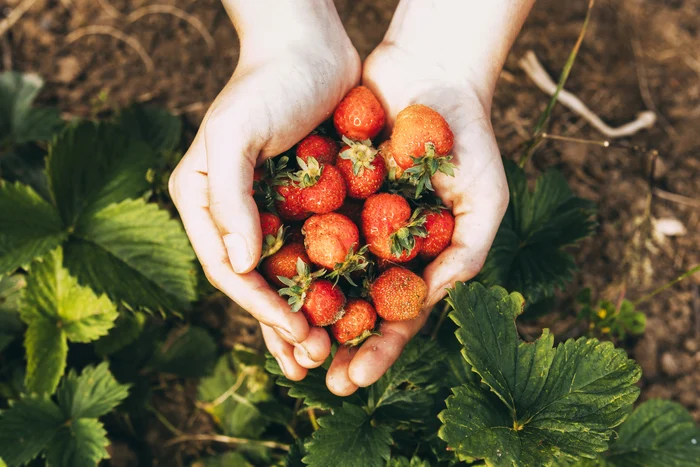
Strawberries. Photo: freepik.com
At Turț, in another collection center, there was no need to look for the place where the purchase center is.
“The smell of the strawberries that were decomposed was the safest hint. At the processing center over 1,000 barrels were under the sun's rays. Due to the lack of sulfur dioxide, they cannot be closed. The responsible also complains about the lack of packaging. informed the village chronicle.
The 60 workers from here were looking carelessly at the strawberries who came to rot, while some producers were dissatisfied with the way the center was managed.
“I have strawberries on an area of 25 areas-Vasile Farcaș tells us. For their collection I was given only 10 boxes! The dissatisfaction is amplified by the way the buyers take over the strawberries. inform the newspaper.
Satu Mare brought half of strawberry production for export
Despite the losses and numerous logistics, the villages in Satu Mare county continued to be proud, in the 1970s, with a rich crop.
“This year, it is estimated that Satu Mare County will provide about half of the amount of strawberries for export at national level. It is a significant volume, equivalent to hundreds of fresh and semi-preacrated strawberries. For more than a week, in the main production basins-Ardud, Halmeu, Halmeu intense rhythm ”informs the village chronicle, in 1970.
After harvesting, fruit trucks arrived at the TRIER CENTER in Satu Mare. The strawberries that corresponded to the quality standards for export were directed to the loading ramp, where, under the supervision of the specialists, they were packaged in crates and loaded in refrigerated wagons.
At Halmeu, another important collection and export center, things did not work as efficiently. The refrigerated wagons were waiting to be loaded, but the pace was slow, and the poor organization.
“In front of the main loading ramp we find 14 refrigerated wagons and two self-heex. Pocket, others shout from strawberries, here a group of girls revolve around the crates, and very few jobs actually participate in loading the wagons ”, a local journalist reported in a field report.
Strawberry exports from communist Romania, full of challenges
The problems were multiple: lack of materials, delays, improper packaging and defective handling.
“At night, at 12 o'clock, we learned that we have no glue for the labels on the crates. We had to wait more than an hour until we get glued. During this time, nothing was charged. The night before, the situation was similar. Because of this, the merchandise was charged, on the heat, which led to the fruit, which took the possibility,” inform the same article.
The packaging also left to be desirable. The commercial form – the plastic baskets – was unsatisfactory, the newspaper informed.
“The labels are stuck at random or are detached. The degree of baking and the uniform way of placing the fruits are not respected. Sometimes, strawberries are put in inadequate crates, without the necessary elements, or in baskets without identification number.”noted reporters.
The precarious transport conditions also contributed to losses.
“Also on the ramp are crates with crushed strawberries, affected by the poorly maintained roads in the areas of Porumbești – Halmeu, Airport -Eardud, Viile Satu Mare, Dobra, Necpoi and others,” informed the village chronicle.
Halmeu was not only the “land of strawberries”, but also a strategic point on the map of communist Romania. In the 1950s, the Halmeu train station was an important railway knot: here the countless train gaskets loaded with the valuable resources of the country, from the Uranium, to the gold in the Apuseni Mountains and the timber that took the road to the Soviet Union.