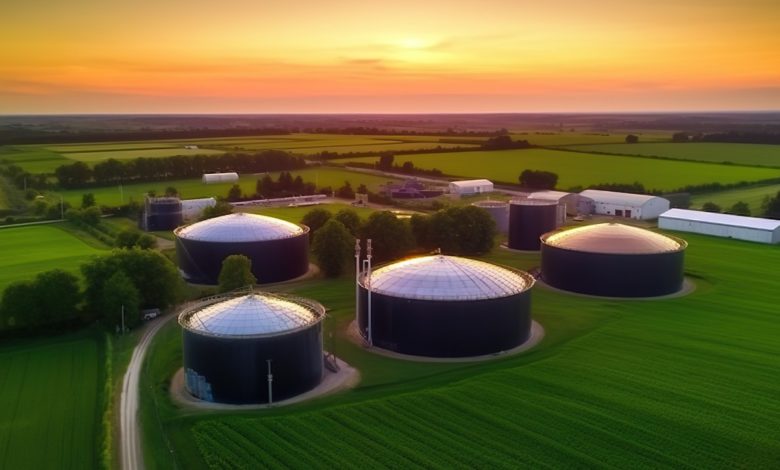
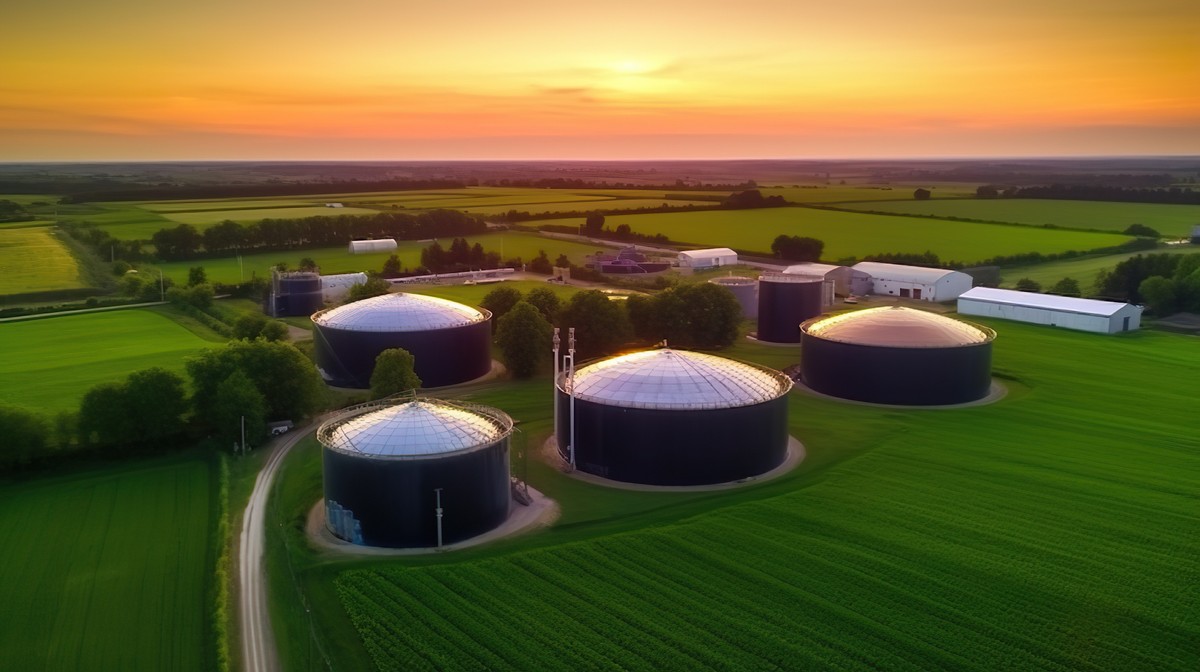
Resources produced on site, production close to consumption, short chains supplies – the distinctive feature of biogas and biomethane is locality. In the report published at the end of May, it is drawn to the attention of the International Energy Agency (IEA), which also assessed the geographical assessment of the potential of these fuels throughout the planet.
On biogas and biomethane (purified biogas form with the same properties as natural gas), rural communities use, for which the development of the installation means economic stimulus and new jobs.
From an energy point of view, both sources provide available powers to be used in conditions unfavorable for weather sources, and they can also be used as a heat source for households and industry, as well as in transport. The polymentation mass produced together with fuel is an possible alternative to artificial fertilizers in agriculture.
Read also: “This is the beginning of a biogas plant.” Facilitation in construction and later large subsidies
We use 5 percent potential
The IEA calculations show that in the world scale the production of biogas based on sustainable development of organic waste could reach almost a trillion cubic meters per year. I am talking about the corresponding quantities 25 percent today's global demand for natural gas.
A huge part of this potential lies in the so -called third world. Developing economies such as Brazil, China or India could satisfy 80 percent From the indicated number, and in the case of India, production capacity almost twice exceed the current gas consumption. The United States is characterized by the greatest potential from the economies developed.
How is it today? The role of biogas and biomethane in the global energy landscape is rather smalland the aforementioned potential is used only in 5 percent. The place of the leading manufacturer is taken by Europe, which in 2023 was responsible for about 50 percent. global biogas production – over 4.5 billion cubic meters.
The continental leaders were Germany, responsible for OK. 40 percent European production. 0.7 billion cubic meters. biomethane This is the success of Denmark, which in this way satisfied in 2023 by over 35 percent. your gas demand (all over Europe it was only over 2 %). Biomethane production up to 0.8 billion cubic meters. from 0.05 billion cubic meters. In 2017, the French also raised.
10 billion cubic meters. biogas In 2023, China produced, and the USA 6 billion cubic meters. For 13 percent Production corresponded to the Emerging Asian economies with India, other than the state, and in Brazil, the substrate increasing the substrate are waste after sugar cane used in the alcohol industry.
In Africa – incl. In Ethiopia, Kenya or Rwanda – biogas improves the effectiveness of waste management and allows you to reduce deforestation. The locality of the industry also results from costs – Most of them fall on transport, substrates and work, so it's easier to save on these expenses, staying in place.
15 billion cubic meters. biomethane in China in 10 years
The economic attractiveness of biogas can be raised thanks to support systems. In the case of biomethane, production costs today $ 18 for gigajulaare about five times higher than the costs of natural gas production. The systems used today include both the supply side (especially using the Feed-in-Tariff mechanism-a guaranteed price for each unit produced) and demand, consisting, e.g. on tax breaks for users. Manufacturers would also help something that is often noticed by the entire renewable energy industry, i.e. simplifying and accelerating permits, lasting up to seven years.
Read also: Where to build renewable energy faster? We are already exceeding important dates today
Despite the restrictions, IEA provides for an increase in the importance of biomethane, which until 2035 is to be the fastest growing branch of all bioenergetics. The emerging economies mentioned above will have a large share in the growth; During the decades, China should raise their biomethane production from today's 1 billion cubic meters. up to 15 billion cubic meters.
In the wake of development, measurable benefits are also to follow – for example, for the European Union it is possible to save OK. $ 30 billion On the import of gas in 2024-2035, and in the scale of the world, in the same time perspective, up to 10 million jobs in rural communities.
Biogas and biomethane also mean a chance to reduce anthropogenic methane emissions, which almost half the manure from manure after farm animals, bio -daddies and sewage sludge. “(…) If the entire global amount of manure was subjected to, reaching about 280 billion cubic meters, we would avoid the emission of 1 billion tons of CO2 from agriculture and 400 million thanks to the limitation of fossil fuels in the energy sector” – reads in the IEA report.
176 MW agricultural biogas plants
According to Biomass's magazine, at the end of 2024 they operated in Poland 442 biogas plantsfrom what 195 They constituted municipal biogas plants operating at sewage treatment plants and landfills. The latest data from the Register of the National Agricultural Support Center valid as at June 4, 2025 show for this 186 agricultural biogas plants belonging to 156 manufacturers. Their total performance is slightly above 768 million cubic meters. biogas production per year, but the electrical power reaches less than 176 MW.
Biogas plants can use support systems determining the guaranteed energy sales price or equalization to the market price, and funds from such public programs as “Energy for the WSI” are also used for their development.
Recently, i.e. at the beginning of June, the launch of new agricultural biogas plants was announced by the Polish Biogasowa Group, opening its 21 installation with a capacity of 1 MW in Gogolin in the Opole region and the E.on Group. Her first biogas plant is located in Nowe Borzach in Mazovia and also has a power of 1 MW. Investors emphasize the role of biogas as stable energy sourcethey say about development of organic waste and income for farmers supplying them, they also pay attention to limiting methane emissions.
January-April 2025-135 applications for connection
A separate matter is the development of biomethane, whose market production in Poland – despite the potential estimated by experts, places in strategic documents or investment plans – still does not exist. In February this year, however, it was launched in Greater Poland Brody First show biomethanesupervised by scientists from the University of Life Sciences in Poznań and financed by the National Center for Research and Development. Its power is less than 0.5 MW.
The expansion of the industry may be accelerated by the new regulations. The planned distance act, known primarily for the regulations regarding windmills, also contains regulations regarding the establishment of the auction support system for biomethane installations above 1 MW. The government amendment to the project at the end of April also provides for the possibility of self -supplying biomethane to the end recipients with direct gas pipelines without a gas network.
According to the information provided to us by Gaz-System, the gas transmission system operator, in 2024, he was submitted 230 applications for connecting a biomethane. From January to April this year there were applications 136while the first connection agreement was concluded in December last year. “The GAZ-SYSTEM network has sufficient bandwidth to take significant amounts of biomethane. The company is received by applications with declared power from 100 cubic meters. at up to even 7,000 cubic meters. at From the perspective of Gaz-System, these are not large connection powers, “says the operator to our questions.
Read also: Interest in the construction of a biomethane in Poland is growing
The possibility of connecting the biomethanownia is to be “relatively large”, the company also does not state problems with the absorption of the network. “GAZ-SYSTEM can support the process of decarbonization of the Polish economy, using many years of experience in gas transport to biomethane transmission” – he states. The non -binding goal of the European Union from the REPLEREU program, which IEA reminds about in its report, is 35 billion cubic meters. Biomethane production by 2030. This would significantly limit the need to import natural gas from outside the community.