Dacia makes voluntary redundancies with premiums up to 40,000 euros. What is happening in the factories

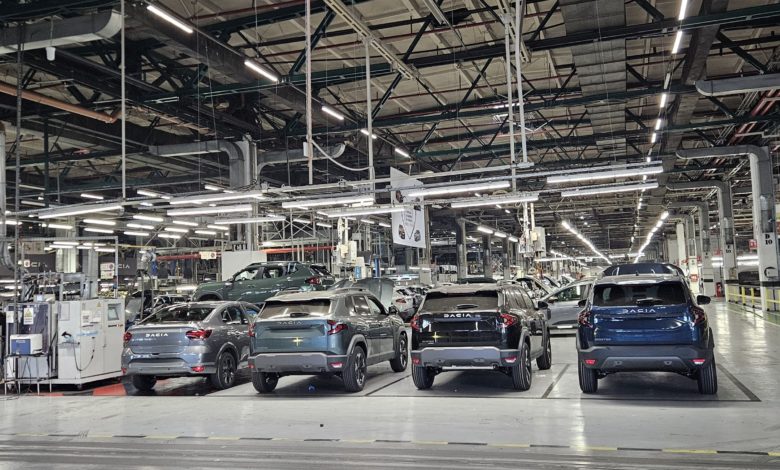
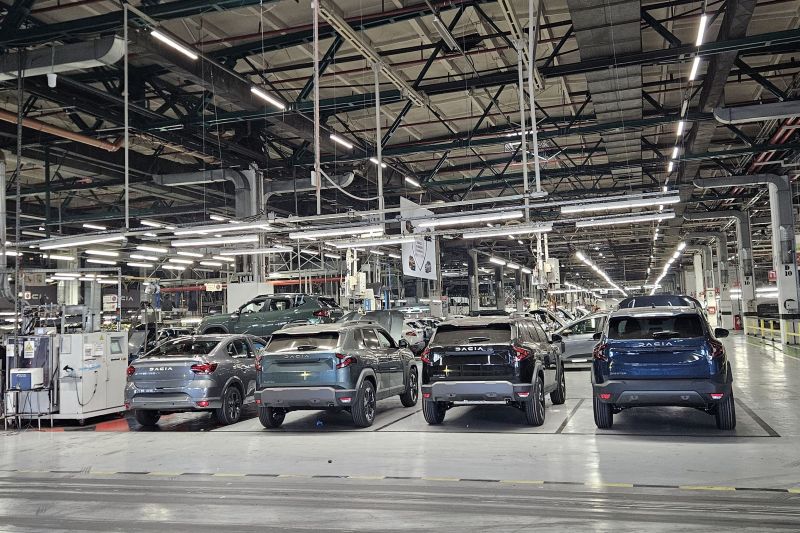
Cars in the Dacia Plant (photo Vlad Barza)
Automobiles Dacia has started a new voluntary departure program, after similar measures have been taken in previous years. Sources in the company explained to Hotnews that many such requests are rejected.
According to an internal document from Automobile Dacia, obtained by the local newspaper Ziartopdearges.com, Dacia conducts voluntary redundancies in June.
Eligible employees may receive the following amounts, if their resignation is approved:
- Up to 2 years old – 24,000 lei, approx. 5,000 euros
- Between 2 and 4 years old – 60,000 lei, approx. 12,000 euros
- Between 4 and 8 years old – 110,000 lei, approx. 22,000 euros
- Between 8 and 12 years old – 130,000 lei, approx. 26,000 euros
- Between 12 and 16 years old – 160,000 lei, approx. 32,000 euros
- Over 16 years old – 200,000 lei, approx. 40,000 euros
Last year, half of the applications for voluntary departures were approved
Dacia has carried out similar programs in the past. The latest voluntary redundancies program at the Dacia plant was in 2024, when approximately 300 applications were approved, that is, half of those submitted by the employees eager to leave “with the agreement of the parties”.
In that program, the employees over 16 years old could receive 185,000 lei, while in the 2022 program, the amount received by those between 12 and 16 years old was 105,000 lei.
The maximum bonus granted also increased due to the inflation rate. This year, the first maximum is 200,000 lei for those over 16 years old.
Why are the requests rejected
Sources from Dacia said for HotNews.ro that they are not easy to meet the eligibility conditions, and managers must agree for each request.
Independent of this program, Dacia continues to hire, said the source.
The employees' contracts cease with the agreement of the parties not only if the post is abolished due to robotization or digitalization, but also in (not rare) cases in which a certain project is completed or the activity of a decreases section.
Robotization but with limits
In the last year the number of Dacia anagajets has increased, and in the last decade several sections have been partially automated. The degree of robotization is higher in the body section, 60%, compared to 42% two years ago. In other sections, the degree of robotization has not increased much in recent years, but the number of autonomous vehicles carrying parts through the section has increased.
Industrial robots are increasingly present in welding, but the company officials have explained several times in recent years that robotization has its limits, and an aggressive robotization would not make sense.
Why? It is not profitable. There is a certain threshold until the automation is profitable, and the best performing robots can cost enormously. Robotization can continue, but Dacia bosses said they would bring extra robots only when they need them, provided a certain degree of profitability is maintained, sources from the company explained.
Dacia expects an increase in production
Overall, throughout the year 2025, it is expected that the factory production will increase compared to last year. And this is because for a few months Bigster is manufactured, the most expensive and sophisticated model of the brand, a car that, with maximum equipment, ends up costing over 32,000 euros in the hybrid version.
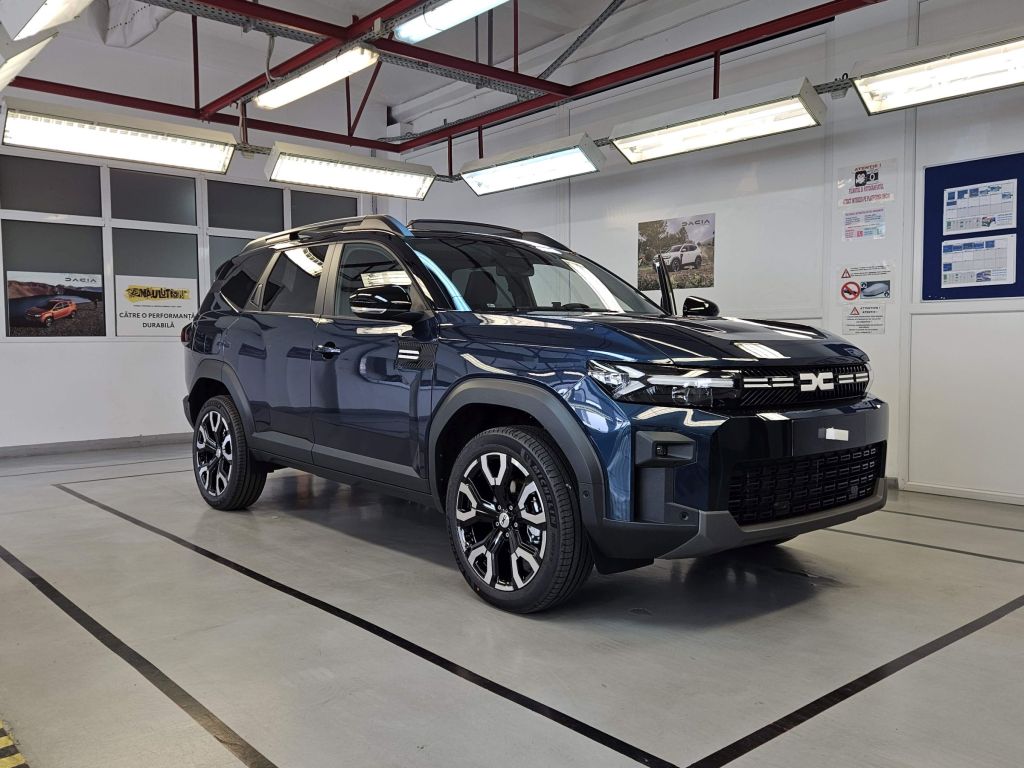
The head of Dacia for Romania declared at the beginning of the year that the production at the factory should approach the maximum capacity of 350,000 cars, last year the total production is 309,000.
The Duster SUV, also produced in Mioveni, has found over 175,000 customers last year in Europe, more, Dacia Sandero, a model especially in Morocco, was last year the best-selling car in Europe.
In the first four months of 2025, almost 15,000 Dacia cars were registered in the country, of which over 5,000 were Duster.
In Europe, Dacia sold 50,000 cars per month in 2025, with a share of 4.5%, over brands such as Opel, Citroen and Fiat.