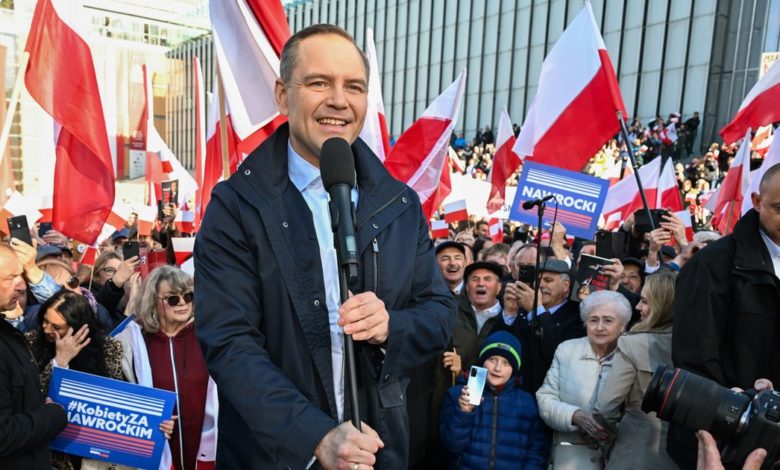
The far -right leaders in Europe greeted the victory of the nationalist candidate of the opposition, Karol Nawrocki, in the Polish presidential elections, a result that represents a major blow to Prime Minister Donald Tusk and his agenda of reforms and approaches to the European Union.
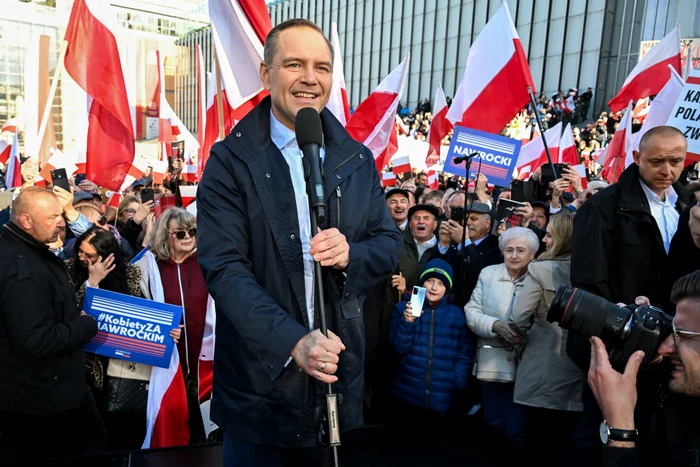
European conservatives greeted Nawrocki's victory in Poland Pho EPA EFE
Nawrocki, a conservative historian and former amateur boxer, won the Sunday elections with 50.89% of the votes, according to the final results announced on Monday, deviating his counter-candidate, Rafał Trzaskowski, the Liberal Mayor of Varșovia and ally of Tusk, who obtained 49.11%, writes The Guardian.
“Congratulations to President Nawrocki for fantastic victory,” Hungary prime minister wrote on social networks, Viktor Orbán, adding that “looking forward to collaborating.” With the new 42 -year -old leader, who has not previously held any chosen position.
The leader of the far -right party in France, the National Assembly, Marine Le Pen, said that Nawrocki's victory is “Good news” and marks “A rejection of the oligarch from Brussels” trying to impose “Authoritarian policies and federalist ambitions … defying the democratic will.”
Nawrocki was supported by the Popular Party of the Right Law and Justice (PIS), which led Poland to Tusk's victory in the parliamentary elections at the end of 2023.
Although the role of president is largely ceremonial, it has influence on foreign and defense policy, as well as the crucial power to block new laws. A presidential veto can only be rejected by a 60% majority in Parliament – which Tusk's coalition does not hold.
Nawrocki's veto means that the prime minister will be difficult to adopt major reforms until the next 2027 elections.
Nawrocki's victory overturned the forecasts of the first exit-polls, which suggested that Trzaskowski would win at the limit, with less than a percentage. Both candidates claimed their victory, which was officially confirmed on Monday, around 8 am.
What does Nawrocki's victory mean
In a hard and often tense campaign, the two candidates presented radically different visions on the future of Poland, and the result will have huge implications for the internal politics and the role of the country in Europe.
Trzaskowski, a pro-EU progressive, has supported the liberalization of abortion law and civil partnerships for LGBTQ+couples. Nawrocki, which promotes conservative Catholic values, would probably block any government attempt to introduce such measures.
It is a harsh critic of the European Union and will probably be alia, whenever you can, with other nationalist and Eurosceptic leaders, such as Orbán, supplying the divisions inside the Community block at a time when the EU is facing major challenges, including the tariffs imposed by the US and the War in Ukraine.
Nawrocki replaces the PIP, andrzej Duda's president. Tusk's mandate as a prime minister has already been marked by difficulties in keeping his wide coalition, a situation now aggravated by a president with an opposite ideology.
Nawrocki's victory will most likely extend the political blocking, turning Tusk's government into “Fragile administration for the next few years”said Professor Aleks Szczerbiak, an expert in the Politics of Central and Eastern Europe at the University of Sussex.
“And it will be worse than with Duda, because Nawrocki comes with a new mandate, which is essentially resulting from a referendum on the Government.”he added. The result will strengthen Pis, a party that has harshly confronted with Brussels during the period in which he was in power, especially on the subject of law.
EU leaders tried to keep an optimistic attitude towards the result, which comes just two weeks after the presidential elections in Romania were won by the centrist mayor of Bucharest, Nicușor Dan – a failure for the nationalist forces on the continent.
However, the result is expected to weaken the recent consolidated position of Poland in the center of major EU decisions and could boost the Eurosceptic opposition, led by Andrej Babiš, before the October elections.