Syria, the new El Dorado for business. Gigantic construction projects develop as the US raises sanctions

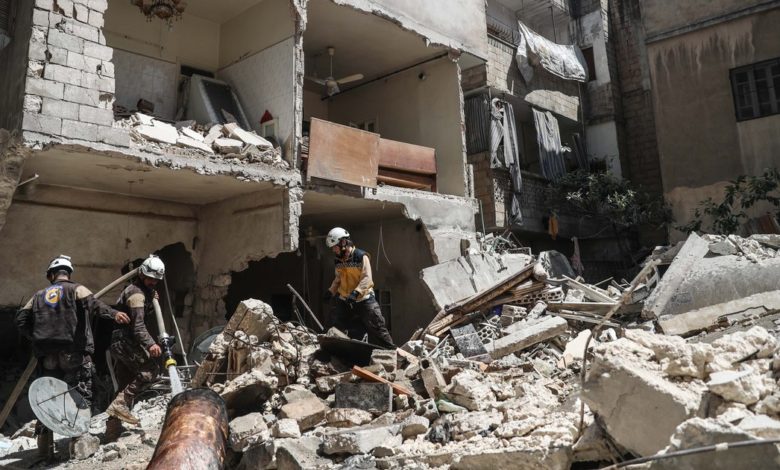
After more than a decade of bloody conflict and international isolation, Syria seems to take the first concrete steps towards economic reconstruction. A consortium of American, Qatareze and Turkish companies has signed an agreement of $ 7 billion with the Damascus government, aiming at the construction of four gas and a solar park in the south of the country, writes Newsweek.
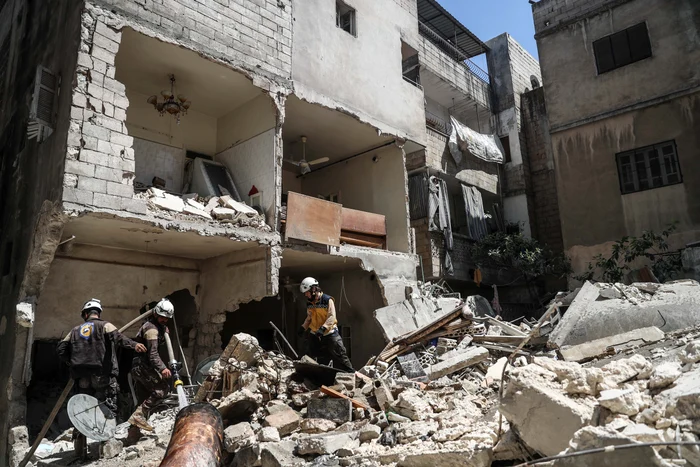
Syria was devastated by years of civil war/photo: EPA/EFE
The decision comes just a few days after US President Donald Trump announced, during a surprise visit to Riad, to lift the sanctions imposed on Syria. It is a potential movement to reshape the balance of forces in the Middle East and which signals a possible resettlement of Washington's strategic priorities in the region.
Economic rehabilitation under the sign of realpolitik
“Syria is open to business,” the X (former Twitter) network wrote on the US, Tom Barrack, marking the first official American visit in the country for the last 12 years. According to him, infrastructure projects represent “a clear signal of Syria's return to the international investment circuit”.
The agreement was signed with a consortium run by UCC Holding, a company based in Qatar. Four power plants with a total capacity of 4,000 MW are targeted in the Homs, Hama and Deir EZ-DOR regions, as well as a 1,000 MW solar power plant in the south of the country. According to the Syrian authorities, the works would start immediately after signing the final contracts, being estimated to last between two and three years.
The Minister of Energy of Damascus, Mohammed al-Bashir, said that the agreement “represents a crucial step in the national plane to recover the infrastructure and to expand access to electricity for the population”.
A turning point in Syria's international relations
The announcement comes shortly after changing the political regime in Damascus, where the new president of Ahmed al-Sharaa took over the lead, following the removal of the pro-Iranian regime led by Bashar al-Assad. Despite this political revival, there is still skepticism on the long -term stability of the country.
Recent attacks claimed by ISIS – which hit military targets in Sweida and against the free army supported by the US – bring to attention the fragility of internal balance and security challenges that can affect both project implementation and investment appetite.
Geopolitics by reconstruction
The analysis of the agreement shows more than just an economic recovery. The simultaneous participation of American capital, Qatarez and Turkish suggests a reconfiguration of alliances and interests in Post-Assad Syria, to the detriment of Iranian influence. The lifting of sanctions by Washington is, in this sense, not only an economic gesture, but also a geopolitical one, through which cooperation channels are reopened in an area that until recently seemed irreconcilable with Western interests.
In addition, the announcement made by Trump in Riad, in a symbolic and political framework with profound meanings in the Arab world, emphasizes the intention to reset Syria in the orbit of regional relations dominated by moderate Sunni actors and traditional US allies.
UCC Holding said that the work on gas power plants will be completed in three years, and the solar power plant within two years. The continuation of the investments and their expansion will largely depend on the evolution of the security situation, but also on maintaining the international political support for the Damascus Government.
In a region where reconstruction has often been used as a exchange currency for geopolitical influence, Syria becomes, once again, confrontation land-this time through contracts, not by missiles.