A new joint agricultural policy is coming. Farmers are afraid of adverse changes in financing

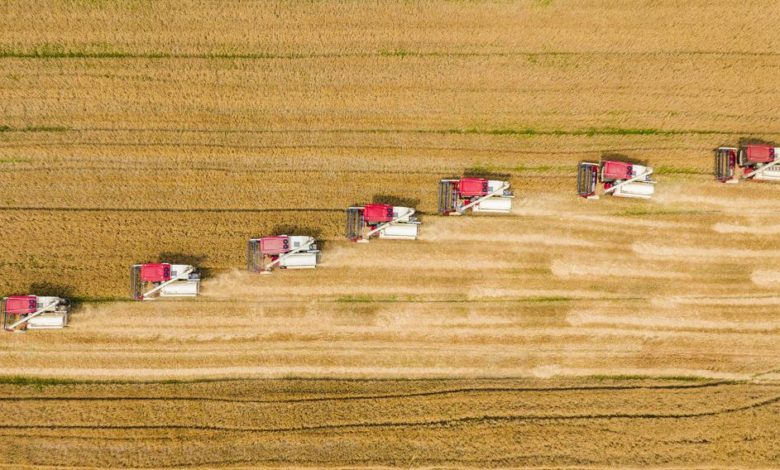
Work is underway on the common agricultural policy for 2028-2034. According to the director of the Institute of Economics of Agriculture and Food Economy, prof. Marek Wigier Farmers need stability and investment activities that support the improvement of the competitiveness of their farms. MEPs appealed for higher expenditure on the CAP and maintaining its shape. For Polish farmers, these are key issues, because as the last two decades show, EU funds drive the development and modernization of their farms, which is a guarantee of the country's food security.
– In the new agricultural perspective, farmers expect that politics will not be more complicated, i.e. speaking simply, they expect simplifications of activities that will be implemented from 2028. They also expect, I think, no less budget for the common agricultural policy. And such assurances have probably already been presented. The future agricultural policy will be divided into two pillars, i.e. there will be a pillar supporting the development of rural areas and a pillar supporting direct help for farmers – emphasizes in an interview with Newseria agency prof. Marek Wigier.
The project of the European Commission for many years of financial framework (WRF), which will determine the goals and priorities of EU expenditure for 2028-2034, is to be presented in July. Then you will know what the common agricultural policy should look like for the coming years. For now, the European Parliament has presented his position on this matter. At the beginning of May, the MEPs adopted a resolution on priorities for WRF, in which they emphasized that they had to guarantee further support of competitiveness and resistance of agriculture and fishing, including for small farms and young farmers and fishermen, as well as help for these sectors in better climate protection. They appealed for a higher and special budget for the CAP and preventing the possible reduction of the financial resources saved in it.
– I do not think that in the future budget the Common Agricultural Policy is less important than currently, because Poland managed to introduce the topic of food safety to the EU agenda. And if we talk about food safety in combination with energy safety, in which agriculture is increasingly woven through a raw material base, I do not think that expenditure on the CAP can be smaller. Of course, defense expenses will also be high, but I think that food safety is one of the priorities – argues the director of the Institute of Agricultural Economics and Food Economy.
In its resolution, he opposed the idea of transforming a common agricultural policy into a single fund for every Member State. There were such voices that the EC will propose the concept of one national plan to divide between individual industries (as KPO is currently operating). Many farmers are afraid of the liquidation of the pillars of the CAP, i.e. the European Agricultural Fund of Warranty and the European Agricultural Fund for Rural Development. The organization of Copa and Cogeca emphasizes that without a clear, covered by special protection of the budget line allocated to EU agricultural policy, it can collapse like a house of cards.
– Farmers expect some stabilization of conditions in which they will operate after 2028. I mean both investment activities that support the improvement of the competitiveness of farms, as well as actions addressed to farmers who want to deal with the environment to a greater extent – says prof. Marek Wigier.
Scientists from Irwir PAS together with the European Polish Rural Development Fund in the report “Assigction of the CAP in Poland – Innovation Innovation, a prerequisite for the survival of Polish agriculture” indicates, among others, that in the discussion on the shape of a new CAP, it is necessary to approach such issues as: the concept of “active farmer”, regulation of agricultural lease and proposals regarding spatial development plans taking into account the interests of agriculture or importance and position agriculture in trade agreements negotiated by the EU. The need for deregulation and simplification, as well as the search for direct subsidies for a hectare, is very often reported.
Director IEirigż emphasizes that the new agricultural policy should primarily respond to current threats.
– An important priority of the CAP will be water -related issues, i.e. a water deficit that we deal with in Europe – indicates prof. Marek Wigier.
Since 2004, the value of transfers from the EU budget to Poland as part of the CAP amounted to approx. EUR 78 billion. It is largely thanks to these funds that in the last two decades Polish agriculture has recorded impressive progress, and in rural areas almost twice the number of natural persons conducting business activity has increased and unemployment has significantly decreased. Income for a full-time farmer increased over 2.5 times at that time.
– From the beginning of our accession, agricultural revenues have been largely reduced. This was the first goal that the common agricultural policy set at the beginning, and we have been largely beneficiaries of this goal since 2004. Without a common agricultural policy, this dispute would be twice as high today, agricultural income would be 20 percent. income in other sectors of the economy – indicates prof. dr hab. Bazyli Czyżewski from the Department of Macroeconomics and Food Economy at the Poznań University of Economics.
The agri-food sector transformation was accompanied by deep structural changes in agriculture. Since Poland's entry into the EU, the systematic increase in the average area of agricultural land in one farm has been recorded (from 8.7 ha before accession to 11.1 ha in 2020). The following years after joining the EU were associated with an increase in the number of medium and large farms in Poland, including in particular those with an area of over 20 ha.
– In two decades there were significant processes of concentration of land in agriculture, the area of farms, both the average and in individual subclasses, increased. This is undoubtedly due to the CAP. This was followed by an increase in work efficiency, although it is lower compared to other economy departments. But as at the beginning it could be said that for 1 percent. The participation of agriculture in GDP worked in agriculture six times more people than in other departments, now it fell to about two or three times – lists prof. Bazyli Czyżewski.
Before Poland's accession to the EU, the added value of agriculture reached EUR 6.8 billion, while in 2023 it increased to EUR 22.1 billion. During two decades there was also a significant increase in the export of the Polish agri-food sector-its value in 2023 was EUR 51.8 billion, i.e. 10 times more compared to the period before accession. A positive trade balance exceeded EUR 18.6 billion and is several times higher than all agri-food exports before membership.
– The improvement of competitiveness also resulted from improvement in quality on farms, modernizing agriculture and agri -food industry, improvement in quality and safety of food – says prof. Marek Wigier.
– Thanks to the accession to the European Union, it is currently easier in agriculture, it is easier to obtain funds for financing, it is easier to enjoy the benefits of economic growth. This is greater equality and higher productivity than in the script, where we are outside the Union – adds prof. Bazyli Czyżewski.
The balance of Poland's membership in the EU in the area of agriculture, the future of the CAP, as well as challenges waiting for Polish farmers – these are one of the topics raised during the conference, which took place last week on the occasion of the celebration of the 75th anniversary of the Institute of Economics of Agriculture and Food Economics – the National Research Institute.