
May 30 12:33
Archaeologists of the Institute for the History of Material Culture of the Russian Academy of Sciences showed new finds surrendered in the Scythian mound in Tuva.
The finds were made during the field season of 2024 in the Tunnnug-1 mound, located in the floodplain of the Uyuk River. This place is also called the Tuvan valley of the kings. Kurgan is considered one of the earliest large. According to scientists, the rituals on it were carried out from the 9th century. BC and before the VI-VIII centuries. N.E.
Most of the finds are of considerable interest in understanding the cultural and technological ties of ancient societies. For example, carefully polished bronze mirrors with protruding handles could be used in the rituals of funeral cults.
Unusual daggers aroused special interest among scientists. So, a bronze copy was found with a top in the form of a curled predator. He demonstrates the characteristic features of the animal style, common among the nomadic cultures of Eurasia, and shows the high significance of weapons in the funeral rite.
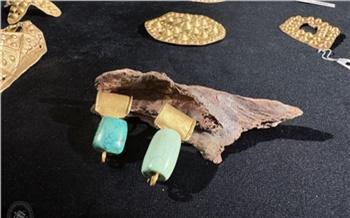
In another burial, a set of gold jewelry was found: different in shape and ornament lining, a necklace of 12 gold large beads in the shape of a drum.
Among the finds are many horse harness objects recorded among numerous horse sacrifices. Among them are bronze bod and psali of different types, including a unique psalia with a top in the form of a bird's head.
“More than 50 items were found, designed in the animal style, mainly in the eastern part of the complex. Flags characteristic of nomads, belt distributors, pendants, ponies and other details of horse ammunition were also found. In total, after building a mound, at least a hundred horses were sacrificed on its surface. The rarest find is a figure of a goat, which adorned not the riding horse, but probably a chariot, ”said Timur Sadykov, a researcher at IIMK RAS.
Scientists also found a lot of textiles. The fabrics had bright shades: indigo, green, red and brown. This indicates an abundance of colors and the high skill of the creators. Researchers in the future want to reconstruct the cut of clothes and compare restored textiles with other similar finds.
The institute noted that the finds showed that the Scythians had a complex funeral practice, the sources of which are still not quite clear. Weapons and jewelry show that local residents had wide ties with other peoples. The option of coming to the population from other territories and the construction of a new type of culture in a new place is also considered.
Links on the topic: