The industry development program, under which the Kremlin required an increase in the production of goods in the civil sector by 40 percent. until 2030, lost 97.15 billion rubles (approx. PLN 4 billion 600 million) financing.
The state program “Scientific and technical development” of Russia, which aims to take Russia to the 8th place in the world in terms of the size of scientific research, will lose 22.17 billion rubles (about PLN 1 billion) from the budget. And this is just the beginning of a long list of cuts in Russia.
By 20 percent Expenses for the State Air Industry Development Program will be reducedin which the Kremlin expected the appearance of thousands of civil passenger aircraft to replace western. After cuts, PLN 39.4 billion (approx. PLN 1 billion 900,000) will be allocated to this program instead of the original PLN 49 billion (approx. PLN 2 billion 400,000).
Expenses for the state program “Development of the shipbuilding industry” will be reduced by 4.1 billion rubles (approx. PLN 200 million) to PLN 24.1 billion (approx. PLN 1 billion 150 million). The budget of the “Energy Development” program was slimmed about 7.2 billion rubles (about PLN 300 million). 62.6 billion rubles (approx. PLN 3 billion) will be allocated to it.
The Russian authorities correct the budget plan. According to the amendments, the total budget expenditure will increase by 829 billion rubles (approx. PLN 40 billion), to PLN 42.3 trillion (approx. PLN 2 trill), although the income will be lower than the original plan: 38.5 trillion of rubles (approx. PLN 1 trill 800 billion) instead of PLN 40.3 trillion (approx. PLN 2 trillion).
As a result, a deficit of 3.8 trillion rubles (approx. PLN 180 billion) will be created in the budget – three times higher than planned, i.e. 1.2 trillion of rubles (approx. PLN 6 billion).
Continuation of the material under the video
Assuming that Ural oil will cost $ 70. for a barrel (approx. PLN 262), and the dollar exchange rate will remain at the level of approx. 95 rubles (approx. PLN 4 50 groszy), the budget will encounter further problems in spring: the Urals' quotations dropped to $ 50 (approx. PLN 187), and the column increased to the highest level from two years –below 78 per dollar.
A hole in the Russian budget
As a result, in the period of January – April, the income of the Treasury from oil and gas fell by 10 percent., aw maju, według szacunków Agencji Reutera, spadek przekroczył 30 proc. The Russian Ministry of Finance expects that by the end of the year it will collect 8.3 trillion of rubles (about PLN 400 billion) of raw materials – by PLN 2.6 trill (approx. PLN 112 billion) less than originally planned.
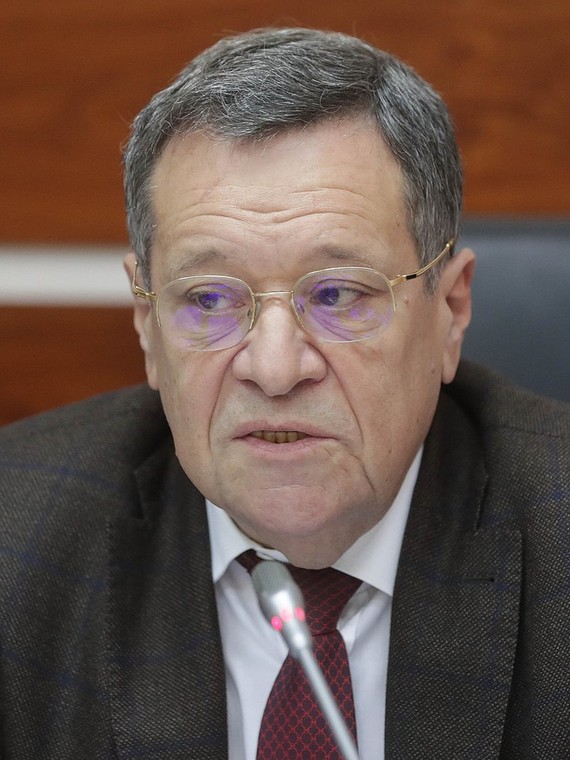
During the presentation of the budget, the chairman of the Tax Committee of Duma Andrey Makarov warned that even these expectations may prove to be overstated due to the threat of American sanctions,
“The deficit for the first four months of 2025 has already reached the level provided for this year, so it may be even greater,” said Makarov.
pride.gov.ru / wikimedia
Chairman of the Tax Committee of Duma Andrey Makarow
Experts emphasize that revenues to the Russian budget largely depend on the sale of natural raw materials, and in particular oil. Meanwhile, analysts such as Mikhail Krutichin emphasize that resources in Siberia are exhausted. The Russian authorities themselves also talk about it.
– There is a reason for gloomy prospects for Russia. It is exhausting profitable reserves in exploited fields and the lack of new large discoveries – writes Krutichin in The Moscow Times.
The situation for the Kremlin in the gas sector is no better. Gazprom lost the European market, which was responsible for the majority of his income. Now in Russia there is talk about increases in gas prices that would reach as much as 20 percent. every year.
This, in turn, means not only a blow to Russian industry, but also in the wallets of ordinary Russians, who still have to face sanctions and a falling standard of living.
I’m Ashley Davis as an editor, I’m committed to upholding the highest standards of integrity and accuracy in every piece we publish. My work is driven by curiosity, a passion for truth, and a belief that journalism plays a crucial role in shaping public discourse. I strive to tell stories that not only inform but also inspire action and conversation.