The court cuts the wings to Donald Trump. The decision hits the pillar of his presidency like a thunderbolt

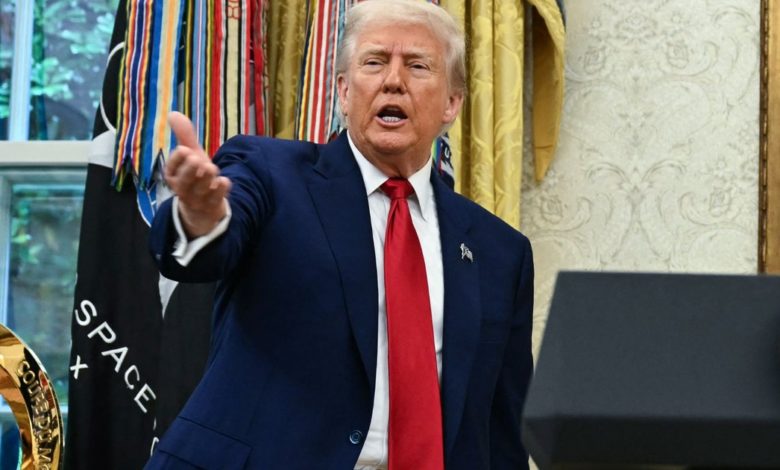
The decision is for Trump like a thunderbolt because he hits one of the main pillars of his economic program. It also occurs at a crucial moment when the president tries to use duties as a means of pressure in commercial negotiations around the world.
“The huge duties of President Trump were unlawful, reckless and catastrophic for the economy,” said the prosecutor general of State Oregon Dan Rayfield, who, along with 11 other state prosecutors of general, filed a lawsuit against Trump's Clot.
A unanimous decision of a three -person judicial composition of the American court for international trade states that the president's decisions went beyond his legal rights, even despite the statements of the state of emergency in the United States.
“Today's court ruling is a victory not only for the state of Oregon, but also for working families, small enterprises and ordinary Americans. This ruling confirms that our rights are relevant and commercial decisions cannot be taken according to the whim of the president,” said the court in the justification of his decision.
The ruling also means that the Trump administration may be forced to return the duties already collected. “Everyone who had to pay duties so far will be able to recover them,” said Ilja Somin, a professor of law at George Mason's University, who helped in the case against the tly lodged by several small enterprises.
The US Department of Justice quickly appealed, paving the way to further legal disputes regarding the scope of Trump's rights in terms of duties. Ultimately, the case may go to the Supreme Court.
Trump justified the imposition of duties on dozens of countries with a state of exceptional state related to trade of fentanyl and the threat of a persistent trade deficit. Trump also applied retaliation duties to the countries that responded the same.
However, the court found that the Federal Act authorizing the president to impose duties, embargo and sanctions in response to extraordinary situations – the Act on international economic rights in extraordinary situations of 1977 (IEEPA) – “does not authorize the president to impose unlimited duties.”
“Customs orders, also retaliatory, go beyond the rights granted to the President by IEEP to regulate imports by means of duties,” said the New York Federal Court in his opinion, which considers commercial law cases.
The court's decision annulled the decrees of Trump imposing duties in the amount of 25 percent. for Canadian and Mexican products and duties in the amount of 20 percent. on Chinese products in response to the alleged state of emergency related to drug trafficking.
Trump's legal failure
The court also annulled the duty in the amount of 10 percent. imposed on all US trading partners in order to reduce the trade deficit, as well as the “mutual” duties suspended by Trump from 20 to 50 percent. At about 60 trading partners to enter into force on July 9, if the governments of other countries do not reach an agreement with the White House before this date.
Deputy Prosecutor General Brett Shumate in the argument presented last week stated that the decision prohibiting Trump to collect duties would “cut the wings” of the president in his efforts to conclude new trade agreements until July 8, including the main trade partners, such as Japan, India and the European Union.
“The court order would be extremely destructive when the president conducts foreign negotiations with other countries regarding trade deficit and fentanyl crisis in the USA,” added Shumate.
This is Trump's latest legal defeat regarding one of his main points of his political program. Federal judges blocked key elements of his mass deportation plan, limited activities aimed at liquidating several federal agencies and slowed down the process of mass release of federal employees from some agencies.
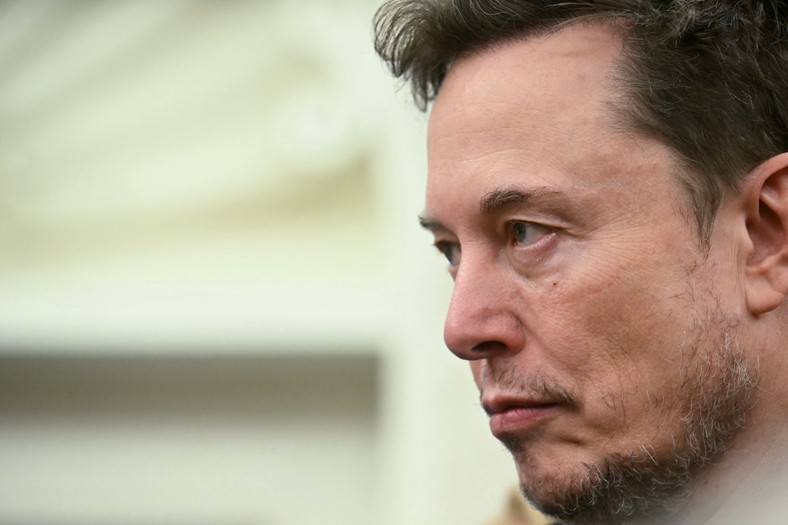
Elon Musk, who headed the government efficiency department (dog). The institution is designed to release employees in public administration in the USA (illustrative photos)
A spokesman for the White House has not yet answered at the request for a commentary made by Politico.
The judgment of the American court for international trade concerns a case brought by Vos Selections, a New York company dealing in the sale of wines, and several other small enterprises, as well as a separate case brought by Oregon and 11 other states managed by Democrats, questioning the constitutionality of Trump's activities.
The decision was issued by a three -member judge, which was composed of Obama Gary Katzmann, appointed by Reagan Jane Restani and appointed by Trump Timothy Reif. A specific judge was not indicated as the author of the court's opinion.
“Trump can also try to impose the same duties on the basis of other provisions,” said the name of Nikakhtar, an official who dealt with commercial issues in the trade department during the first term of Trump, and is currently a partner at the Wiley Rein law firm.
“The president still has broad rights to impose mutual duties, only with other legal measures,” he said.
However, Somin, a professor of law at the University of George Mason, was skeptical as to whether Trump would be able to use other rights to repeat the mutual customs program.
“I don't think they can impose something so far from another statute.” The reason they wanted to use Ieep was that they believed that she could give them such broad rights that they could not get in a different way – said Somin.