The fighter circulates in the air like a vulture, makes a bend and then rushes towards the empty highway. It lands with deafening speed, but only for a few seconds – after that it rises again. “Touch and Go” is the name of the maneuver, which on Tuesday Finland and Dutch pilots practiced in the Finnish city of Jyvaskila. As a runway, they used empty highway sections.
Similar exercises were also held in Germany – during the Cold War. Then, however, there was a belief that peace and development of abilities in this area is unnecessary. Finns think differently. There, these exercises – called Baan maneuvers – will take place even twice a year.
Military argues that society accepts closing highways during exercise without complaints. He appreciates the fact that the authorities seriously treat the defense of the country. The Finnish approach to the army and the war in Ukraine is significantly different from the approach of many other European countries.
Finnish customs
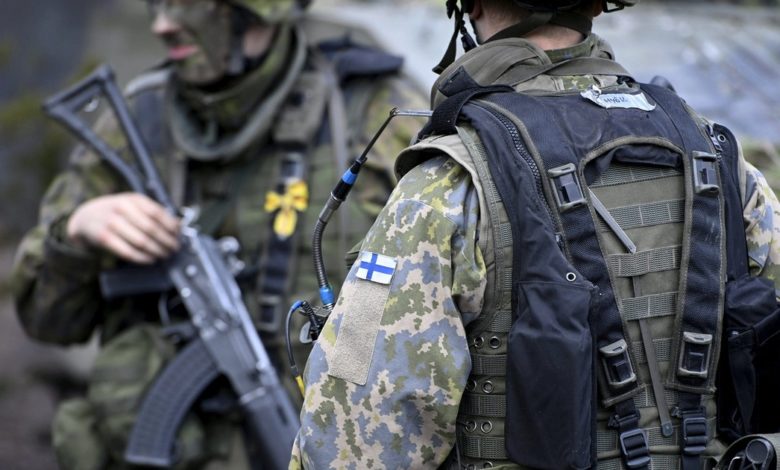
– Finland brought its own culture to NATO – this is how a representative of the North Atlantic Alliance in an interview with “Die Welt” commented on this country to the alliance. Indeed, a lot can be taught from this country. Although it has only 5.6 million inhabitants, it is able to mobilize as much as 900 thousand. reservists. This is largely due to the attitude of Finnish society.
Four out of five Finns say that if necessary, he would defend his countrya similar number is of the opinion that in the case of war Finland should help with NATO partners. For comparison – only 17 percent in Forsa survey The Germans admitted that in the event of a war it would defend its country with a weapon in hand.
In the case of Finland, it is crucial that in its concept of national defense it takes into account the concept of immunity. This means that the army and civilians are not treated as separate units – Everyone is part of the Finnish security concept.
Continuation of the material under the video
In the Finnish army, professional soldiers constitute only 3 percent. – The rest are reserves. They come mainly from military service, which is mandatory for young men, women can do it voluntarily. The training lasts about a year. After him, they were conscripts, they are regularly appointed to compulsory reserve exercises.
In addition, there are also voluntary trainings that are very popular among Finns – although they are not rewarded, the organizers only provide a warm meal. – Sometimes reservoirs call themselves to ask if they can take part in the training on the training around a week. They even take a vacation to do it – says the Finnish government representative.
Resistance as the basis of security policy
The state tries to engage citizens early in crisis situations and not hide potential threats from them. In campaigns, he appeals to them to collect stocks for 72 hours and distributes brochures containing the rules of conduct during natural disasters and armed conflicts.
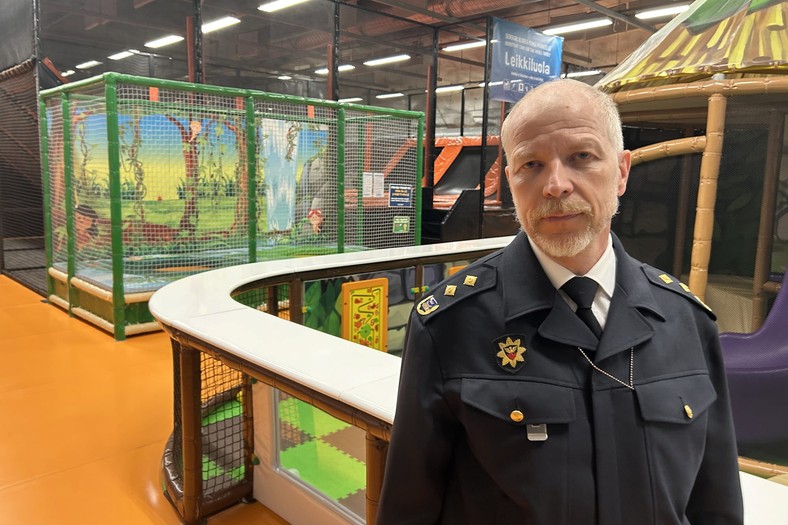
How much crisis situations are related to everyday life can be seen 22 m near Helsinki. Pati Raatikainen, the main planner for population protection, shows journalists “Die Welt” along a giant bunker complex – only 5500 in the capital alone. Since World War II, Finland has been building bunkers, which in the event of war can accommodate a total of 4.5 million people. Also when building new residential buildings, there is usually a requirement to build shelters.
Die Welt
Pati Raatikainen in front of the underground trampoline in Helsinki
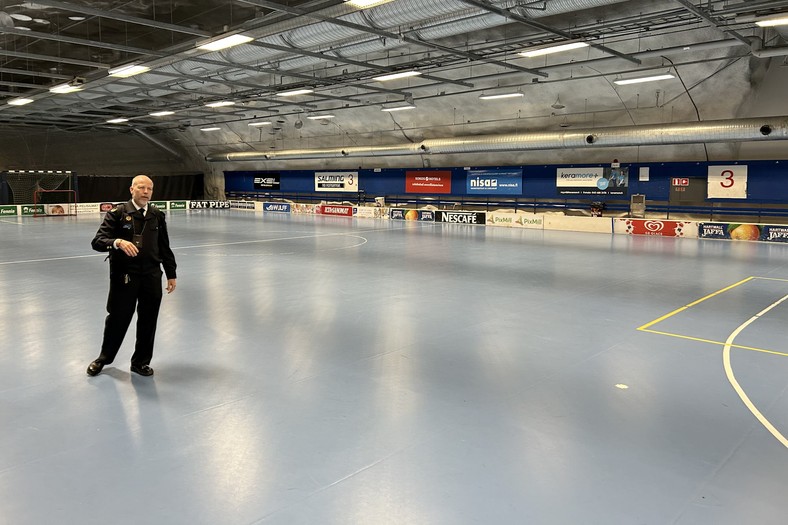
These rooms are also used in room time – as hockey, ice rink, park or playgrounds. Part of public life is naturally underground. – In a crisis situation, people will be less nervous because they already know the surroundings. It also helps that it's nice here. In this way, a claustrophobic atmosphere is avoided, says Raatikainen. During the conversation, one of the women pushes a pram through a huge blue door, which – when closed – are to protect against combat gas.
There is also a range of cellular network. “People complain when they can't call home during training,” says Raatikainen on the underground hockey pitch. Underground sports facilities are easier to maintain in the conditions of merciless winter.
Finnish Supermoc
Finnish resistance to crises has its own name among residents: SISU. – Sisu is our Supermoc – says Raatikainen. It is difficult to translate this term – it means something like the “willpower” or “determination”. The Finns are used to unfriendly conditions – on the one hand due to the climate, on the other due to the continuous threat from Russia. Opposing this is deeply rooted in Finnish identity.
Die Welt
Underground hockey playground in Helsinki
The war in Ukraine dispelled the last doubts of the Finns about the threat of a warrior neighboring. In 2023, Finland joined NATO. This decision was dictated, among others Her historical experiences – in the years 1939–1940 as a result of the Winter War, lost her territory in favor of the Soviet Union. Nothing good comes from the East – today the Finns repeat today.
Recently, there have been reports that Russia is building a new infrastructure along the border with Finland. A high -ranking government official who asked for anonymity, however, in an interview with the editors of “Die Welt”, however, remains calm. – These are very small matters that do not pose a direct threat to Finland at all. Space of several tents and camps is not a problem for us – he says.
When asked about the script in which Europe could test NATO, for example, by taking a small area, it answers bluntly.
– I see the risk [pojawienia się] minor incident. However, Russia shows teeth mainly when it is strong and is not now – he says.
I’m Ashley Davis as an editor, I’m committed to upholding the highest standards of integrity and accuracy in every piece we publish. My work is driven by curiosity, a passion for truth, and a belief that journalism plays a crucial role in shaping public discourse. I strive to tell stories that not only inform but also inspire action and conversation.