Donald Trump's supporters in Central Europe and Balkans remain unsatisfied: no preferential treatment for popan, Vucic and Dodik leaders

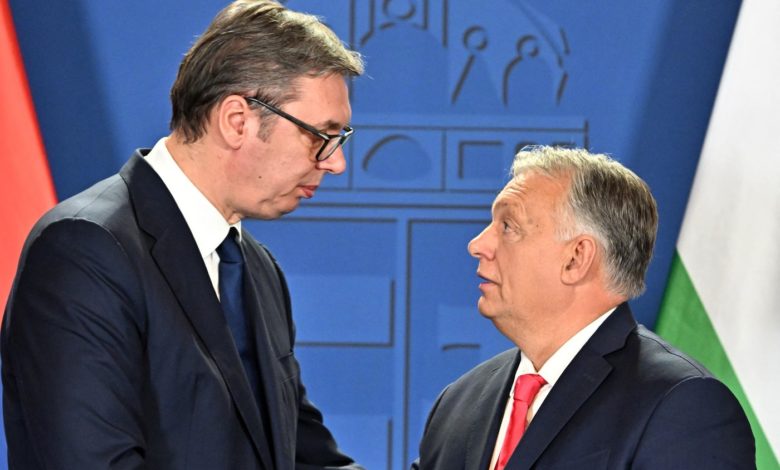
The popular leaders who have shown their sympathy for Donald Trump does not enjoy any preferential treatment from the American administration. What could end up with their supporters, write Hungarian politicologists Peter Kreko and Ferenc Németh in an article in Le Monde, taken over by Rador Radio Romania.
For four months, the spectrum of the Presidency Trump 2.0 is planning on Europe. Many leaders, enchanted by Donald Trump's first term, were pessimistic about his return to the White House and the consequences he would have for multilateral institutions, such as the organization of the Northern Atlantic Treaty (NATO), and for the fate of Ukraine.
However, other leaders, especially from Central Europe and Balkans, were more optimistic. Viktor Orban (Hungary), Aleksandar Vučić (Serbia) and Milorad Dodik (Republic of Bosnia) seemed to have an advantage due to ideological relations and affinities.
They predicted a golden age for bilateral relationships and discussed openly about how a white house led by Trump would help their countries to become great.
Orban, Vucic, Dodik and others assumed, despite Trump's repeated promises in the campaign on rates and trade, that their countries will be exempted or receive preferential treatment due to the support of Trump's policies. And here, now they wake up as victims of a new commercial and imperialist approach from Washington, in which large and influential countries are taken seriously, while others become negligible.
No clemency
April 2, the “Day of Liberation”, showed no pity on Trump's allies. Serbia was imposed 37% rates for exports, the largest in the region; Bosnia and Herzegovina was punished with a 35%customs duty; And Hungary, whose leader is widely considered close to the new president, may be subject to a 20% tax on exports due to his belonging to the European Union and his economic relations with China and Russia.
Nothing has politically contradicted this indifference. The US Secretary of State Marco Rubio has quickly and unequivocally condemned Milorad Dodik's signature of separatist laws that undermine the constitutional order of Bosnia and Herzegovina and warned local and regional actors, including Hungary and Croatia, not to try to undermine Dayton Peace Agreements. [încheiate în 1995 în SUA, sub patronajul administrației Clinton, între președintele bosniac Alija Izetbegovic, președintele croat Franjo Tudjman și președintele sârb Slobodan Milošević].
The leader of Belgrade Aleksandar Vucic, who had hoped for a change of direction in his favor under the Trump administration in the Kosovo problem, as well as in raising the sanctions against the local oil company, NIS, he was only with hope. It is significant that Richard Grenell, the sending of the White House for special missions and a firm supporter of Vucic, did not publicly manifest in his favor against the background of massive street protests against his presidency.
For Hungary, whose prime minister and government supported Trump's return, the first days of the 47th US president were particularly difficult. Orban predicted a “fantastic and great gold” in the relations between the US and Hungary, due to his relationship with the president, and talked about a positive impact on the “Hungarian wallets”.
It was probably not expected to impose so severe rates, nor that American sanctions be kept against the members of his government-including his head of cabinet, Antal Rogan, who supervises the country's intelligence services-or the Republicans to publicly denounce Hungary policies towards China and Russia.
All three leaders maintain their hope that the transactional nature of the Trump administration is temporary and that bilateral relationships will eventually improve. This is likely to explain why US policies continue to imitate, such as “reprimands” from civil society and non-governmental organizations that have benefited from USAID grants (US Agency for International Development), with allusions for Elon Musk's Government's effectiveness (Dogs). Similarly, under the pretext of reducing public spending, defense of sovereignty and combating forces “Woke”, each implemented initiatives that signal the ideological proximity to the transatlantic ally and silence the detractors on the domestic level.
Embarrassing obstacles
However, significant obstacles, if not even embarrassing, are profiled on the horizon. The below average expenses of Hungary for defense and NATO contributions continue to represent a challenge, which the US president will probably emphasize before the annual summit of NATO members in The Hague, the Netherlands, from the end of June.
It is expected that the increasing presence of China and Russia, both in Hungary and Serbia, is a conflict with the White House.
The dependence on Russian energy will continue to attract criticisms, while the American government officials have already reported to both countries that China is a strategic challenge – which the President's eldest son, Donald Trump Jr., reiterated during his recent visits to Budapest and Belgrade.
These subtle calls to dissociate from the Eastern power and to promote the US economic involvement will probably have an effect if the line of conduct does not change.