He explained that it was the Russian Federation that finally determined who would give to Ukraine.
“Ukraine works in very difficult conditions of a full -scale invasion, and the Mariupol garrison is one of the priority areas of return. And there is already the results of this work,” Yusov said.
He noted that in the framework of this exchange, Russia handed over the lists of those who are ready to give. Ukraine did the same.
Earlier, the commander of Azov Denis Prokopenko wrote on Facebook that during the big exchange to Ukraine, not a single Azovts was returned, and called it “shame”.
Context
The exchange of prisoners in the format “1000 per 1000” delegations from Ukraine and Russia agreed in negotiations on May 16 in Istanbul (Türkiye). On May 22, Deputy Head of the Coordinating Headquarters on the treatment of prisoners of war Andrei Yusov said that the Ukrainian side handed the Russian Federation a list of exchange in the “1000 per 1000” format.
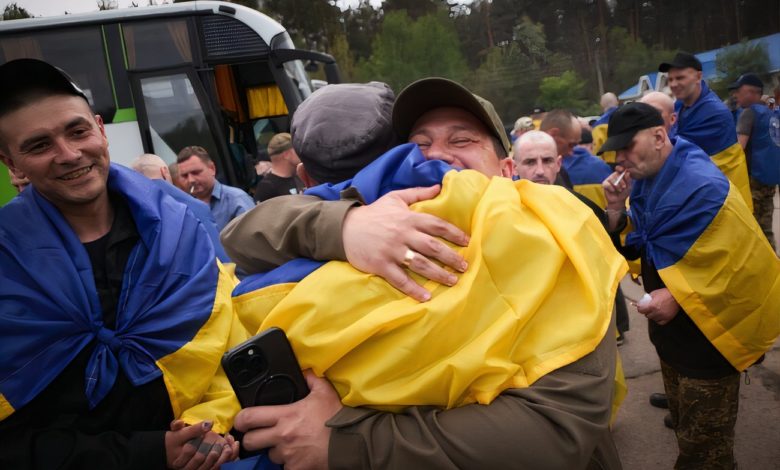
As part of the first stage of exchange on May 23, 390 Ukrainians returned home – 270 military and 120 civilians. They exchanged fighters of the Armed Forces of Ukraine, the National Guard and the State Border Service. Among them are three women and 387 men.
On May 24, the second stage took place – they were released from captivity 307 people. All of them are men, representatives of the ordinary and sergeant composition of the Armed Forces of Ukraine, the National Guard, border guards and territorial defense fighters. Among them are 27 defenders of Mariupol.
On May 25, the last stage of the exchange of prisoners between Ukraine and the aggressor of the Russian Federation in the format “1000 per 1000” took place. 303 Ukrainians returned home.