“My father was” treated “with electricles of communists!” + What huge sportswoman has loved and who impresses her now

Article by Andrei Crăciun – published on Saturday, May 24, 2025, 00:05 / Updated on Saturday, May 24, 2025 00:06
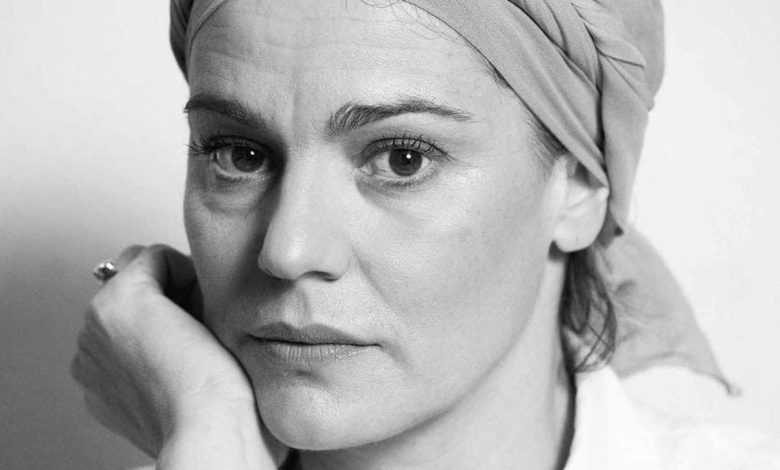
In a unique interview with the Sports Gazette, the famous actress Maia Morgenstern, 63, talks about sports, body, memory, limit, will and childhood. With over ten shows in the active repertoire, Maia carries her career with an overflowing vitality and we wanted to find out what the secret is.
Maia Morgenstern is one of the most appreciated and most beloved theater and film actresses in Romania – and not just in Romania. His career has an international dimension. It felt for a long time, and it still feels sometimes, excluded, because it is Jewish, because it has a harder name to pronounce, because, because …
In the general school he wanted to do the volleyball, but he was not held in the team. It was at Zoya Kosmadeyanskaya (an anti-Nazi heroine) in Bucharest. Today, the school is called the Central School. He accidentally discovered, in high school, a physical aptitude he did not know (being a spoiled and sick child, who avoided the effort): resistance. He had no speed, but he was the best at resistance. Maybe this is also one of the secrets of his long career excellence.
At the theater he entered the second attempt. But he entered the first, from the second attempt. Another secret, which the champions know, whether they are in the Popic or in the theater: Don't give up!
We were curious to find out what links it has, as it has, Maia Morgenstern With the sport and how it manages to stay in excellent physical form, which allows it to play in 2025 in over ten theater performances, to go in so many trips, to be in Bucharest today, in Bârlad, tomorrow in Reșița. And to shoot for movies or serials.
When we met, he was leaving the theater, from rehearsals. He was sitting on a bench and reading a book by Henry Kissinger, the great American diplomat. But he also had the phone, open on a social network.
– Are you always in step with the new, lady?
– I try, but with a lot of self -irony, because it is clear to me that I am not good.
– Have you ever used Chatgpt? Artificial intelligence, what has appeared now?
– Why? To ask artificial health intelligence? I didn't call. But we must learn, that otherwise we remain without dinosaurs and we must make them from plexiglas. Bad will look after the dinosaurs we are!
– What dinosaurs?! You have twenty years of career in front! Will you ever stop playing yourself? Have you contemplated this idea, of your acting career end?
– Sure. Of course. When I no longer help my memory, body, mind, I will give up.
– Do you not want to play until the end of the end, to perform on the holy board?
– the end of the end – as much as I can. But for now I can.
– How many shows do you play now?
– At least ten.
-Throughout your life, how much did you play?
– A little more.
– But how many movies have you done?
– I don't know how to answer now, I have to consult the archive.
Maia Morgenstern: “I tried to run, but I didn't like it. I can't!”
– How do you always keep in this extraordinary physical form? Run?
– I'm not running. I also have a certain age, I have no more forty years. But the theater requires physical training. Permanent. Sure.
– Were you a sporting yarn?
– No. I wasn't a sporty yarn and I never liked it. Although I tried.
– When did you try? In adolescence?
– No word. After fifty years I started, but it was not me. No walk. What should I do if you didn't go? It didn't work very well. Age speaks its word. I learn to meet myself-although I do not please-the limits. Sport teaches us too, maybe. I try to understand my body aspirations. I can't run. The knees, the joints … and then they do otherwise.
Maia Morgenstern: “I learn to meet myself-although I do not please-the limits”
-I saw you in some shows, you were very scratch. Made a real physical power demonstration.
– I would say physical condition. I do gymnastics adapted to my age, stretching, yoga.
– Yoga?
– Yoga, yes. And I have known her for five years, since I refused. My father was doing yoga. I was refusing it too. We are talking about the 1970s.
– I know he was a special man your father. You told me he was also a vegetarian.
– Yes, he wasn't just used to those years. It was before the concepts of the time.
– The father was doing yoga, and you refuse in principle, as the children do.
– Dad was doing yoga, yes. And I was communicating with my parents, especially with my father, with your eyes over the head, “Leave me alone, you do not understand anything.” That's how I told them. They were both mathematicians. Leave me alone, because you don't understand! And look, they didn't throw me on the window. Do you realize?
-Why didn't they throw you on the window?
– Because they were smart and very good and they loved me. And Dad was doing yoga and the world looked at him ugly. Even at sea, on the beach. I told in my show – It is not me – at the Theater of Romanian Dramatics. It is played rarely, but it is played. And the world was laughing. A fifty year old to do yoga, make the candle …
– What the world didn't know is that he wasn't old and had just passed the half of his life. I know that your father had a long life.
– He lived ninety -one. You're right. He was perceived as an old man, he was a shame. The world I think he was saying he was a fool! How to do that? Yoga – What is that?!
“Dad was also admitted to mental health clinics. He became ill and maybe even mind.”
– Did you go to a sport in your early youth?
– I would have liked to be a ballerina. They took me to test me at a ballet studio. My father took me, my mother worked. Dad – no. Dad was kicked out. He was an assistant in college, in mathematics. And he was saying what he thought in the 1950s. And, of course, they kicked him out.
– A complicated story …
– And the mother kept the house, with her salary, with her efforts. Dad was also admitted to mental health clinics. He became ill with soul and maybe even mind. They also treated it with electric shocks. This was the treatments since then. He was a very tormented man in that regime.
– also as a form of exclusion, marginalization in society.
– The conclusions are drawing them. But it was the mother who put the bread on the table. I was staying with my dad for a long time, he was taking me, he was bringing me from school, he took me to ballet. But they didn't receive me.
– Why?
-They found me too weak. I was a spoiled child, my parents had me in old age. I was also sick, I always had tonsillitis. And I was running out of effort. I'm not proud, but that was my life.
– It was not a culture of sport, at that time.
-You have to understand: we lived modestly, in a housing on wood, without a bathroom. The mother worked enormously, the father was sick, the soul had rags, he was a survivor of the Holocaust. Deported. His father died at Auschwitz. I didn't live in a sport culture as a means of fun. They were real trauma. Dad had nightmares. He woke up sometimes screaming at night.
Maia and Nadia: “I saw it for neighbors on television”
– You are about the same generation as Nadia Comăneci. Did you have her model?
– I wouldn't say I was necessarily lonely, but I was a little difficult. I wanted to be like everyone else and not going. The parents were encouraging, but it didn't go. I wasn't easily accepted. You are not like us, you are different. Nor could I pronounce the name.
– How is your name correct?
– (smiles) Maia. I'm Maia. We got to do therapy, not interview! My full name is Emilia-Maia-Ninel Morgenstern.
– Did you have idols in childhood?
– I had people I was looking at, with admiration. But idols – no. For example, my uncle's wife, who, unlike my mother, walks flirty … I liked Roussos!
– Demis Roussos?!
– I like it now! If I liked a boy, I ask him to call me and put on a song of his Demis Roussos. And jump the coupling. And the mother found out. And it was a problem.
– Among the athletes?
– Nadia. I saw it for neighbors on television. We didn't have it. Dad hadn't allowed a TV at home. But at Nadia she let me go. It was something extraordinary.
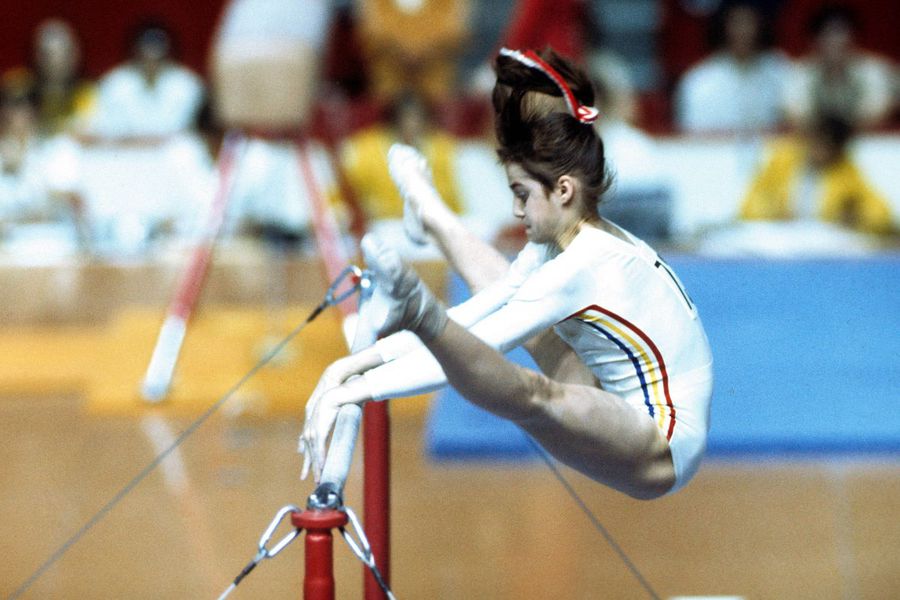
Nadia Comăneci at Jo Montreal 1976 Photo: Imago
– Perfection?
– That impressed me less then. I liked the movements, the dynamics itself. As he did. I wish I could do so, diagonally, Flick-Flack. I could get over my head – but only in front. In the back I couldn't succeed. The sparrow I do now. But trying diagonals on the carpet I fell into my head. Well I didn't hit bad. I had no talent.
– Thumbs? Wheel?
– I was doing, I was doing … but with the volleyball I was longing. I would have liked to play.
– Did you try?
– In school, through the seventh grade, when I arrived at the Central School, the girls played volleyball. But they didn't receive me there. They already had a team. I lied to know how to play, but I didn't do it too much. At the volleyball you have to train with someone and no one was patient with me. Finally, some tragedies. The tragedies of yesteryear.
-Have you ever met the great athletes you are talking about, at events, galas, receptions?
– Maybe yes … maybe yes … do you know what I played? Badminton!
– Badminton?!
– It went there. It came to me that I was not good at sports, but I was just relieving. Until one day, at the Sports Base Cireșarii, when they asked us to run-I don't know why-and I discovered that I am very good at resistance! I was the best in the class! I had no speed. But I had resistance. And I didn't know. It was useful to me in my job.
– At swimming?
– Oh, and I was good at swimming! So, we resist well.
– Do you swim now?
– Of course. It makes me very well. Not performance, but for my age.
– Do you look at the Paris Olympics? David Popovici?
– I value him and I admire him and I love it. I was very dear to me! I looked a little, because I don't have much time but I enjoyed!
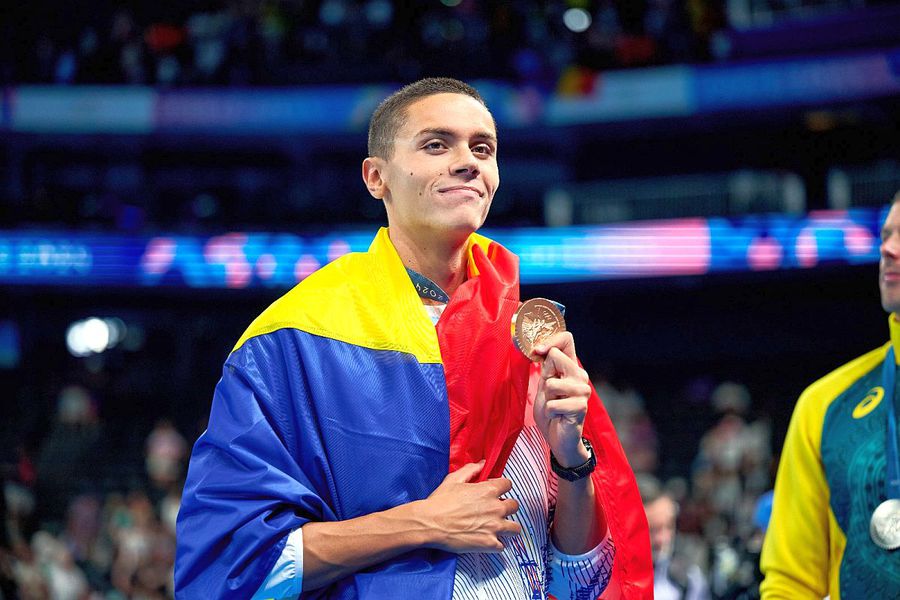
David Popovici at the Paris 2024 // Photo Olympics: GSP Archive
– Where did you learn to swim?
– At the youth beach. It's more than half a century since then, do you realize?
-Did your kids guide them for sports?
-Yes, but I didn't know how to do it with wisdom. I was doing with girls especially aerobics, after video tapes. I didn't know how to communicate, probably. They discovered themselves now.
– Do you look at tennis, for relaxation?
– I prefer to do, but to look. More. When I have time, I prefer to play sports, swim. Old, so, as I can. With the head on the surface.
-What sport would you like to do?
– Volleyball! I was longing for volleyball! I would have liked it a lot. In school, through the seventh grade, when I arrived at Zoya Kosmodemianskaya – about the fight against Nazism – girls played volleyball. But they didn't get me there …
“I still smoke, but I do not want to give advice. As a mother I made mistakes, like that boot that goes without boots.”
– Why?
– They already had a team. I would have liked to be part of this. I lied! I lied to know how to play, but when I actually played, I didn't do it too much. At the volleyball you have to train with someone and no one had the patience to train with me. Finally … some tragedies. The tragedies of yesteryear.
– What would it be better not to make a young man who has concerns in this area, of the sport?
– not to stop smoking. I started at the age of 14, from terrorism, that I didn't like it at all. And I didn't leave until today. Well, I left with breaks, when I had the kids but I'm still smoking. I try not to smoke much. But I don't like to give advice, so I don't give! I say so …
– What job would you have had, if you didn't go to the theater?
– (without hesitation) pediatric doctor! I am very good with the children and I understand very well with the children. As a mother I made mistakes, like that boot that goes without boots, but I generally do exceptionally with the children! Maybe this is, in fact, my great talent.