From the floods in Spain to the Romanian elections. Russia has performed misinformation campaigns to attract Eastern European countries into its sphere of influence

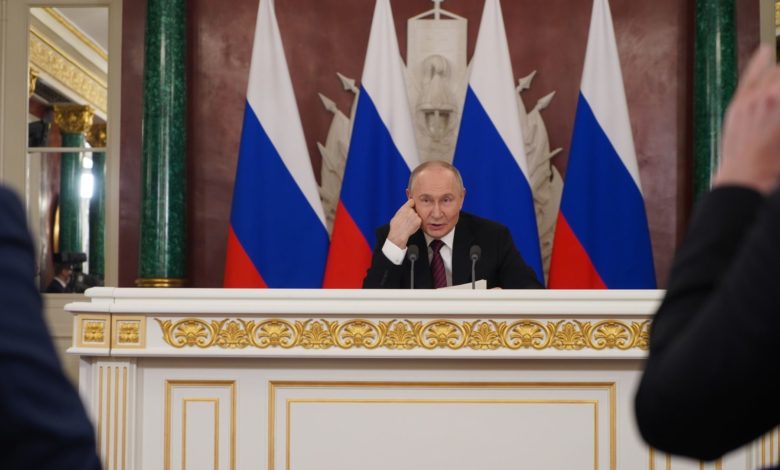
A confidential report of the national security services in Spain states that Russia has carried out misinformation campaigns after last year's catastrophic floods to try to generate mistrust in democratic institutions and delegitimize Spain's support for Ukraine. The Kremlin also proceeded in the case of elections in Romania, Moldova or Georgia, the purpose in these cases being to remove these countries from the European Union and to bring them, possibly, in the sphere of influence of Moscow, reports El Pais, according to News.ro.
The Kremlin took advantage of the catastrophe caused by the “Dana” phenomenon in Spain to try to generate the distrust of Spanish society in its democratic institutions, to delegitimize Spain's support for Ukraine and to design an international chaos image, the annual report on national security, elaborated by the national security department (DSN), Gutiérz Hurtado. The document was transmitted to the Spanish Parliament.
It is for the first time, says El Pais, when in an official document the connection between the spread of false rumors and news is made, which followed by the natural catastrophe that devastated the province of Valencia and several autonomous communities, in the autumn of 2024, and the misinformation campaigns promoted by the Russian government.
“On the occasion of the crisis that took place in our country after the passing of the Storm Dana, on October 29, 2024, the propaganda and misinformation system pro-Kremlin (…) amplified and adapted for its benefit pre-existing narratives,” explains the report. “The pro-Russian actors focused on promoting the distrust of citizens in public institutions, delegitimizing the support given to Ukraine under the pretext of the real need for help for the areas affected by Dana and on designing the image of a country in chaos,” adds the report.
The document shows that misinformation is one of the main risks for national security and reminds that the world economic forum places erroneous information in the first place in the top of the 10 global risks.
“Events such as pandemic, electoral processes or natural catastrophes have been and will continue to be exploited and instrumentalized by the Kremlin,” warns the report.
“Doppelganger” operation
Based on the various researches of the European External Action Service (SEAE), the National Security Department shows that, in the middle of 2022, after Russia had launched its invasion in Ukraine, the “Doppelganger” campaign (Sosie, n. Red.), Attributed to Russia and still active, which has a 228 information structure, and 258, coordinated with each other, operating in different languages, including Spanish, and which has been associated with 60 documented incidents.
“The Kremlin has carried out misinformation campaigns to try to influence, more and more directly, the electoral processes from other countries”, such as the Republic of Moldova, Romania or Georgia, in order to remove them from the EU or, “ideally, to attract them into the sphere of influence of the Russian government,” the Spanish document mentions. He also adds, the Kremlin “would have promoted misinformation campaigns against the 2024 electoral process”, after which Donald Trump was chosen.
The Department for National Security warns that these campaigns would have been carried out through unconventional and more sophisticated channels than in the past, when the Kremlin means, such as Sputnik and RT, were used. Now, however, “traceability to the source is more difficult”, because they are actors who operate multiple infrastructures, are specially created for a certain occasion and operate independently.
The use of artificial intelligence (IA) also represented “a qualitative and quantitative jump in the massive and almost instant diffusion of the misinformative content”, adds the report. At least 41 cases of use for the handling of information were registered by SEAE.
 MAI warning, before the elections: the network of cloned sites that mimic institutions and publications / how users cheat.
Regarding the assessment of risks and threats, the report identifies as the most serious vulnerability of cyber space, misinformation campaigns, irregular migration flows, strategic and regional stresses and economic and financial instability.
Also, the report presents misinformation and cyber space as the greatest risks in the next five years, while experts believe that, in the long term, in 2035, the greatest danger is the fragmentation and strategic uncertainty.
Although the document dedicates a chapter to energy vulnerability, it does not mention the risk of a total power feather, such as the one that took place on April 28 and affected Spain and Portugal. The report was approved by the National Security Council on April 24, just four days before the entire electric network of the peninsula was removed.
 Russia has spied on the borders of Europe, including Romania. Gru compromised thousands of rooms to track the help sent to Ukraine