Openai works on a secret pocket device that could redefine human relationship with artificial intelligence. Will be launched next year

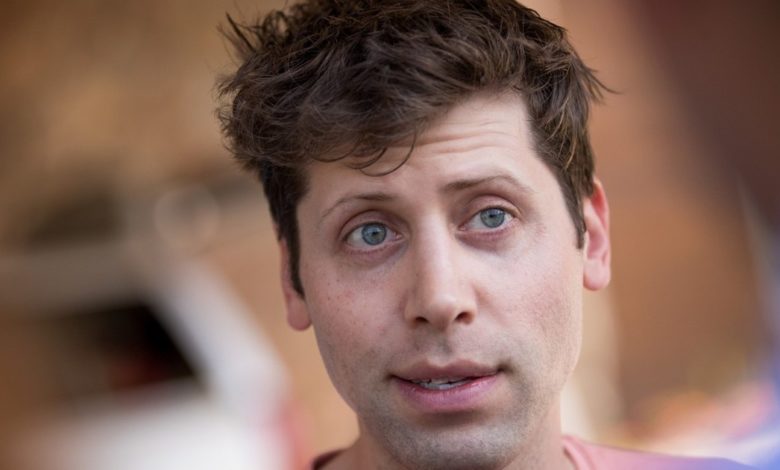
Openai CEO, Sam Altman, along with former Apple designer, Jony Ive, are preparing their team to launch a new secret device. It will work with artificial intelligence and will become as indispensable as a laptop and a smartphone, writes The Wall Street Journal.
Sam Altman, CEO Openai/PHOTO: Getty Images
A new chapter on Openai ambitions is outlined in a space where iconic design meets the radical technological vision: Sam Altman, the CEO of the company, recently presented to employees a project that, in its vision, could become the most important step in the history of Openai. At the center of this plan there is a “company” device fueled by artificial intelligence, designed in collaboration with Jony Ive-the designer who gave form-symbol products of the Apple era.
The plan is that, in a few years, 100 million such devices will become part of the daily life of users. This is not a new smartphone, nor about a pair of intelligent glasses – Altman has explicitly rejected both hypotheses. It is, however, an object designed to be the “third essential piece” on the modern man's desk, along with a laptop and a phone.
The device should be discreet, portable, aware of the user's environment and, in Altman's words, “closer to the SF dream of what personal AI could really mean.”
A new hardware ecosystem, designed from scratch
In a meeting with the employees, Altman spoke openly about the acquisition of Jony Ivete's startup, called “Io”, for the amount estimated by Wall Street Journal at $ 6.5 billion-a financial and technological bet, which could bring OpenAI an added value of 1,000 billion. Ive, who collaborated closely with Steve Jobs, compared his relationship with Altman with the visionary dynamics he had in the Apple era: “The way we resonated and we managed to work together was deep for me.”
Ive spoke about “a new design movement”, while Altman described the project as the beginning of a “devices family”, in which the integration between hardware and software would play a central role – a model inspired directly from Apple philosophy.
Strategic secretomania and industrial ambitions
Altman told the employees that the preservation of discretion is essential: the competition in the Big Tech area is fierce, and a premature leak could lead to copying the idea before it is matured. However, beyond mystery, there are some clear things: the objective is for the first device to be launched at the end of next year, and the production capacity will reach an unprecedented level for such a product.
“We will not deliver 100 million units from day one,” Altman admitted, “but we want to get there faster than a company has ever succeeded.”
Efforts are ongoing: Ivete's team is already collaborating with suppliers who could produce the new device on a scale. The ambition is doubled by a clear vision – that the future of the interaction between man and artificial intelligence will not be mediated by the classic interfaces, but by a radical form of personal object.
Why a screen is no longer enough
For Altman, the main reason for this move is that the current interaction with the AI-through laptops, applications or browsers-no longer reflects the real potential of technology. “People use extremely advanced models in an old setting: I open a site, they write a question, it is waiting. This is not the revolution,” he said.
The real change should come through a omnipresent, intuitive and integrated into everyday life, not just in a search or writing process.
Between utopia and reality
But the context is not lacking in tensions. Openai is experiencing massive financial losses-WSJ reported that the startup could record a deficit of $ 44 billion by 2029. Similar projects, such as the “AI PIN” device launched by Humane-another startup made up of former Apple employees and supported by Altman-failed to win consumers.
However, in the absence of such a product, companies such as Openai remain dependent on operating ecosystems controlled by Apple and Google – giants who, although they have remained behind the AI development, dominate the channels by which users access technology.
For Altman, the stake is clear: without its own device, Openai cannot become a real consumption brand, but only a technology in the background of the products of others.
“The Chatgpt subscription could come up with a new computer”
One of the significant moments in the internal dialogue was when Altman sketched the radical idea that a chatgpt subscription could involve sending a “computer” itself, personalized for AI experience. “We both got excited about the idea that if you pay for Chatgpt, we simply send you a device. And use it.”
This change of perspective – from software to dedicated device – marks a transition of substance in OpenAi philosophy.
Against the background of an era in which technology again promises to change the form of daily life, Altman and Ive propose not a gadget, but a vision: an intelligent companion that not only answers questions, but lives with you. An ambitious bet – between the futuristic dream and the limits of industrial reality.