Great medieval fortress, with a defective cable car, after an investment of four million euros

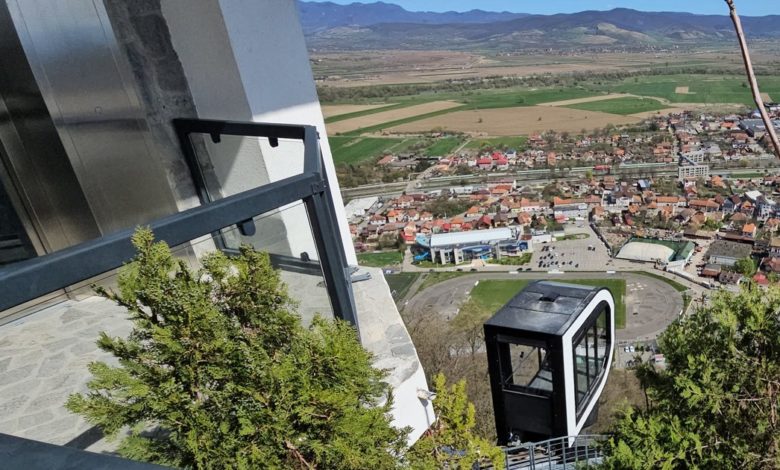
For more than a year after its commissioning, the new cable car of the medieval fortress of Deva remained, most often, unused. The investment cost four million euros and aroused numerous controversies, both through its costs and its condition.
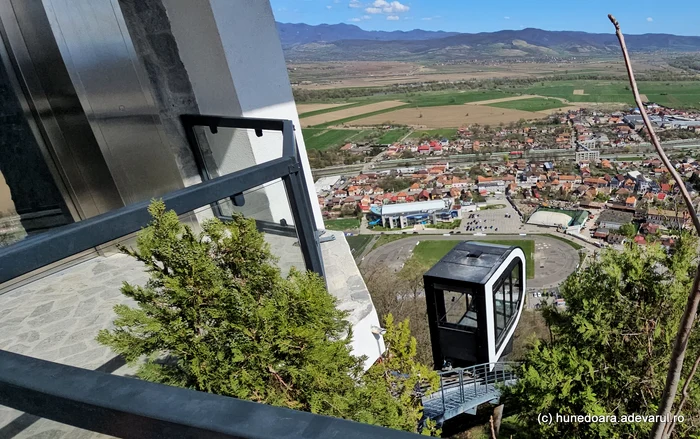
The cable car of Deva. Photo: Daniel Guță. TRUTH
Four million euros were invested from funds from the local budget of Deva municipality for the modernization of the cable car used for the transport of tourists at the foot of Deva Fortress to the medieval ensemble.
The new elevator, with a capacity of over 30 places, has been inaugurated twice in the last two years. The first time, in December 2023, when the Deva City Hall announced the completion of the works started in 2021. However, at that time, the cable car could not be used by tourists, because the rehabilitation works of the medieval fortress, carried out by another investment financed by the European Union, were not yet completed.
Inaugurated twice but rarely used
At the end of March 2024, the cable car was first opened to the public. However, just one day after the inauguration of the spring of that year, his damaged installation.
There were weeks in which, for various technical reasons, the elevator remained stopped, alternated with short periods in which tourists were able to use it to make their climb to the medieval fortress.
The bottom station of the cable car is at the foot of the fortress of Deva, in the parking area. From here, the journey to the I gate of the fortress lasts about 20 minutes, the route being steep, tiring for the elderly and uncomfortable for rushed tourists.
Tourists can reach by car to near Port I, but for those who travel by bus, the climb is difficult, due to the narrow streets and the accentuated slope.
Even those who arrive by car at the I gate, where there is a small parking, do not escape the effort of the climb: they must travel over 150 steps to the I premises, considered the most spectacular area of the historical monument, or use the cobbled road that climbs around the hill.
Is waiting for ISCIR authorization
Most of the year 2025, the cable car did not work, and is currently stopped, waiting for the authorization and certification of the State Inspectorate for the Control of Boilers, Pressure Containers and Lifting Installations (ISCIR).
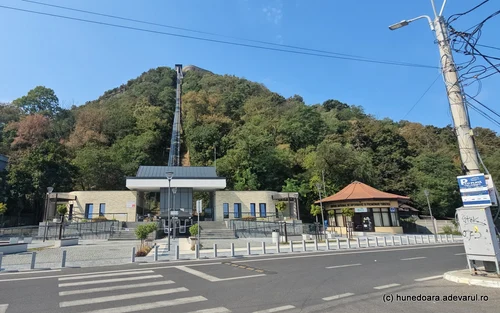
Image 1/18:
Citadel Citadel PHOTO Daniel Guță Adevărul (13) JPG
The builders of the installation, companies in Romania, have to return to Deva to verify and remedy the deficiencies, so that they meet the safety rules provided by law and can be put into operation.
“The ISCIR is the one who has to give his opinion for the technical solution proposed by the builder. We need the correct data and documents that will be behind all the reasons regarding the functionality of this cable car. Without the approval of ISCIR, it cannot be”, said Lucian Rus, the mayor of Deva.
The price of a ticket for the transport with the cable car is 20 lei, being the only fee paid by those who visit the fortress. Tourists climbing on the medieval assembly are not charged. The non -functioning of the cable car does not bring income to the local budget and generates dissatisfaction among those who reach the foot of Deva.
The mayor of Deva claims that a tourist train is currently in the test phase and could be used to transport tourists to the medieval monument. However, this compromise solution, until the removal of the cable car is not to the liking of everyone.
“In Hunedoara there are many tourist attractions, but I want the tourists they accompany, by bus, to see as many things in a short time. says a travel agent.
He adds that tourists participating in organized trips have started to avoid Deva's fortress due to non-functional cable car, as well as other places like Ulpia Traiana Sarmizegetusa, where the Fast-Fast Parking, or the Dendrological Park Simeria, who are facing the lack of parking places, disappeared.
Devei Fortress, one of the oldest in Transylvania
The fortress of Deva (video) was erected in the 13th century, on a spur of the Poiana Ruscă Mountains, above the Mureș Valley, having a strategic military purpose. In the fifteenth century it belonged to the family of Huniazilor, and later passed the possession of several princely families in Transylvania.
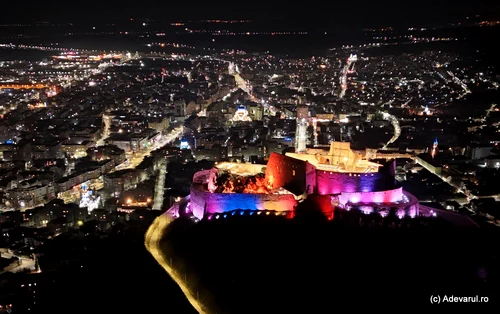
Image 1/15:
Deva Fortress Night Photo Daniel Guță (10) JPG
In the Middle Ages, the fortress played an essential role in the defense of the region. The scholar Giovanandrea Gromo, a counselor and military expert of King Sigismund, described her in the sixteenth century as “undefeated”, with sufficient resources to withstand years to a siege. Two centuries later, Nicolae Bethlen considered her the most successful fortification in Transylvania and one of the most solid in Europe, before the era of firearms.
“A solid fortress, difficult and strong, on a steep rock, which raises its head to the crest of the sky, on the edge of the Mureş river, to which from any part can be prepared to mining, not being able to be conquered in any way. Only if it will be taken through the siege, because of the hunger, There is no fear.in the seventeenth century, described the Ottoman scholar Evliya çelebi, in the book of travelers.
An explosion in 1849, from the ammunition store, destroyed much of the fortress. The ruins were later used by locals for house construction. Over time, the old fortress has become a tourist landmark of Hunedoara. In the last decade, his three enclosures have been rehabilitated, in turn, with the help of European funds attracted by the local authorities in Deva.