Poland is still fighting to delay the entry into force of ETS2. This is a threat to energy prices

2025-05-13 17:38, act 201.2025-05-13 18:15
publication
2025-05-13 17:38
update
2025-05-13 18:15
Poland will continue to fight to postpone the date of entry into force of the ETS2 system in the EU, and if it fails, it will fight for derogation for itself – the minister of climate and the community Paulina Hennig -Kloska announced.
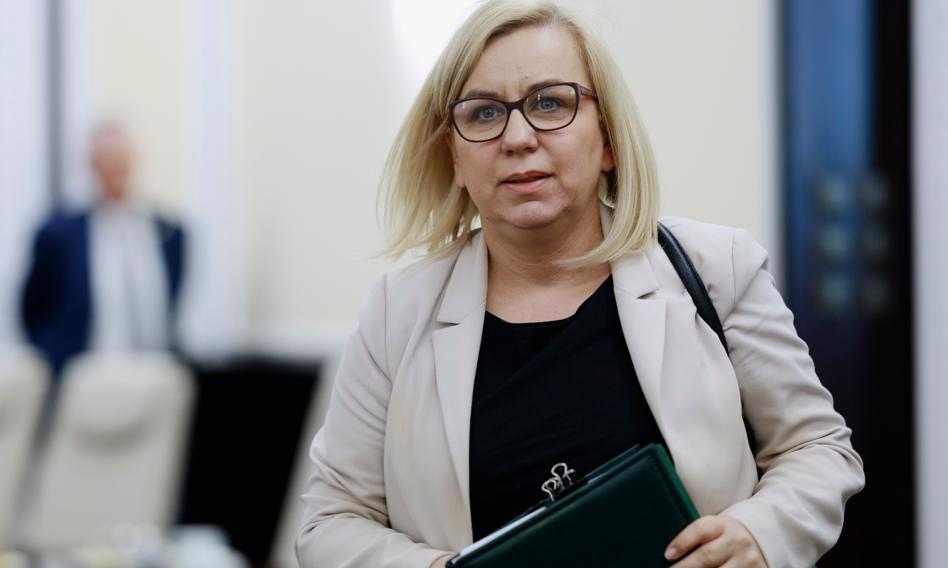
“We have the ETS reliability inscribed in the calendar, I am also very happy that we are developing an increasingly light scenario of the light review of the EU climate policy with a view to ensuring greater stability for the economy and greater stability for households” – she said at the conference after an informal meeting of Energy Ministers in Warsaw Hennig -Kloska.
When asked about Poland's activities in the EU forum on limiting the impact of the future ETS2 system on recipients, she replied that Poland is still fighting to delay the entry into force of the ETS2.
“Various member states Various mechanisms see what should be changed in this directive when it comes to ETS2 (…). Caps are those mechanisms that appear in bilateral discussions, but also collective ones between the member states (…). Poland will fight to shift the date of the ETS2 entry and more and more countries see more and more countries. directives ” – noted the head of the Ministry of Culture and National Heritage.
She added that if it fails, Poland would strive for derogation for itself.
“If we fail to move this term in a large window, then Poland will definitely fight for derogation for themselves due to the large number of households still using even coal stoves in their homes, but also because of the progress we do” – emphasized Hennig -Kloska.
“Undoubtedly, this effort must also be noticed and appreciated at the EC level (…) and we should get the chance to change this term and possibly derogation,” she added.
She announced that next week she would discuss the ECJ with the EU Commissioner responsible for this portfolio.
From 2027, EU is expected to become a new emission allowance system – ETS2 – which will cover all 27 EU countries, as well as Iceland, Liechtenstein and Norway.
This system will apply primarily to emissions from road transport and buildings, but Member States will be able to voluntarily expand its scope with other sectors.
Hennig-Kloska: Women's support for the calendar of departure from fossil fuels from Russia
During the informal meeting of the EU Energy Ministers in Warsaw, many countries expressed their approval against the closing calendar of European markets for fossil fuels from Russia – informed the minister of climate Paulina Hennig -Kloska.
The European Commission proposed a ban on concluding new contracts and contracts at the end of 2025 on the import of Russian gas with gas pipelines and as LNG. Long -term contracts would be terminated at the end of 2027. The detailed EC proposals are to be presented in June.
As she emphasized at a press conference after the informal meeting of the Hennig-Kloska energy ministers “many countries expressed their approval towards the European markets closing calendar published by the European Commission for fossil fuels from Russia.” As she emphasized, the development of the calendar was one of the priorities of the Polish Presidency in the EU Council.
On Tuesday, before the start of the second day of the meeting, the Dan Joergensen Commissioner participating in it announced that the Union in the future does not intend to import any energy raw materials from Russia.
As the minister added, the Polish presidency will agree on the final agreement on this matter with member countries. Discussions concern, among others how to ensure the stability of raw materials prices when introducing restrictions on Russian gas or uranium. However, it is too early to communicate what exactly these conclusions will – Hennig -Kloska reserved.
In turn, in the area of the ECJ Directive, the minister reminded that the opening of the revision procedure is already planned, while various member states perceive differently what should be changed in the directive, both in terms of the ETS and ETS2 system, which is to cover emissions from buildings and transport. In discussions, there are proposals for mechanisms for limiting the prices of entitlement to emission – noted Hennig -Kloska.
She added that Poland will constantly fight to postpone the date of entry into force of the ETS2 and more and more countries sees a threat to the increase in energy prices for households resulting from these provisions. She expressed the opinion that Poland should get a derogation in this area.
As she informed, the topic of Tuesday talks was also the support of Ukraine in preparing for the next winter. She said that the Ukrainian Energy Minister German Gałuszczenko decided that the previous winter was the most important element of the Support Fund, i.e. direct financial assistance, which allowed Ukraine to function to the energy system. “It is extremely important to continue to support Ukraine in this area before the next winter season” – emphasized Hennig -Kloska. She added that Gałuszczenka's assessment shows that the key direction of support is decentralization of the power system. It is thanks to their own sources like photovoltaics on roofs, institutions like hospitals could function – said the minister. “This is proof that the decentralized system is simply more safe,” she noted.
WKR/ MALK/ MHR/
JZ/ ANA/