China is trying to buy influence to the detriment of US. Xi Jinping's plan for the Caribbean and Latin America

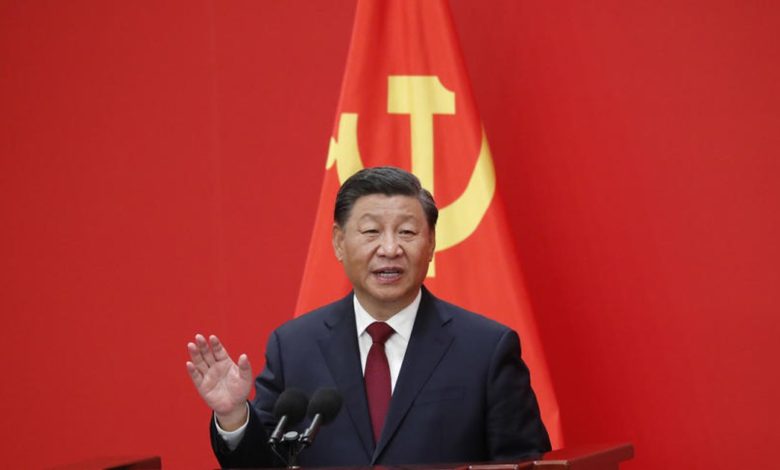
Chinese President XI Jinping promised to extend China's imprint on Latin America and Caribbean on Tuesday through a new line of loans worth $ 9 billion and fresh investments in infrastructure, although Brazil warned the region not to become too dependent on external financing.
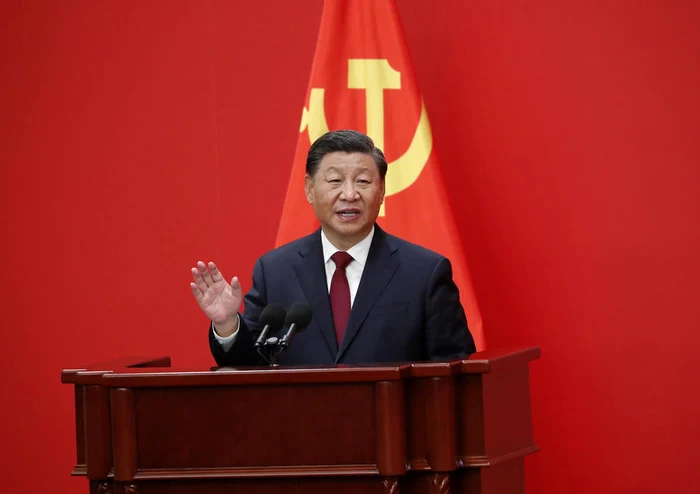
Xi Jinping has announced a Latin American and Caribbean EPO-EFE
The second largest economy in the world will grant a loan of 66 billion Yuan ($ 9.18 billion) to members of the community of the Latin American and Caribbean states (Celac), told XI from about 30 countries gathered in Beijing, on the occasion of the Ministerial Meeting of the China-Celac Forum, which takes place every three years.
“China and Latin and Caribbean countries are important members of the global south. Independence is our glorious tradition, development and revitalization are our natural law, and equity and justice are our common pursuit.”said XI.
XI's promises for Latin America
XI promised the leaders present, including the Brazilian president Luiz Inacio Lula Da Silva and the Colombian counterpart Gustavo Petro, that China will import more from Latin America and encourage Chinese companies to increase their investments in the region.
Beijing has intensified its efforts to replace the United States in recent years as the main development partner of the region, although the global infrastructure initiative of XI, “Belt and Road” (Bri), has encountered difficulties in some countries.
China also sees the court of the region as a way to isolate the self -government taiwan. Seven of the 12 countries that have official diplomatic relations with the island – which Beijing considers a province of SA – come from Latin or Caribbean.
Haiti and Saint Lucia, who recognize the Taiwan, sent representatives to the Celac summit in Beijing. Ambassador Panama in China was also present, although the country has announced that it does not intend to renew its accession to BRI, which expires in two or three years.
Credits in yuani and visa -free travelers
The new credit line, expressed in Yuani, will be well received in many capitals in the region, say analysts, although the funds are not immediately useful for countries that are struggling to pay their debts in dollars.
“China is concluding more and more agreements based on Yuani, especially for foreign currency swaps that facilitate transactions in RMB instead of USD for borrowed countries.”explained Eric Orlander, co-founder of the China-Global South Development project.
“I think it can be said to be a win for Latin America, in the sense that access to capital is no longer as easy as before.”
The amount is little under half the value offered by Beijing at the first China-Celac forum in 2015, but, as its $ 19 trillion economy has slowed down, and the availability to borrow has reduced.
XI also announced that the visa -free travel regime for five countries will be introduced, without calling them.
After the opening ceremony, the delegates adopted a common action plan for cooperation by 2027, the Ministry of Foreign Affairs of China announced.
US -China Competition
The forum takes place at a time when many states of Latin America and the Caribbean seek to negotiate better commercial conditions, after the rates imposed in the era of President Donald Trump, known as “Liberation Day”.
XI reiterated China's opposition to these rates, while the Brazilian president urged the region not to become too dependent on the world's great economies.
“It is important to understand that the fate of Latin America does not depend on someone else. It does not depend on President XI Jinping, it does not depend on the United States, it does not dependsaid Lula.
However, Brazil is getting more and more aligned with China, seeing an opportunity to sell more agricultural products to the largest food importer in the world, while it reduces its US purchases.
XI and Lula had discussions on Tuesday and signed a series of cooperation agreements in fields such as agriculture, nuclear energy and general technical collaboration, the public television in Brazil sent.
Of the $ 240 billion in goods purchased by China in the Celac countries last year, almost half came from Brazil, the largest economy of the region.
The bilateral trade between China and the Celac block was $ 515 billion in 2024, according to Chinese customs, increasing compared to 450 billion in 2023 and only 12 billion in 2000.