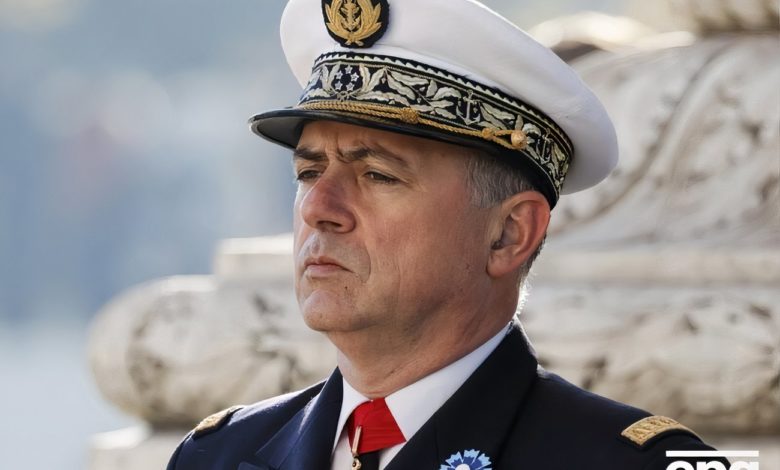
He noted that the Americans themselves are calling for a certain form of emancipation, so that the Europeans reach “adulthood” and become better in a number of areas, including space.
He noted that the Russian war against Ukraine showed the importance of space assets for communication on the battlefield and collected intelligence. She also painfully emphasized Europe's dependence on a limited number of American companies, mainly SpaceX, the commander said. It is expected that the IRIS² satellite system competing with the American EU EU will not be commissioned until 2030.
The fast militarization of space changes the architecture of this sphere, and this requires Europeans to rethink the business model of their companies, Vandier said. In space, the military relies on commercial infrastructure, and most satellites have a dual purpose, that is, they can have both civil and military goals. He emphasized that in order to ensure the persistence of the country, they can no longer rely only on large satellites in geostationary orbit, now they also need backup groups in low -earth orbit. According to Vandier, satellites in low orbit are cheaper-from $ 100 thousand to $ 150 thousand for each compared to $ 300-400 million per geostationary satellite. In addition, they can be launched more often and at a lower price.
The commander noted that today Europeans are far from the center of the market. In the vast majority of cases, it is the American proposal – military or commercial – provides the services necessary for Europe, said the admiral.
In parallel with this, space becomes increasingly becoming a potential zone of combat operations, Vandier noted. According to him, some countries are already introducing space weapons, including bombs brought into orbit, which can fall on command and avoid detection by early warning systems, as well as weapons intended for jamming or descent of satellites from the orbit.
The publication recalls that earlier this month the US space command described the space as an “extremely controversial strategic environment”, referring to China and Russia. NATO Secretary General Mark Rutte also expressed concern that Moscow seeks to place nuclear weapons in space.